Peter Dowdall pays tribute to Seamus O'Brien, a conservationist, colleague and friend
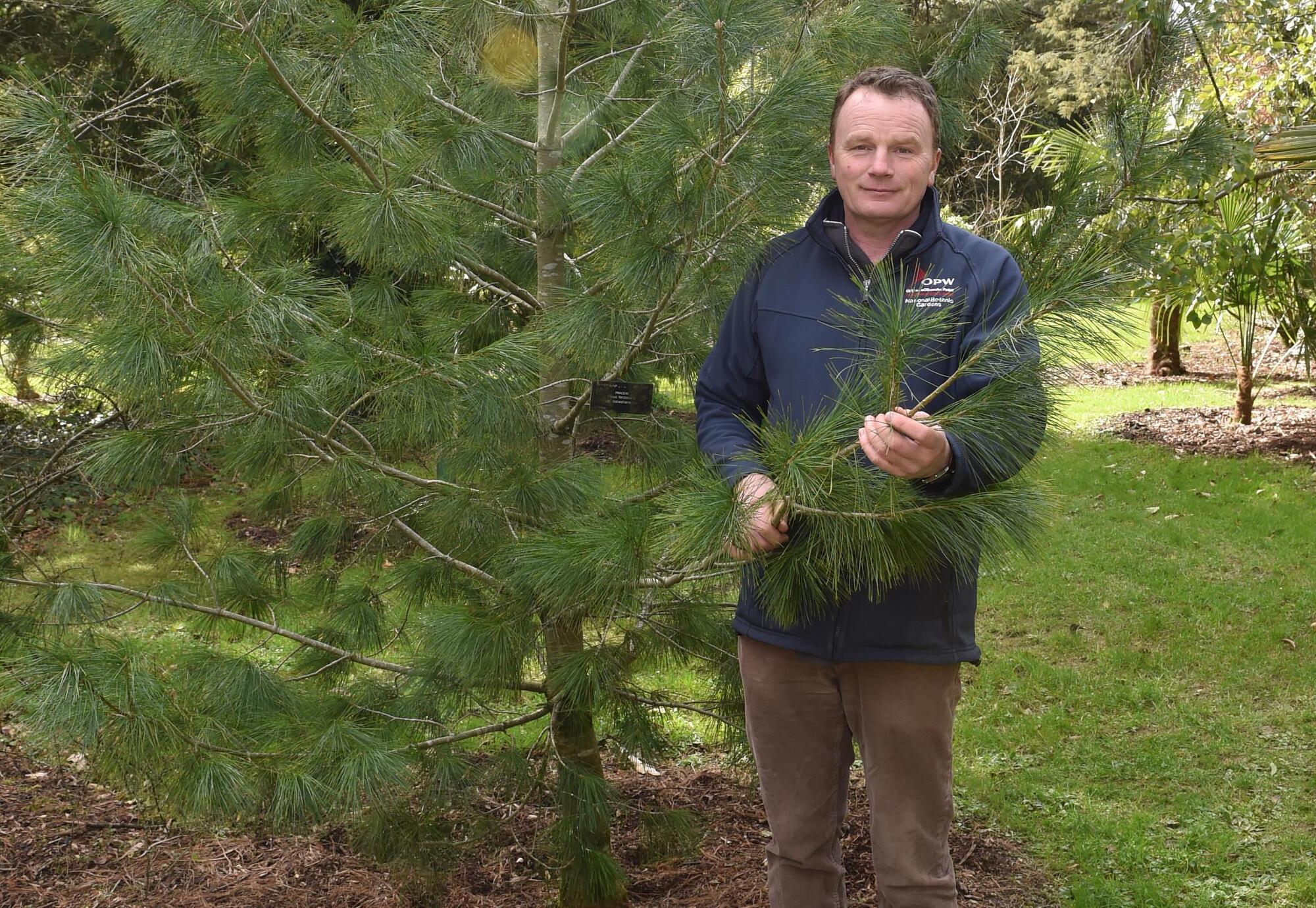
The late Seamus O’Brien, head gardener, National Botanic Gardens, Kilmacurragh, Co Wicklow. Picture: Dan Linehan
I'm not quite sure how to start this column; in fact, I've put off writing it for quite some time. You see, I want to do so much in this piece. I want to acknowledge his work and contribution, I want to express my sympathies to his family, and I want to acknowledge the help and assistance he gave to me through the years, now that he has passed.
I am talking about Seamus O'Brien, who unfortunately passed away far too early and at far too young an age in December 2025. Seamus was the head gardener at Kilmacurragh, which is one of the National Botanic Gardens of Ireland.
To manage a national botanic garden takes a special kind of person, and it was a role that he was immensely proud of and made for, but it only says a small bit about who he was and the size of his contribution to Irish and international horticulture and plant conservation.
I only met Seamus relatively recently for the first time. I had heard about him, of course; his reputation had certainly preceded our first meeting in 2019.
I had never and haven’t since encountered anyone, as knowledgeable about horticulture, plants and gardening as he, but also as willing and able to share this phenomenal knowledge that he had.
There are many people in this world whose brains act as an encyclopedia, but often they are not great at being able to communicate this knowledge. Seamus was different in so many ways; he wasn't just able to share it, he seemed to positively light up when telling stories about particular plants, and these may have been stories that he had told many times before, but his enthusiasm never waned.
It was in Kilmacurragh where I first met him, and below are the opening few paragraphs of the column that I wrote at the time. “If gardens, the great outdoors, the green environment, call it what you will, but if they are going to save the planet from the chaos it is in at the moment, then gardeners must be the new superheroes. In that case, in Ireland, the champion superhero must be one Seamus O’Brien, head gardener at Kilmacurragh Botanic Gardens in Co Wicklow.
"This is a garden of champions, starting with Seamus, who was awarded the RHSI Gold Medal of Honour during 2018 for services to horticulture on an international level. The term 'champion tree' is defined as the 'tallest, oldest or most massive of its species in a given region' and in Kilmacurragh, you are not quite tripping over them, rather looking up at them at every turn.
"This garden is intrinsically connected with horticultural royalty, everywhere there are links to the past and associations with some of the most famous, important and influential horticulturists and plant hunters of the last few centuries.”
Seamus is now among them.
I remember asking him about a particular Magnolia campbelli in the gardens and he told me with that same enthusiasm of how that plant originated as a seedling from the Himalayas which was sent to the Botanic Gardens in Calcutta from where it travelled onwards to Kew Gardens in London, to the Botanic Gardens in Glasnevin and after its final journey it was planted in Kilmacurragh in 1876. All of this off the top of his head.
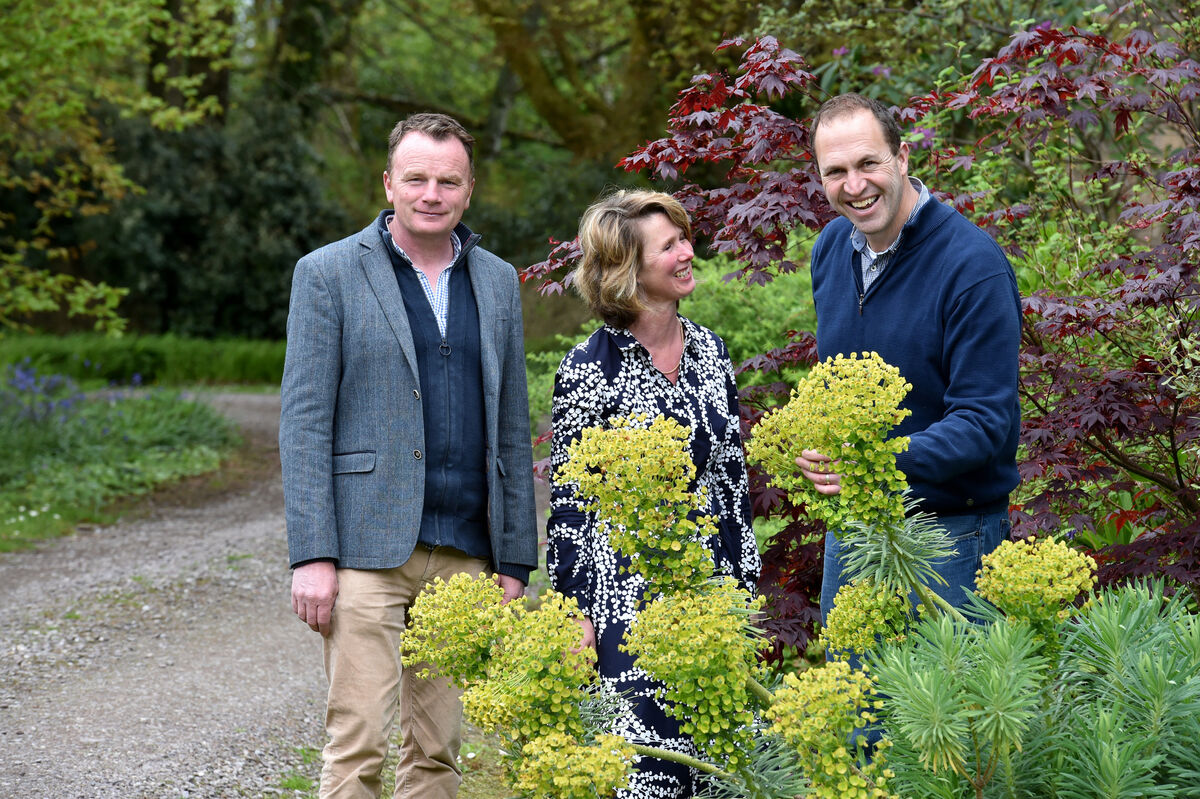
Ireland was incredibly lucky to have benefited from Seamus’s knowledge and expertise for the years that we did. Kilmacurragh, a place for which he had a deep, deep love, benefited in particular.
We became good friends from that meeting onwards. We were both speakers at several events over the years, and whenever I would need to pick up the phone to him, to ask him his opinion, or an update on a particular horticultural topic, I was always greeted with the same infectious enthusiasm.
In 2022, one of the world's rarest conifers, Pinus armandii var. dabeishanensis, coned for the very first time in cultivation, at Kilmacurragh.
This Pine is native to the Dabie Mountains in China, and according to Dr Sun Weibang, of Kunming Botanical Gardens, a member of the Chinese Academy of Sciences, it is not cultivated in Chinese gardens, so outside its native range, the Kilmacurragh tree is the only known cultivated plant in the world.
The International Conifer Conservation Programme's founder, Martin Gardner, estimates that there are only about 36 left in the wild.
Seed was collected from the trees in the wild by Roman Businsky in 1999, and the seed was distributed to botanical gardens around the world. The Kilmacurragh specimen arrived in 2001 via Martin Gardner, who is based at the Royal Botanic Garden Edinburgh.
It has unfortunately failed everywhere else but here, where it stands at about four metres high with a spread of about three metres. It is expected that it will reach as high as 30 metres. According to Seamus, at the time: “It could be just luck that has allowed it to survive, but I hope it is more a sign that we are doing something right." Well, they certainly did get it right in Kilmacurragh, though Seamus would have been the last to look for any trumpet-blowing.
Seamus was a plant conservationist above all else. Perhaps people who knew him better than I may say otherwise, but this is how I regarded him. He was particularly interested and driven by one of his more recent pet projects, which was establishing a community of truly native Irish Scots pines.
Scots pine, Pinus sylvestris, was thought to have died out in Ireland in the 17th century; however, carbon analysis of a remnant patch in the Burren, carried out by Trinity College Dublin, proves that these trees are absolutely native and their provenance can be traced back through the centuries. Eighty seedling trees from those growing in the Burren made their way to Seamus in Kilmacurragh as part of their ex-situ conservation, which means that the genetic diversity of this purely native strain was and can continue to be assured, for some time to come.
Seamus was also immensely proud of the important work that has been quietly unfolding in the restoration of the meadow at Kilmacurragh over recent years. Rather than sowing some off-the-shelf wildflower mix, the team carefully brought the existing grassland back towards its original, wilder state. By introducing locally sourced yellow rattle to knock back the coarse grasses, they allowed a far richer, more diverse meadow to re-emerge naturally.
Seamus received many awards for his work over the years, and he had written several books, including those on famous plant hunters of previous times.
He himself had been all over the world on plant-hunting expeditions to far-flung and remote places on the planet. He had been to China on several occasions, Nepal, Tibet, Sikkim, Bhutan, Tasmania, Australia, Chile, California and Burma.
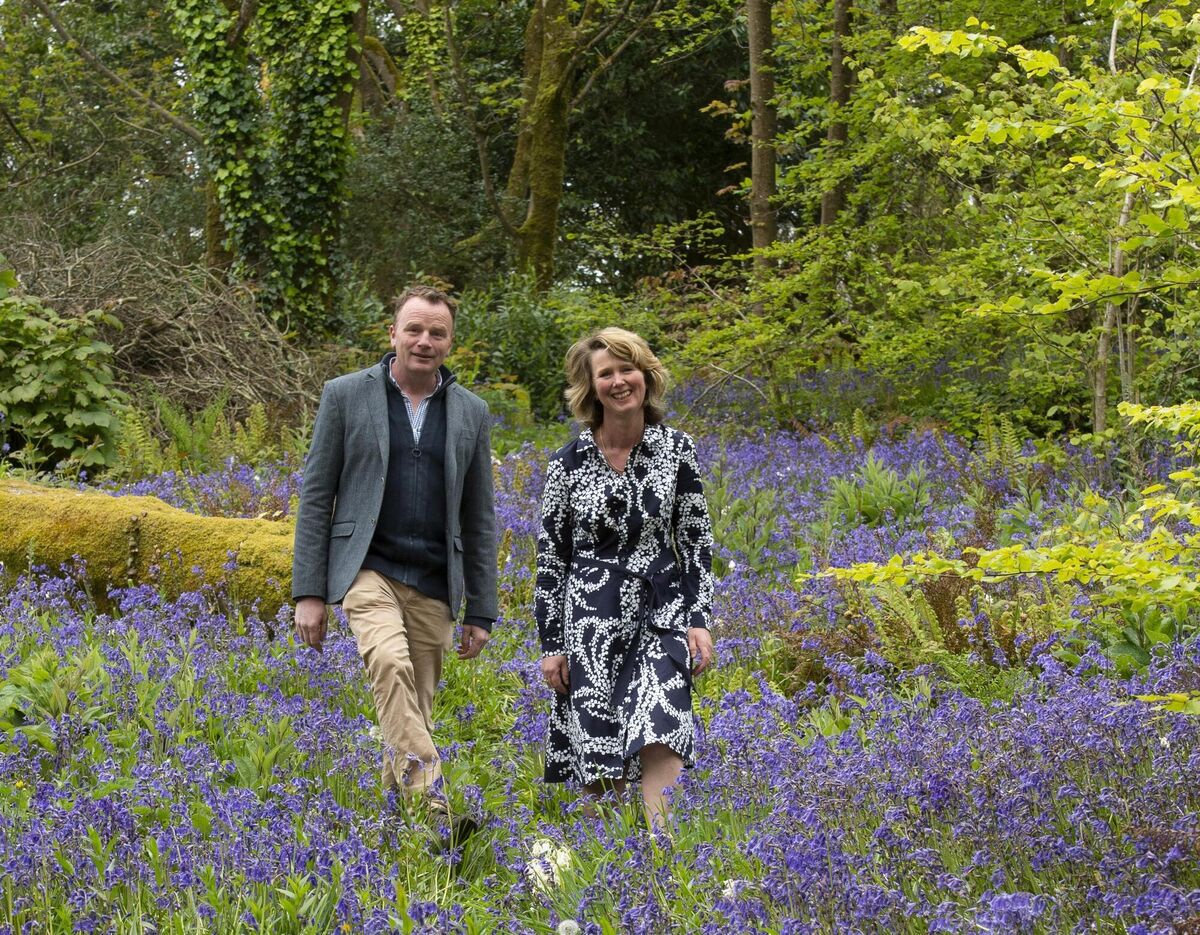
He used the gardens at Kilmacurragh to further the conservation work that he and others were so importantly doing, and he made use of the beneficial microclimate of this part of Co Wicklow to help to develop and sustain many at-risk and endangered plant species.
But to tell you about all of this, and believe me, I can only include a taste of the amount and type of work that he did here, tells you nothing about the person. Seamus was generous, friendly, professional, and so knowledgeable. His loss to Ireland and to Irish horticulture is and will continue to be gigantic. The loss to his family is so much bigger, and to them I express my deepest sympathies. I'm only thankful that I knew him for long enough to learn from him and to call him a friend.
As is the way of life, the plants and the gardens in Kilmacurragh will keep going and growing, and these gardens are so much richer and important for having had Seamus at the helm for as long as they did.
He was immensely proud of Kilmacurragh and its rich horticultural heritage. William Robinson was a regular visitor and advisor to the gardens at Kilmacurragh during the late 1800s, along with Frederick Moore, who was the director of Glasnevin and FrederickBurbridgeof Trinity Botanic Gardens.
For someone so unassuming, it would possibly be somewhat of an embarrassment for him to learn that possibly the most important influence and custodian of the gardens here will prove to have been Seamus himself.


CONNECT WITH US TODAY



Be the first to know the latest news and updates