Jennifer Sheahan: Simple tricks to improve your home's flow so you stop bumping into the furniture
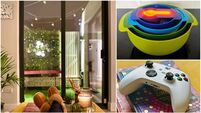
The living area at Jennifer Sheahan's home in Rathmines, a finalist in RTÉ's 'Home of the Year'. Jen says you should leave at least 60cm around furniture and at least 90cm for main walkways such as between a kitchen island and kitchen cabinets. Picture: Moya Nolan
Sometimes, when something doesn’t feel quite right in a home it has nothing to do with the colours or fabrics or decor.
Sometimes it’s invisible. The kitchen may look perfect, but it’s not easy to get to what you need. The living room may look cosy and inviting at first sight, but you keep banging your hip trying to get to the couch. The word for this is flow — or lack thereof.

When flow is off, rooms feel frustrating — like you’ve woken up on the wrong side of the bed. When flow is done well, the home is literally easier to live in.Â
Movement is more free, items can be accessed as needed, and the room feels less constricted. In a tiny home like mine, flow is doubly important and easily overlooked. With space at a premium, it’s tempting to cram things in at the expense of flow — a critical mistake. So how do you get this right in your home?
The first step to good design in any home is to assess how you and the other occupants live your daily lives.Â
Assessing how you move around is key to creating a home that will work for you. Spend time going through your typical day step-by-step, and be honest — don’t just think about how it looks when it’s perfectly staged and tidy.Â

Do you dump all your items inside the doorway the second you come home? Do you frequently move between the kitchen and the living room, or pace around your office thinking aloud as you work?
Try drawing a rough floor plan of your home and tracing your movements for a day — from making a cup of tea in the morning to getting ready for bed. Are you constantly weaving around furniture or doubling back on yourself? Do your guests loiter awkwardly in a corridor when they come in because there’s nowhere to hang coats or drop bags? These little frictions add up — and they’re often a flow problem hiding in plain sight.
One of the easiest ways to improve flow is to give your furniture room to breathe. It can be tempting — especially in smaller homes — to push everything up against the walls, but this can interrupt the natural movement through a room and make the room feel more cramped.Â
Instead, think about ergonomic spacing — leaving enough room to move comfortably around and between items.
As a general guide, you should leave at least 60cm between items of furniture such as the couch and the coffee table, and at least 90cm for main walkways such as between a kitchen island and kitchen cabinets.Â
In bedrooms, leave at least 60cm around the bed so you’re not shimmying sideways to get in and out.
These numbers aren’t hard rules, but they help you design with human movement in mind. Bear in mind that leaving too much space can also create an awkward and empty area, so plan carefully.Â
If you’re unsure about whether an item of furniture might fit properly, try marking out the dimensions with masking tape or cardboard cut-outs before committing.
Interior designer and author Frida Ramstedt highlights two areas that often disrupt flow if not properly planned — transition zones (inside doorways) and passages (the space between two doorways within the same room).Â

These are places where people are in motion, so they need to be kept clear and functional.
If you walk into your kitchen and immediately collide with the fridge door or step into your hallway and trip over a pile of shoes, the transition zone isn’t working. A good rule of thumb is to keep around one metre of open space directly inside doorways — even more if it’s a room that sees high traffic.
In my own tiny home, this meant resisting the urge to install hallway cabinets near my front door. Instead, I used wall hooks for keys and bags, which frees up precious floor space and makes it easier to come and go without bumping into anything.
While flow is often talked about in terms of physical space, there’s also an emotional aspect to it.Â
Good flow means your home supports your daily rhythm and reduces frustration.Â
A well-flowing kitchen lets you cook without constantly reaching across awkward gaps. A well-flowing bathroom means the towel is where you need it to be when you step out of the shower.
This is again where ergonomics plays a part.Â
Think about height — are your most-used kitchen utensils in easy reach? Do you have to crouch down to find your socks every morning? A drawer insert or a repositioned shelf might seem insignificant, but these minor adjustments build up to create ease and flow throughout your day.
Often the best way to improve flow in any home is simply to have less stuff. Over-furnishing is one of the biggest culprits when it comes to poor flow. Decluttering isn’t just about minimalism or style — it’s a way to give your home space to breathe and your body space to move.
Getting flow right isn’t always about big design moves. Sometimes it’s a centimetre here, a better hook there, or just noticing how you walk through a room. But it is worth sitting down and planning it out, because once you get it right, everything else just falls into place.