Shipping container and rambling houses in the running for Ireland's favourite building title
Eve Kelliher checks out the entries seeking your vote in the Royal Institute of the Architects of Ireland 'Public Choice Awards' 2024 
Shipping container and rambling houses in the running for Ireland's favourite building title

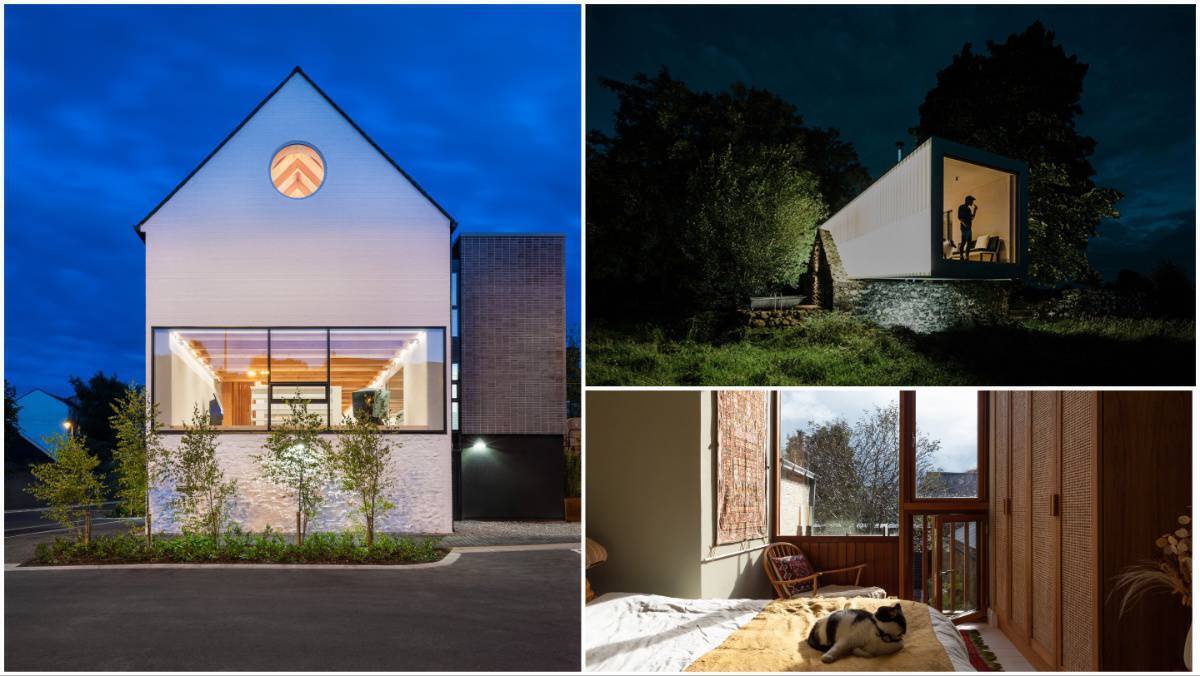
The library/former grain store in Kinsale, Co Cork, left, Barney's Ruins, Derry, top right, and High Street, Balbriggan, below right.

What do a shipping container, a 19th-century grain store, and a series of old rambling houses have in common?

Clever design has gifted them a whole new lease of life.

Transformation is the hallmark of the 2024 Royal Institute of the Architects of Ireland’s Public Choice Award.

Thoughtful design impacts our lives every day and this year’s shortlist of buildings and public spaces designed by registered architects includes fascinating homes, exciting heritage restorations and inviting public spaces.

We get to choose between a distillery, libraries, homes and workplaces and we have until midnight on Wednesday, June 19, to vote online, with the winner revealed on Friday, June 21.

The RIAI Public Choice Award is “a unique opportunity for members of the public to choose their favourite project from a shortlist of buildings designed by registered architects”, says Dr Sandra O’Connell of the RIAI.

Now in their 35th year, the awards celebrate excellence in the design and delivery of buildings and places. “The RIAI received an impressive 180 entries, with 42 projects shortlisted and now in the running for the Public Choice Award. The shortlist is the outcome of a thorough adjudication process that includes jury visits,” adds Dr O’Connell.

Vavasour, by Scullion Architects. Picture: Aisling McCoy

This year’s shortlist highlights strong regional representation of architectural quality, with buildings and public spaces located in all corners of the country — and beyond. “We have entries from small rural communities and towns in counties Cork, Dublin, Derry, Galway, Kildare, Meath, Monaghan, and Wicklow, to our large urban centres, Dublin and Cork. The shortlist also includes international representation with a project in Poland from an RIAI member,” says Dr O’Connell.
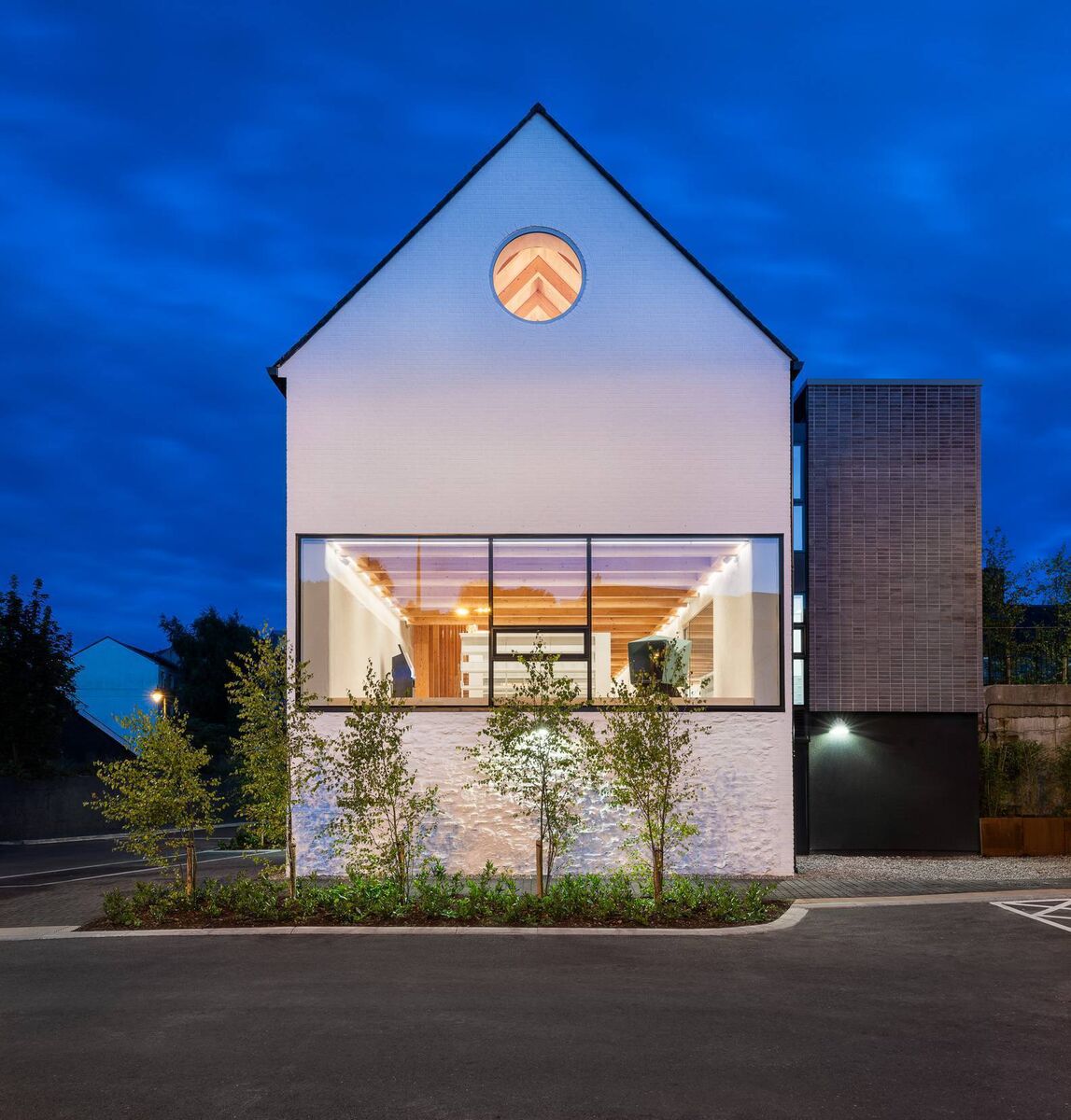
Kinsale Library, designed by Cork County Council Architects. Picture: Jed Niezgoda

The focus is on sustainable living and reuse of existing buildings. There are inspiring examples of the adaptive reuse and restoration of old buildings across residential, workplace and public buildings. “Each project showcases a commitment to innovation, sustainability, and community, reflecting the value that thoughtful design brings to every aspect of our daily lives,” says RIAI president Sean Mahon.

Barney's Ruins by Patrick Bradley. Picture: Joe Laverty

Examples include the boarded-up shell of a 19th-century grain store in Kinsale’s medieval town centre that was transformed into a public library and exhibition space, and the 200-year-old Barney’s Ruins in Derry, that were skilfully transformed into a dwelling and guest annexe while retaining the original rubble stone ruins. 
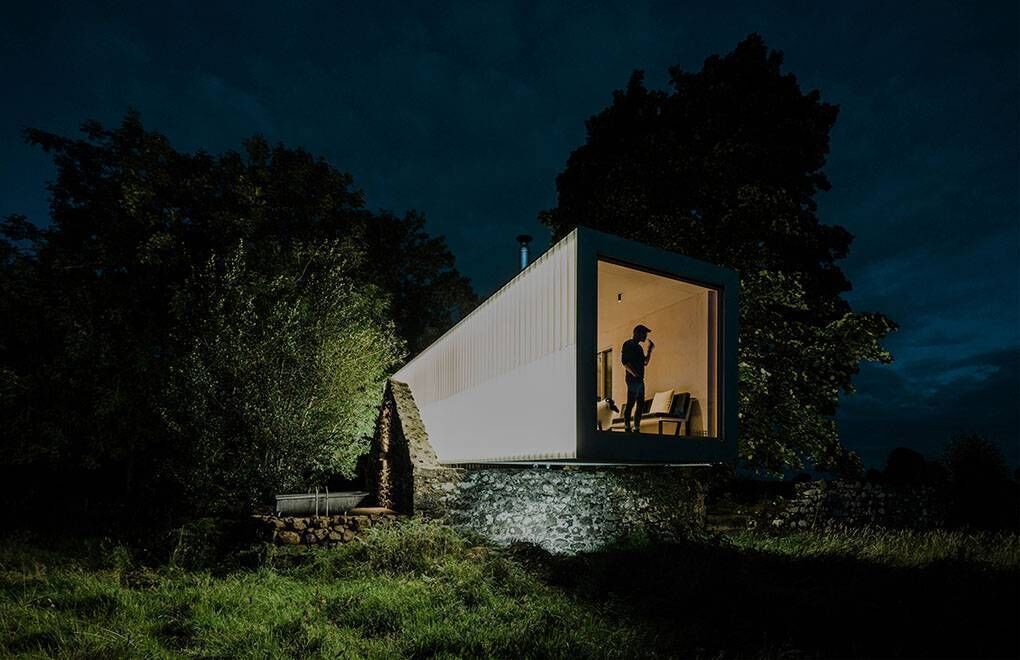
Barney's Ruins. Picture: Joe Laverty Photography

The container structure rests above the old stone ruins of the owner’s great uncle Barney’s home, dating back to 1830. Barney’s Ruins in Maghera, designed by award-winning architect Patrick Bradley, is a cottage within a shipping container, and offers luxurious accommodation overlooking adjacent farmlands. “A typical approach would be to demolish, renovate or merge the existing within the new dwelling design,” says the architect.
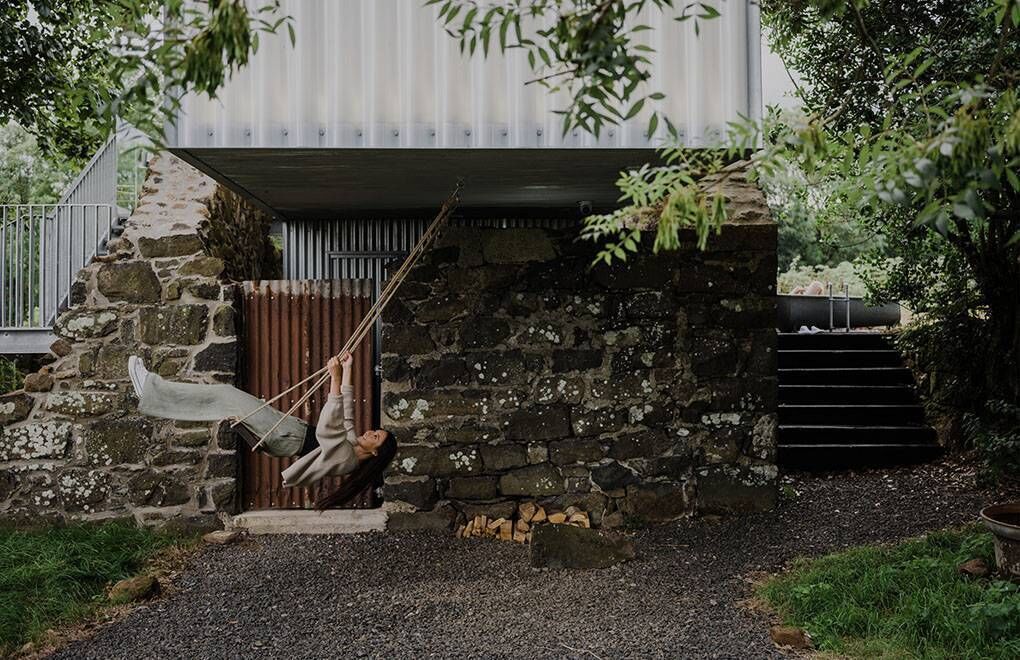
Barney's Ruins by Patrick Bardley. Picture: Joe Laverty Photography

Constructed off-site from a shipping container and craned into position, the simple dwelling cantilevers over the ruins, projecting out into the wildflower meadow below by resting on top of a set of steel columns erected within the footprint of the original cottage.
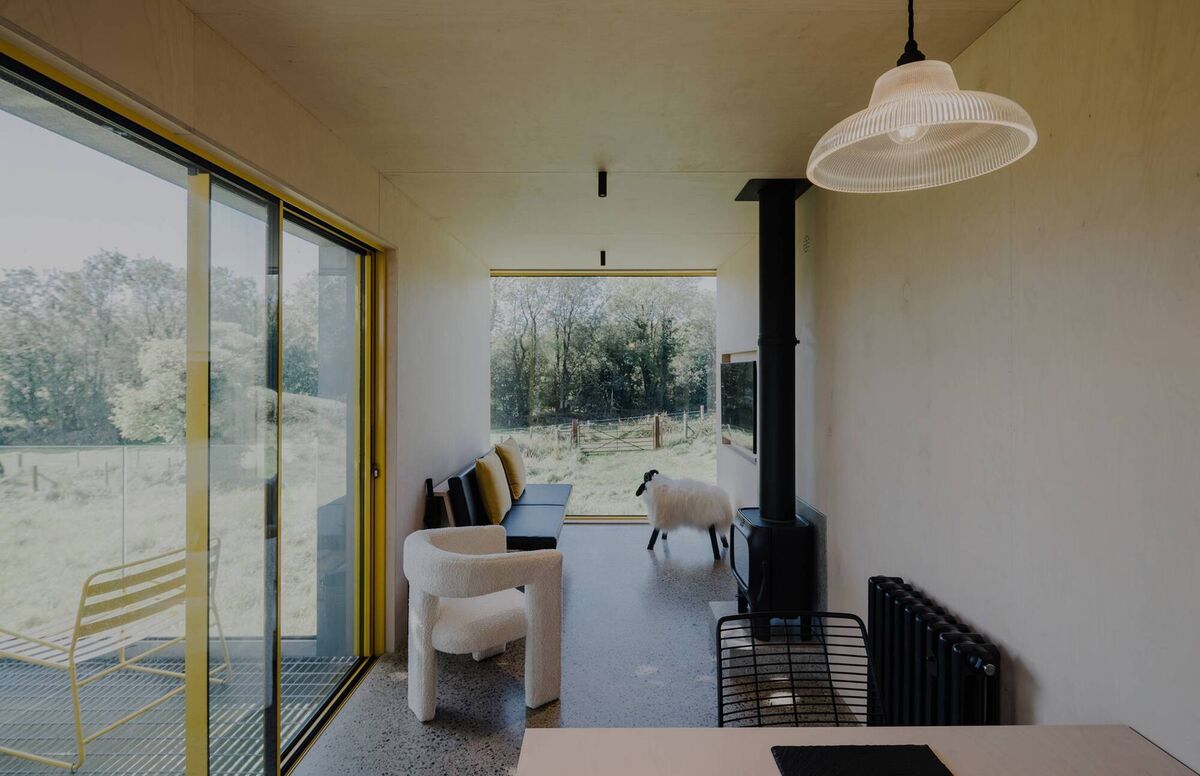
Barney's Ruins, interior. Picture: Joe Laverty

“The adjacent old barn has been converted into a guest annexe, reusing the existing stone wall structure with a shuttered concrete fireplace and chimney breast, topped with a galvanised corrugated steel roof, a nod to its agricultural past,” adds Mr Bradley.

High-quality public housing projects have also made the shortlist. One example is Dublin City Council’s Cornamona Court. The intergenerational development provides a mix of 28 houses and duplexes for families and 33 apartments for older persons. A community space and a landscaped courtyard are also provided.
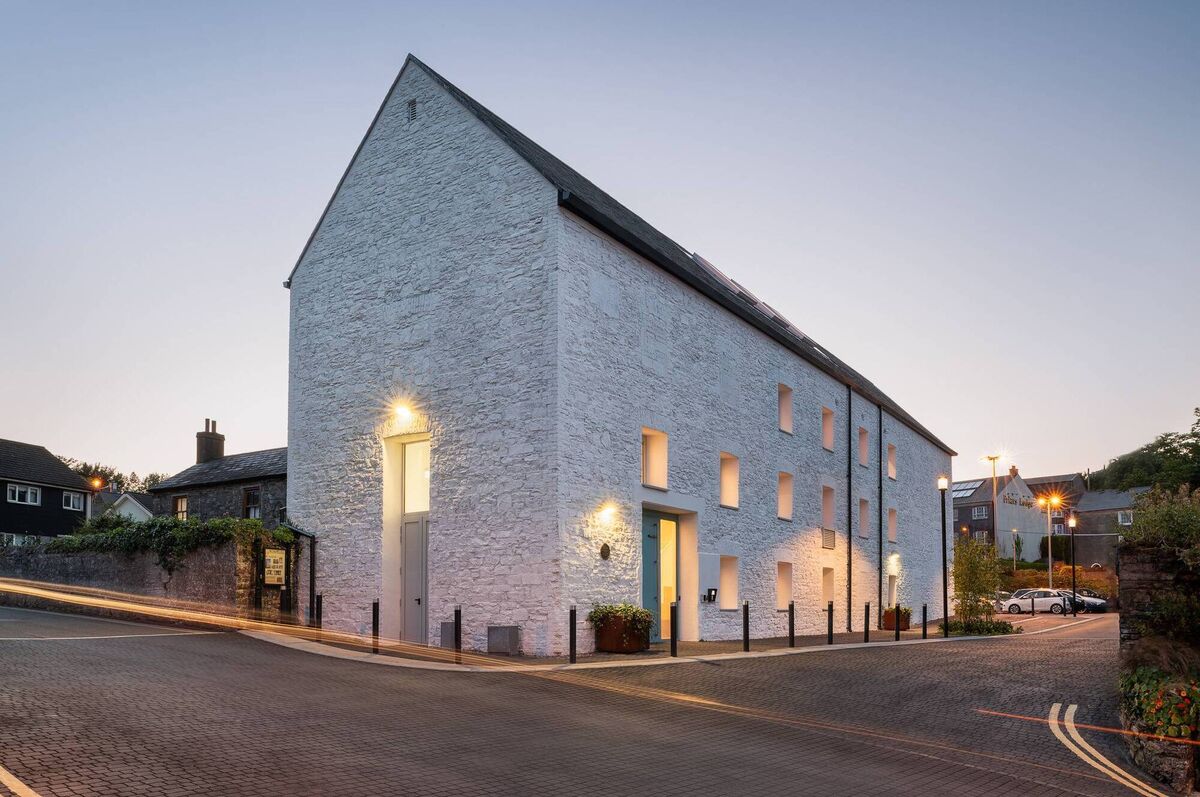
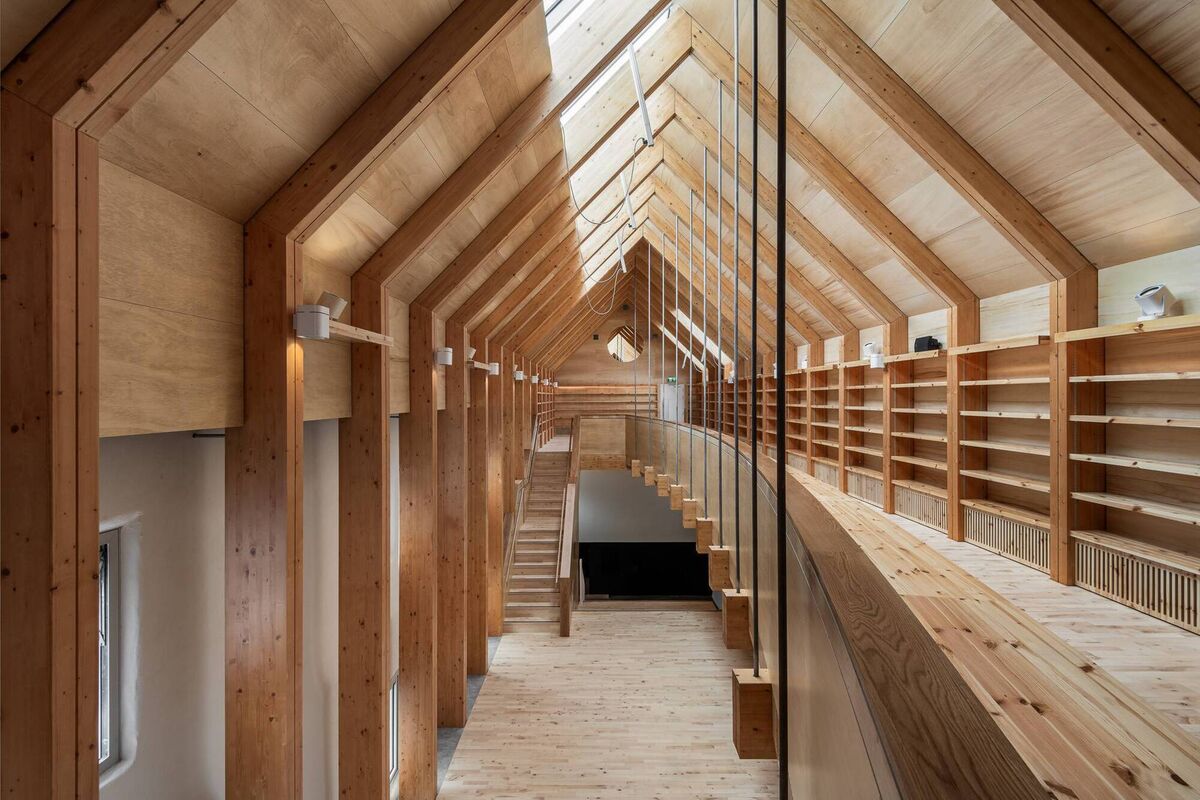
Kinsale Library, designed by Cork County Council Architects. Picture: Jed Niezgoda

Three significant Cork buildings are on the list, Kinsale Library, Stone Vessel and the Strength and Conditioning Gym at the Mardyke, UCC.

Kinsale Library, by Cork County Council Architects’ Department, is a public library and exhibition space over three levels, on a new engineered timber structure hung from the eaves of the existing ruin.

Originally one of a pair, the James O’Neill Memorial Building, aka the Old Mill, is a protected structure built sometime between 1840 and 1880 within Kinsale’s Architectural Conservation Area (ACA) and a Zone of Archaeological Potential.

Badly damaged by fire on two separate occasions, the building’s original roof, apexes and internal floors were all lost when the building was acquired by Cork County Council in the 1980s. 

Kinsale Library. Picture: Jed Niezgoda

Following consolidation works carried out by the Council, the building had been in occasional use as an unserviced black box exhibition space from 2007 onwards.
Its transformation into a public library and exhibition space for the town was a longstanding objective of Cork County Council’s Development Plan.

“A vessel for stories and imagination, the building re-engages its urban context and invites robust conversation,” according to the architects.

The RIAI president agrees that Kinsale Library, in particular, showcases how a building can be reimagined. “Our towns and cities contain many buildings that are vacant and under-used. Kinsale Library is an example of how a vacant building in disrepair can be sensitively and imaginatively adapted back into community use,” says Mr Mahon.

 “The reuse, repair, adaptation and retrofit of our existing buildings is also key to addressing climate change.”

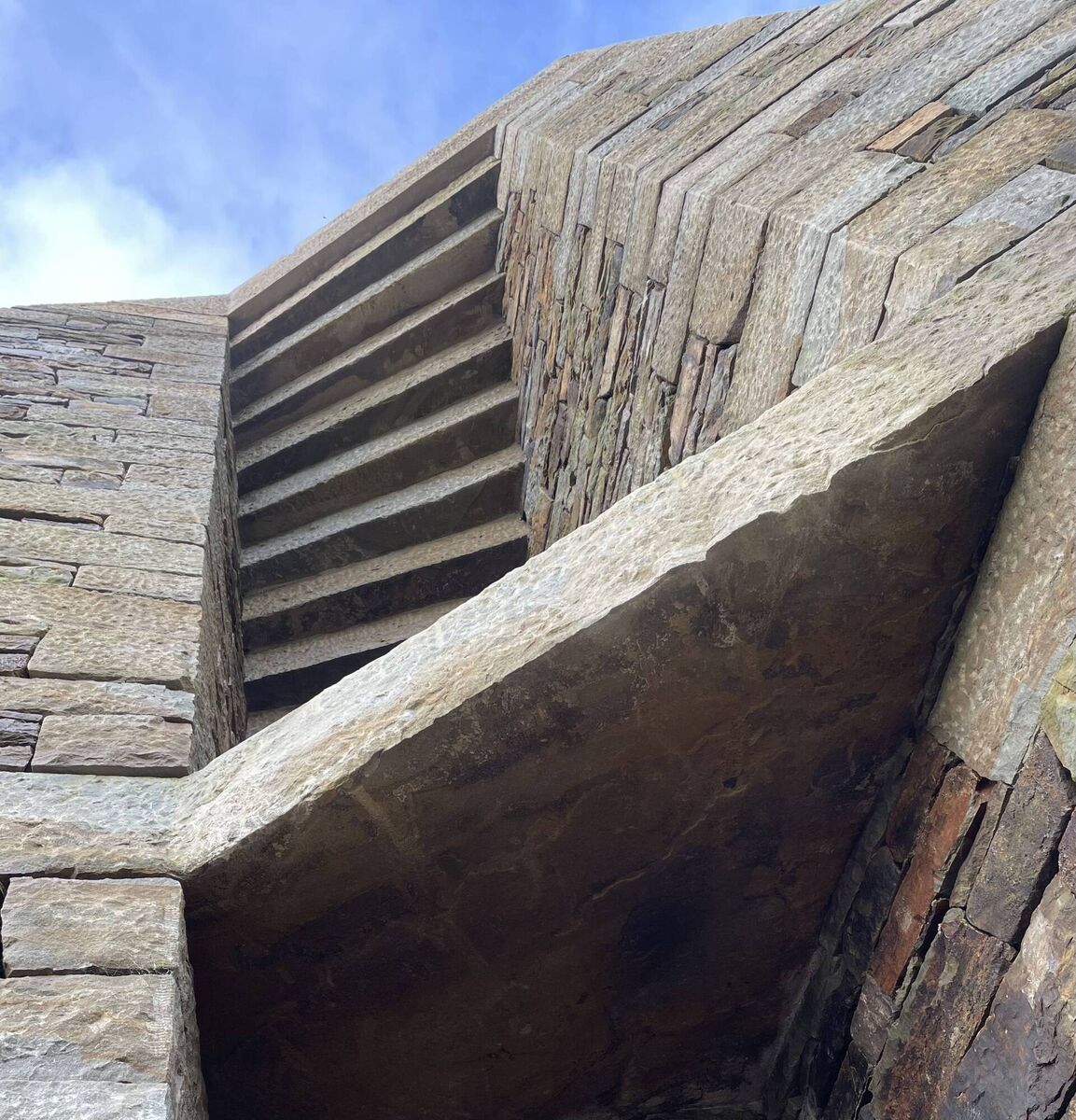
Stone Vessel.
Stone Vessel.

Storytelling is the main element of another Cork entry which has rambling houses as its focal point. Located at Fartha, Co Cork, Stone Vessel is a collaboration between Joseph Walsh Studio and O’Donnell + Tuomey.
“The rambling houses at Fartha were proposed as a set of three experimental structures, demonstrations of local skills and built in locally sourced materials,” say the architects. “Rambling houses were found in old Irish villages, gathering places for music and storytelling, places open to the passer-by. The material quality of two old farmhouses at Fartha were a starting point for this conversation between architects and makers, resilient structures having supported life and community for many generations.”

Stone Vessel, the second in the series, was constructed during spring, summer and autumn months of 2023, out of stone and assembled by hand, stone on stone.

All three Cork entries focus on “championing towns and cities”, according to the RIAI president and the third entry, the Strength & Conditioning Gym at the Mardyke, UCC, by O’Connell Mahon Architects for University College Cork.

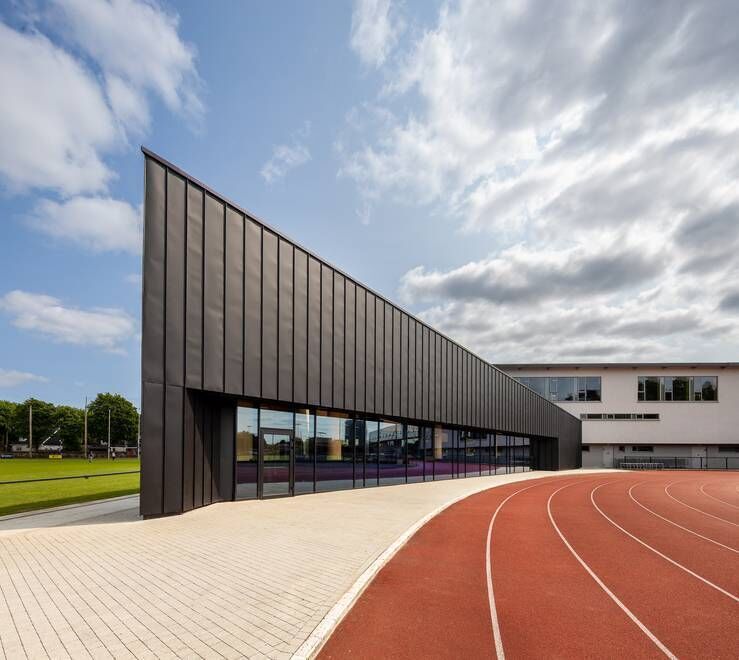
Strength and Conditioning Gym, Mardyke, UCC, O'Connell Mahon Architects. Picture: Janice O'Connell, f22

There were two primary objectives for the new gym extension at UCC’s Mardyke Sports Area — firstly, to provide a dedicated squad/athlete strength and conditioning gym meeting the needs of all sports teams, scholarship students, and international and Olympic athletes attending UCC, and secondly, to provide a design that delivers near-zero carbon in construction and operation.

Strength and Conditioning Gym, Mardyke. Picture: Janice O'Connell, f22

 “The design took advantage of the challenging triangular site to make a strong geometric proposal,” say the architects.

“The triangle is the strongest shape in nature, and it is therefore symbolic of the proposed function of the new extension which acts as a strength and conditioning gym.”

More in this section

Revoiced

Newsletter

Had a busy week? Sign up for some of the best reads from the week gone by. Selected just for you.

Cookie Policy Privacy Policy Brand Safety FAQ Help Contact Us Terms and Conditions

© Examiner Echo Group Limited