The Prince of Tiles: Handmade Zellige brings Moroccan magic to a variety of spaces
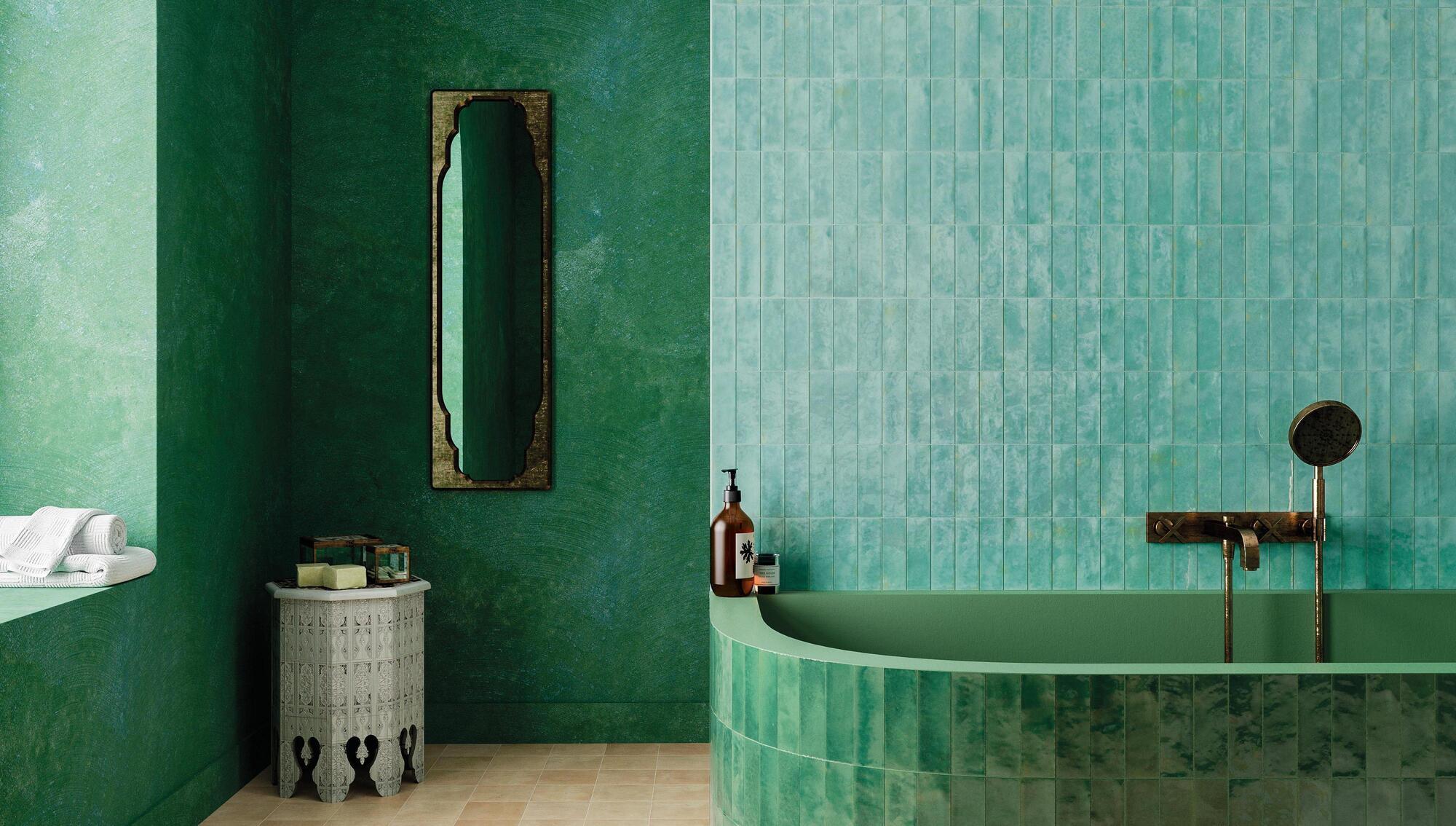
Emerald Mosque tiles in porcelain from the Porcelain Superstore (UK). Similar, Mojave Sea, €62 per metre square (porcelain 6cm x 25cm), deluxebathrooms.ie
With an emphasis on honest texture and a rich, thousand-year heritage, the rising popularity of what we term Zellige tile (properly referred to as Zellij) will continue to go up-the-walls for 2024.
So, what exactly is perfect-imperfect Zellij? Hand-made and hand-cut Moroccan clay tiles, Zellij is made by a division of highly respected mason artisans known as Maallems, in the ancient city of Fes, and its satellite towns in North Africa. Developed in the 10th century when the Byzantine Empire’s use of colourful, glazed mosaics spread via aristocratic fashion and skilled journeymen, Zellij was a perfect creative response to the prohibition of ornamental images of living things in Muslim architecture.
In Morocco, geometric Zellij tiling in unrefined clay has been used for centuries to ornament and protect sacred spaces, pools, public seating and the walls and floors of courtyards (riads), proving its aesthetic and material longevity. A treasured art form with a fascinating, meditation impact especially in complex, wondrous mosaics, Zellij carries the crown as “The Prince of Tiles”. With a timeless quality, it’s a heritage choice with a rustic charm that won’t date in a clutch of years.
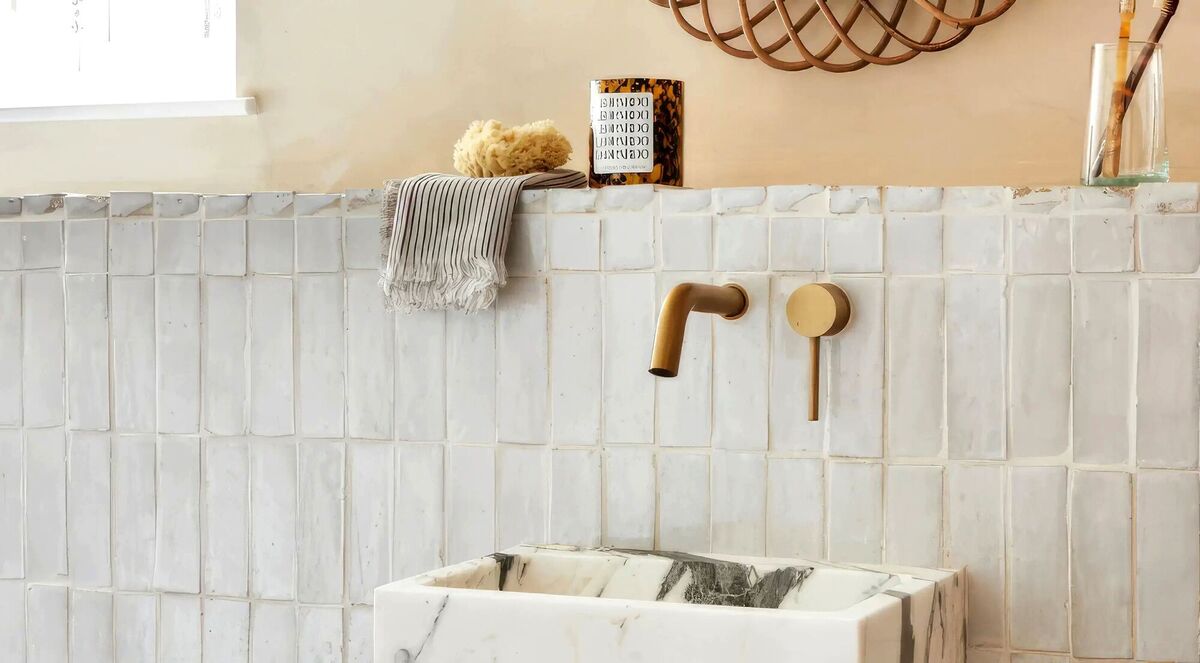
Zellij is marketed today either as authentic Zellij, made using traditional methods in North Africa, or porcelain/ceramic “style of” Zellij products, or as a rustic Moroccan-inspired tiling (which in reality can be made anywhere). Depending on how genuine you want to go in terms of its undulating character, Zellij is not a starter tile to install or care for, but there are two key components to the look that you could replicate with cheaper, standard, factory-made tile choices.
The first is a high-shine glaze (it can be slightly iridescent or oil-on-water). The second is a random-looking, rippled physical finish of varying depth. All modern domestic tile is engineered in a single depth to meet perfectly at the edges and grout lines. Together, Zellij's characteristics in the shine and depth of the tile add aquatic movement and reflection in even a single colour and sizing of arithmetical shimmering surfaces. If you choose real Zellij, you need an excellent tiler at your elbow, as chips, physical flaws, and any raised edges must be well grouted if it’s going on the floor, or you could cheerfully shave off a toe in the shower.
The nearest, familiar comparable, familiar tile to Zellij would be a glazed terracotta and a very similar tile was brought to Spain and Portugal by the Moors, known today as Azulejo. There are many famous examples of this crafted tile used in glorious combinations of shape and tone, including the 17th century Nejjarine Fountain in Fes, the Hassan II Mosque in Casablanca completed in 1993, and the 14th century Alhambra Palace in Granada in Andalusia, featuring fabulous Moorish polygonal Alicatado decoration in traditional colourways, recalling earth, fire, water and air. Azulejo tiling is treasured in Southern Spain. On your next holiday, look out for its extensive use indoors and out, new and old, on hotels, churches, homes and public buildings. With Spanish colonialism, Zellij styles in cheaper, painted concrete would sail out to Central and South America.
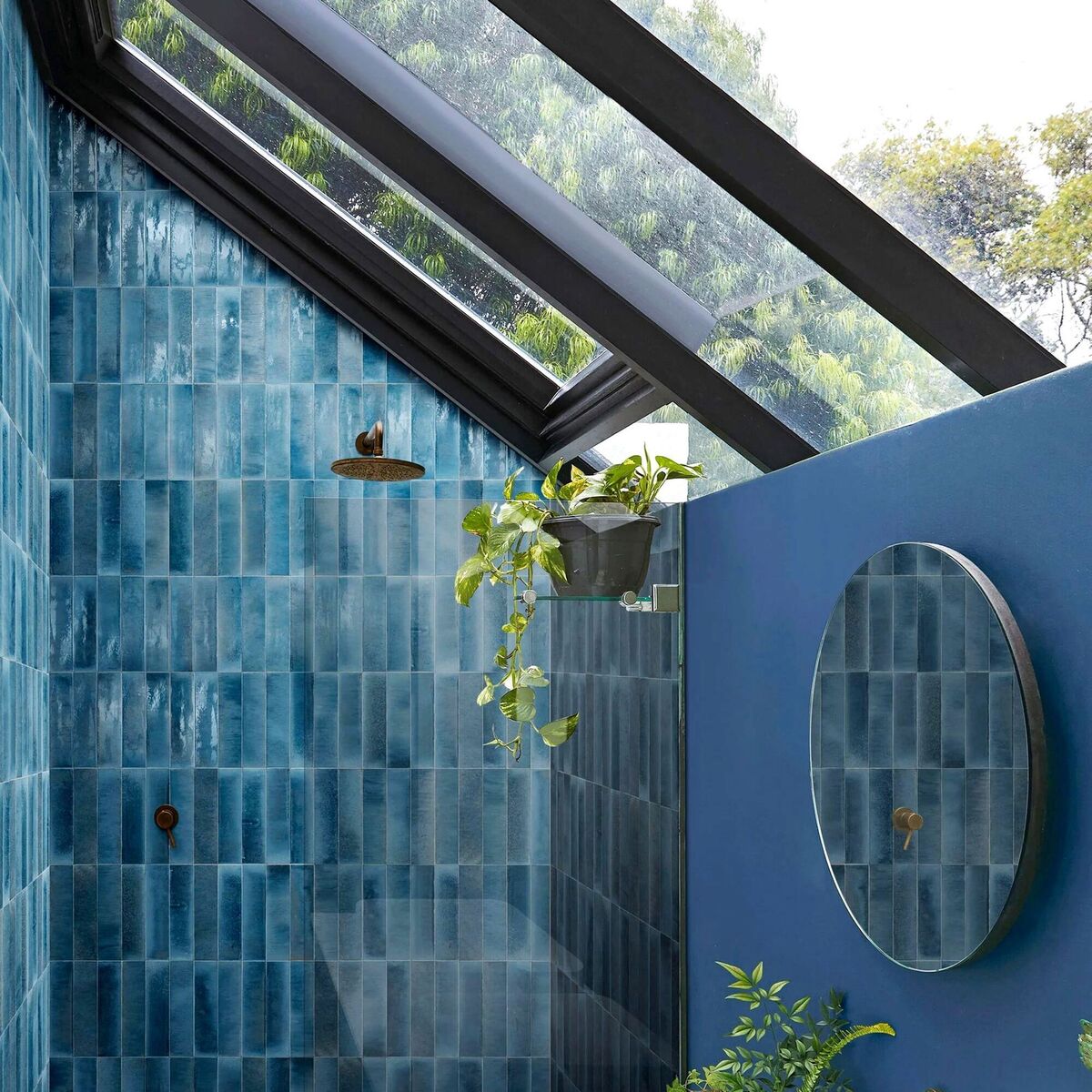
Genuine Zellij tile is very expensive (€120 per metre up) and with every tile carrying a unique characteristic they should only be bought through a trusted tile dealership specialising in their use and application. Generally, we are looking for similar Moroccan styles, and this is something the utter purist will baulk at – referring to a tile as either Moroccan or even Zellij even when it is a fired ceramic not sourced in Africa. Using say an Italian or Spanish ceramic tile, we want something with a rich colour, preferably in Zellij elemental tones of red, black, brown, deep green or blue, with a gentle ripple, and perceptible variations in tone and shine inspired by hand-made tiles of Fez or Tangier.
Original Zellij glazes like terracotta types, are porous and have slight imperfections, making them difficult to clean, and potentially ruling them out for large areas like wet rooms. The glassy top layers have a reputation for catching soap scum and other rubbish that can dull their gorgeous lustre. Be prepared to exact regular baking soda clean-ups, and to scrub up the grout to keep that ancient loveliness. That said, you can of course find the style without the housekeeping hassle in a similar porcelain or ceramic branded tile (search under Zellige, Zellij and Moroccan tile). Try placing long Zellij types in vertical alignments for an up-to-date look that will shed water more effectively.
As real Zellij has slightly varying depth, don’t expect the grouting to look sharp and regular. Some areas will grab more grout and be thicker or thinner. It’s part of Zellij’s charm. Choose a regressive colour in the same tone as the tile (say silver grey with white tiling) to dial down the visual impact of this oddity. A superb trade is crucial for a good final finish with any heritage material. Ask your supplier to suggest a tiler with a very high skill set.
CONNECT WITH US TODAY



Be the first to know the latest news and updates