The science behind buying houseplants for home and work

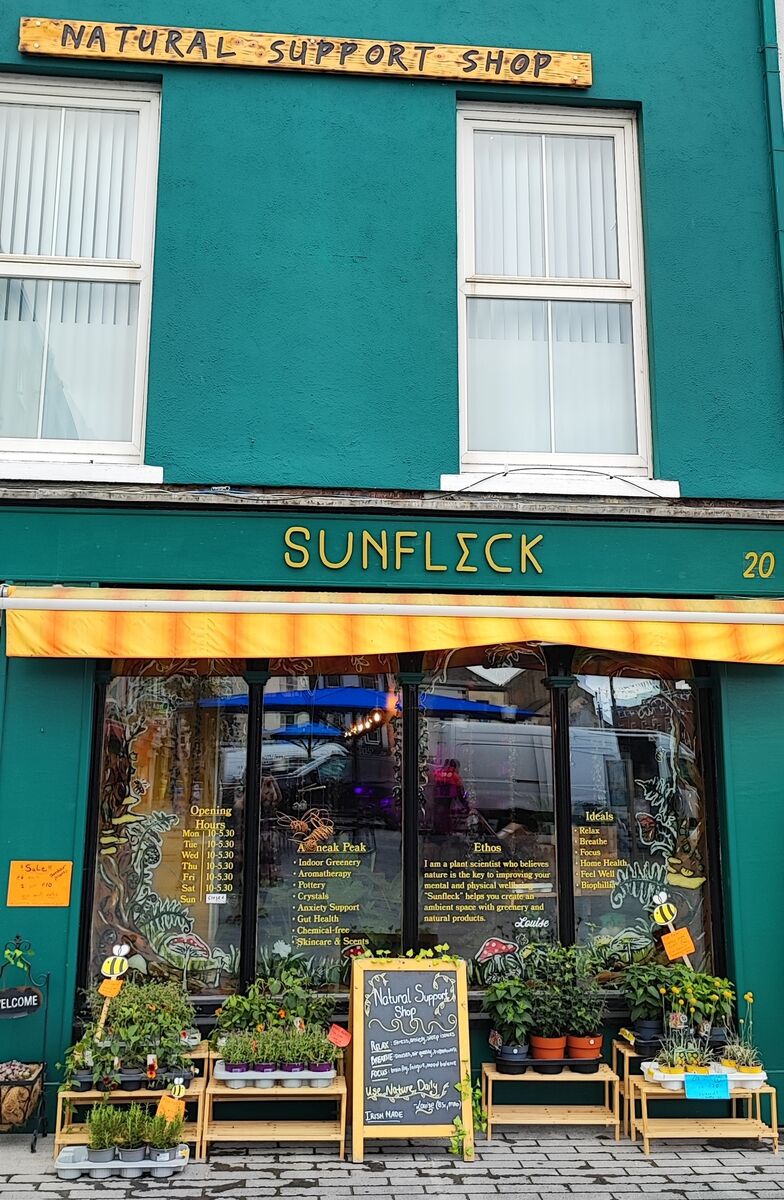
We visit plant scientist and retailer Louise Ryan at her houseplant shop Sunfleck in Dungarvan, Co Waterford
The science behind buying houseplants for home and work

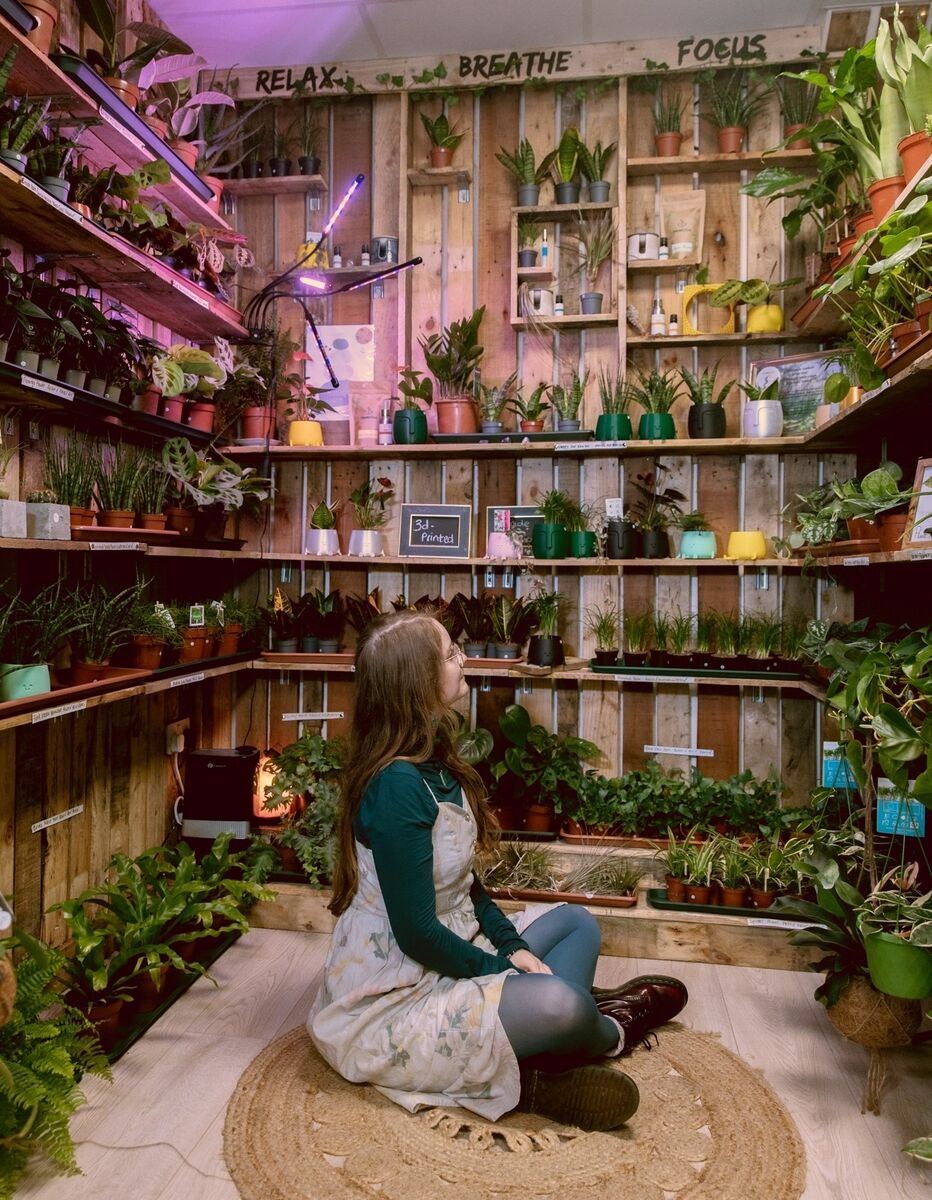
Louise Ryan in her shop Sunfleck, in Dungarvan, Co. Waterford. Picture: Milana Ziedelyte

Houseplants continue to grow on us, and it’s not just for their leafy loveliness. Louise Ryan is the owner of Sunfleck, a houseplant shop with a difference in Dungarvan, Co. Waterford.

She has this to say: “When people come in, they tend to tell me a lot more about their personal life than they intend to. It’s about switching off but [also] opening up the mind.”

Intrigued by its unusual name and extra signage stating “natural support”, I wander in with my daughter one morning after a fraught Ben Hur chariot race around Dunnes.

We find cloister-deep quiet, cloaked floor-to-ceiling in a rich, nurturing green. Light scythes softly through airy planting and points of jewel-bright grow-lights. 

The air smells strange and fantastic, and our shoulders spontaneously drop. 

Paused in the mesmerising canopy of plants, surrounded by reclaimed timber panelling, I knew I had to learn more about the owner/creator of this meta-physical fairyland. I would not be disappointed.

Louise Ryan is young, and highly qualified academically. She holds a BA in Zoology and Botany from the University of Galway, and an MA (Residential) in Plant Science from University College Cork, which involved a good deal of travel.

Her curiosity and passion for the science around plants is clearly undimmed.

Louise Ryan outside Sunfleck. Picture: Milana Ziedelyte

A fresh generation of progressive houseplant sellers like Louise is bringing new awareness to an old business. 

With a public hunger for alternative solutions to guard and enrich emotional and mental health, some retail horticulturists now also offer advice on holistic wellbeing, including the perceptible feelgood of living with plants.

How did Louise come to open this remarkable, grounding shop, rather than rooting around in rarefied fieldwork?

As it was for many, the disruption of the covid pandemic was a watershed in her life: “I’m not sure what happened to our brains over that period, but we were out of our own routine for a very long time. 

We started to question what actually meant anything to us anymore. Many people left their jobs and changed where they lived. 

"What happens now? When covid hit I was based in Cork city, working to live, managing a vegetarian restaurant.”

Despite enjoying the human interaction (something she had yearned for during the intensity of what was essentially a mini-PhD), Louise used the enforced retrenchment of spring 2020 to catch her breath. 

She took up an invitation to live with her partner’s parents in Tipperary, while she considered how to get back to something physical and above all, working with plants.

Louise worked for a period in a plant nursery and a health shop, before moving down to Dungarvan in Co. Waterford. Her mother’s partner Tony challenged her, simply asking her what she would like to do — right now. 

She didn’t hesitate: “I knew I wanted to have a learning centre where I taught people how to interact with nature, showing them how to get their hobbies and interests going again.

“Retail was Tony’s background, so he told me to work up a business plan. He gave me the chance to pursue the dream, and convinced me that once the idea was solid, everything else would fall into place — and here we are!

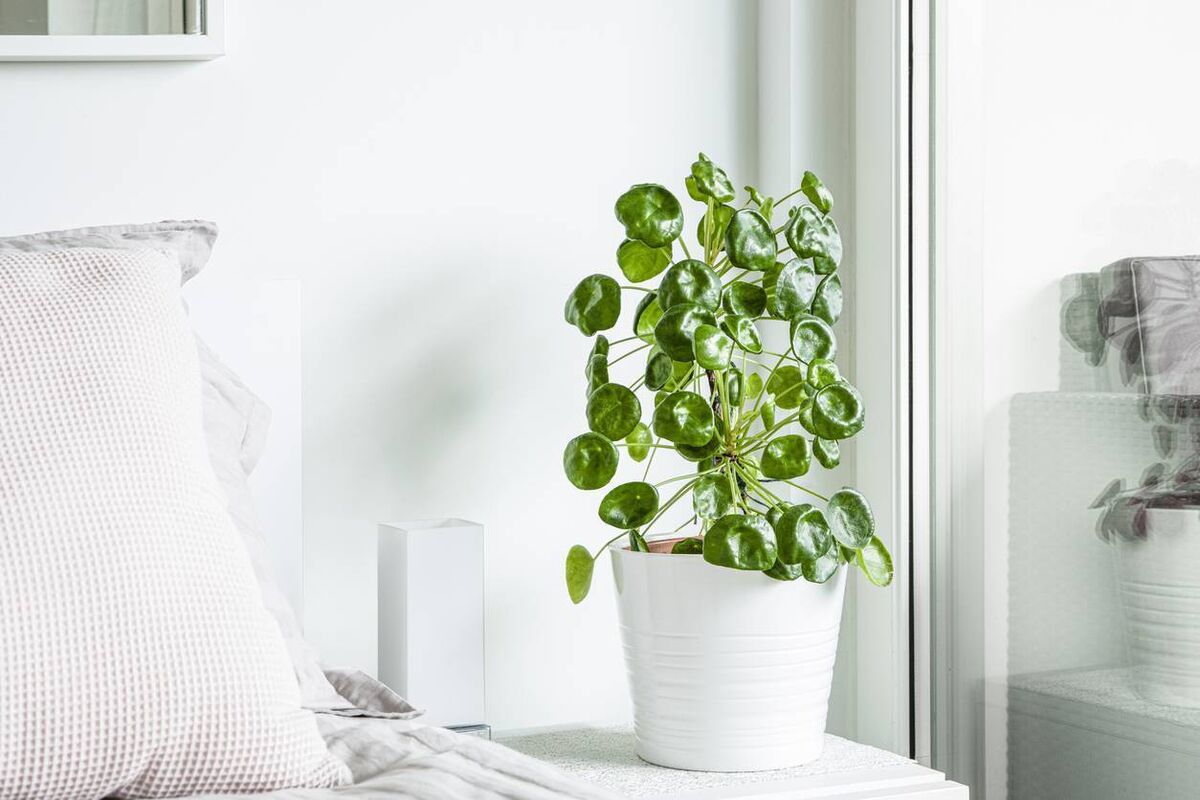
Bringing plants into close proximity can promote balance and grounding in nature, even from the moment we open our eyes. Bedside positions are Louise’s favourites for the plants she sells. File picture

“Sunfleck was a botanical term that had stuck with me from my undergraduate days, and it felt vivid and meaningful, which is what I wanted for the shop,” Louise explains.

“In terms of this space, I wanted to create somewhere to buy plants that didn’t look like a shop — more of an experience of scent and sound — a sensory, tactile, stirring environment where people could escape from their day for 10 minutes.

“We started with house plants and built out from there.”

Promoting plants for their proven but previously unappreciated influence on well-being has been taken up by enlightened houseplant suppliers around the country, including Verde, Ballyseedy, Hanleys, and Deep Route Gardening of Cork.

For many of us plants are just a decorative, aesthetic tool, but the roots of this attraction run deeper. 

Louise explains, “We’ve always known innately that nature makes us feel well. Now we can prove it scientifically.”

She points to a 2022 Chinese study that led to houseplants being described as a “green prescription”.

Research covering 400 people living in urban areas found that those who owned houseplants had better mental well-being and a marked connectedness to nature.

Sunfleck, Dungarvan, Co. Waterford.

“Houseplants have become popular again as we run out of space in the urban jungle,” she explains.

“I started to research the connection between plants and wellness.

“When I was an undergraduate, ethnobotany had nothing to do with well-being and was focused on making medicines, herbalism, and issues around deep physiology rather than concepts like mindfulness. This sparked my interest, the latest research exploring how our stress is decreased by plants.”

“I had only thought of biophilia (a word coined as late as 1984) as interior decorator-speak — palm prints on wallpaper.”

Louise explains it has another meaning. Something happens when someone connects with a plant.

“It’s the genetic tendency for humans to be drawn to nature and to seek it out” she continues.

“For instance, plants that look like trees or have a trailing or vining character, elicit a response in us.”

I wondered if this had to do with gentling architecture and taking out sharp corners. Nature seems to place everything perfectly — for example in a hedgerow.

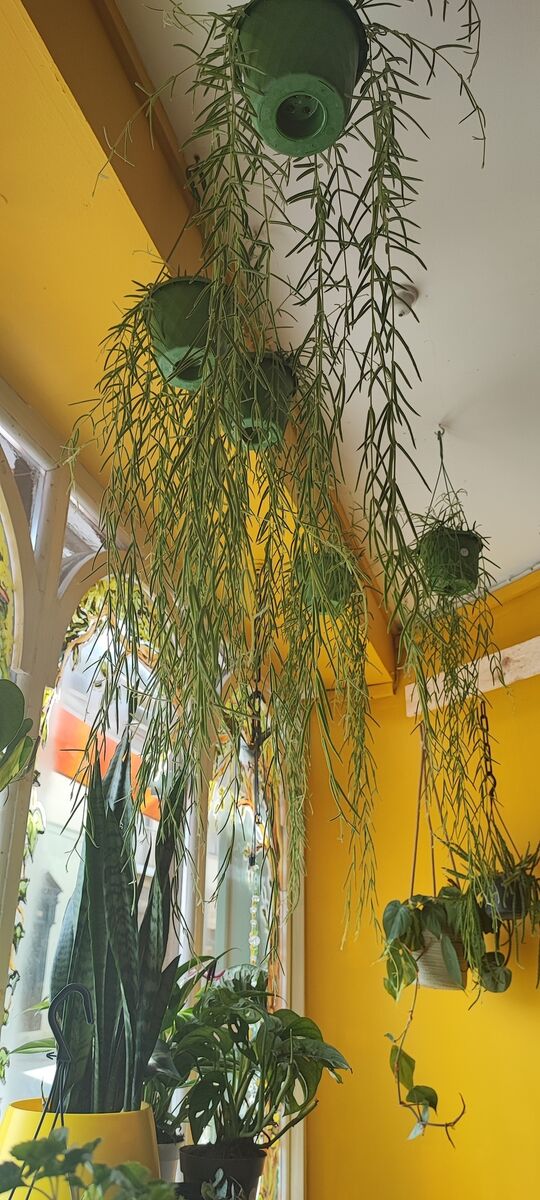
Hoyas are trending, including this Hoya linearis, a hanging/trailing plant, also known as the green curtain.

“Yes,” Louise replies, “boxes don’t exist in nature, but they are all over our homes. One study found that we are not really intended for these organised spaces that we idealise, as it doesn’t mimic anything in nature. 

"The parts of the home that are intended to enrich you should be a maximalist, a combination of texture and colour, but not just random commercial stuff.”

Placing a plant, have we been getting it all wrong? Louise has noticed that conventions around where we think plants should be can separate us from being truly present with them.

“For instance, I will have customers who come to me and ask for a plant for a hallway or bathroom. 

"My question is: Are you spending much time in the hallway or bathroom? If the answer is no, then we talk about where the plant might be in closer proximity, evoking joy in a favourite space. 

So, where do you spend your relax-time? That’s a confronting moment for some people.

“They have to really think about it. Is it in the bedroom, do you like to watch TV, or hang out in the kitchen? Where is it?”

Louise suggests making living plants the first thing we see in the morning and the last thing at night — placing plants on a bedside table if possible.

“Plants being harmful in the bedroom is a myth. There are no studies to prove they denigrate air quality for most people. 

"My top spots are the bedside locker, or somewhere you can see the plant from the bed, around your TV (it’s just a big hard box that could do with softening) and workspaces. 

"Then we tease out the selection, looking at available light obviously, how far the plant might be placed from the light source and the amount of time someone has to care for a plant. 

"The shop might appear dark but it’s quite typical of the available light in many houses.”

Can plants manage dampness and condensation and even clean our air? “Yes,” Louise responds, “but this should not be overstated.

“They can act as air purifiers, but it depends on the size of the plant, the age of the plant and the time of year (we have more air exchanges in summer anyway as our windows are flung open). 

Louise Ryan in her shop Sunfleck, Dungarvan, Co. Waterford. Picture: Milana Ziedelyte
"You can’t expect a small snake plant to valiantly muscle through dirty, dank air, and serious dampness is not solved by plants.

“There is the opportunity to create a micro-climate if you place the plant as close to you as possible, for example on your desk.”

Each plant in Sunfleck is described by name and then on an in-house key of relax/breathe/focus indicating their positive, nurturing values other than good looks.

The repeating structure of some plants is associated with increased productivity. Within the shop, together with plants and all the accessorising you could need, there’s a determined sensory feel that includes natural smells in wax melt diffusers, candles and chemical-free lifestyle goods.

Still a scientist, Louise reminds me that smell is our most primitive sense in terms of creating memories and changing our moods swiftly. 

She engages with small Irish companies who share her strong environmental principles including gut health and skincare in the holistic atmosphere of Sunfleck, which she terms natural support.

I think the sort of wellness I offer is somewhere between medicinal and a health shop — it’s supporting your daily routine.

“People come in and talk about things they don’t usually talk about, and I really like that. They feel relaxed and free of judgement.

“I’m not a therapist, but it’s wonderful to have people drop by at lunchtime and just say they needed some time to relax and breathe. I wanted to do that with this place — to make a little bit of a difference, to change their mindset. 

"I knew it might make people happy, but not to this extent. It’s been a revelation. We do full after-care, and I get texts from customers who now have 20 plants in a collection, to tell me a single leaf has come out. I just love that.”

I bought a plant from Louise. He’s a flamingo plant, and I’ve called him Rory. He put up a leaf today and I felt good.

More in this section

Revoiced

Newsletter

Sign up to the best reads of the week from irishexaminer.com selected just for you.

Cookie Policy Privacy Policy Brand Safety FAQ Help Contact Us Terms and Conditions

© Examiner Echo Group Limited