Peter Dowdall: Nasturtiums may be unruly but they add joy and colour to the garden
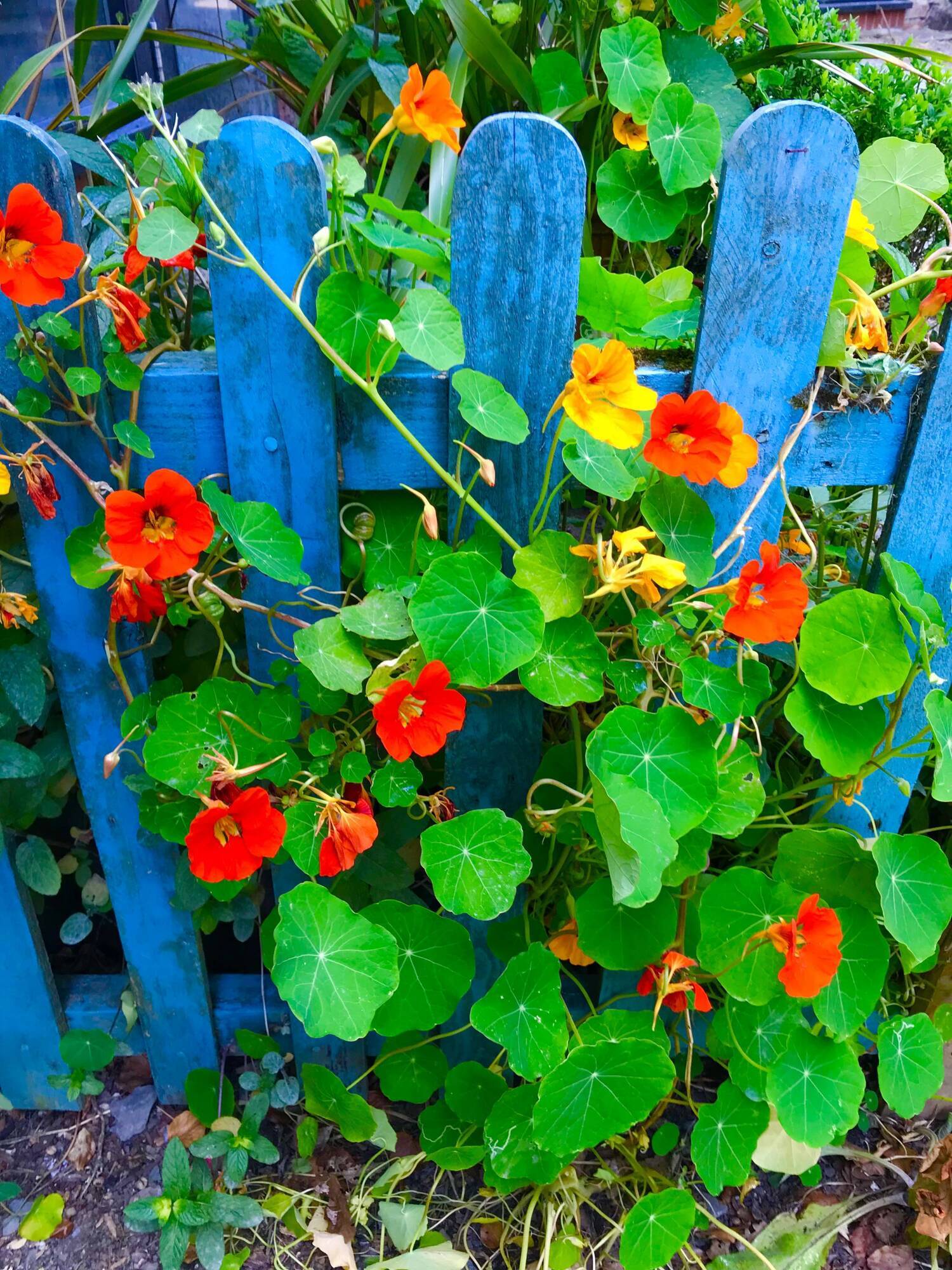
They are a bit unruly perhaps, but nasturtiums bring so much colour, life and value they're always welcome in Peter Dowdall's garden. Picture: iStock
They're a bit like an unruly guest — once they get comfortable nasturtiums will spread themselves everywhere with ne’er a thought for their neighbours but they bring such joy, beauty and other values to the garden, I forgive them a multitude.
One of the easiest plants to grow, nasturtium adds vibrant colour with its blooms in shades of orange, yellow and red, flowering freely and profusely until the frosts put paid to their fun at the tail end of the year.
It is a one-year plant but at the same time, a plant for life.
What I mean by that, is that each plant itself is an annual, completing its life cycle in one year but once you have planted just one, as anyone who has done so will attest to, you will have little nasturtium seedlings popping up for evermore.
I remember well, as a small child, sowing them once and in the following years waiting to see how many different coloured forms would emerge.
It is a great value plant and a good one to start with kids, as, because they germinate and grow very quickly, the younger and more easily distracted amongst us, don’t have time to forget about them and lose interest.

Nasturtiums like as sunny a position as you can give them which should come as no surprise as they are native to South America and they prefer poor soil.
Good, nutrient-rich soil with loads of added organic matter and plant food will lead to plenty of leaves but not so many flowers. Like many annuals and in particular, wildflowers, nasturtiums want the opposite.
For such a fun and light-hearted plant, it’s perhaps hard to believe that it can play such an important role.
All parts of the plant are edible, and the leaves and flowers are often used in salads. I do like my food with a bit of a kick but I must say that I find the flavour from nasturtium very strong and it’s not to everyone’s taste.
I have never been brave enough to try the seed pods as I am told they are the part of the plant that is strongest in flavour, so if the leaves and flowers burn the mouth off you, then perhaps try pickling the seed pods instead.
Don’t wait for the seeds to ripen, rather, gather them and pickle them whilst still green, a great alternative to capers, I’m reliably informed.
Whilst the leaves are very peppery, mixing them with some cheese or other, more bland salad leaves, dilutes the taste and a good munch of nasturtium leaves will benefit your health as they are rich in Vitamin C and the compounds within have strong antimicrobial and antifungal properties, hence the recommendation of nasturtium oil as good for preventing sore throats, coughs and colds.
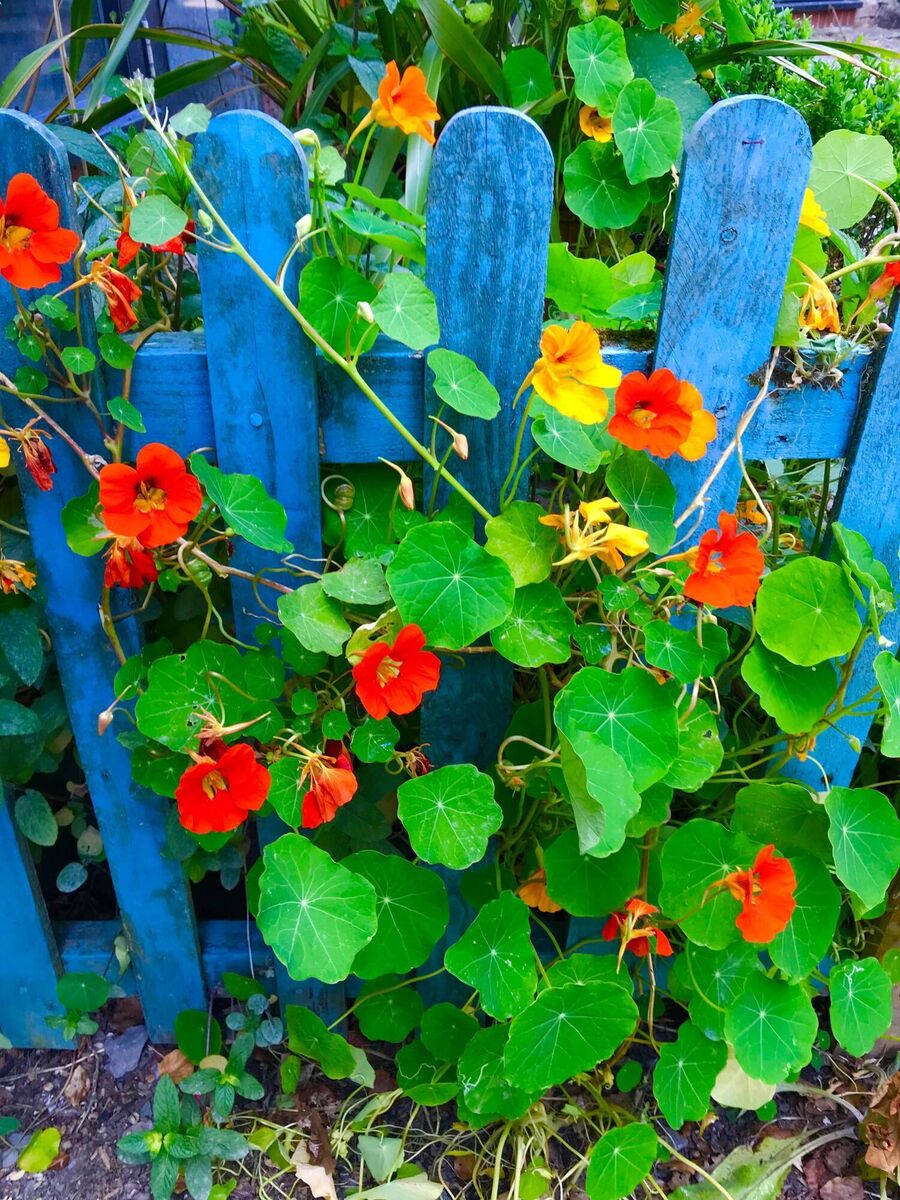
It’s not just the leaves that have health benefits, the flowers, seeds and foliage all offer myriad herbal remedies said to heal all, including the aforementioned sore throats, cuts and grazes due to its antiseptic qualities and fungal nail infections.
As with all herbal remedies I would strongly advise getting correct advice from a medical herbalist or doctor before treating oneself. Anything that is that strong and effective needs to be handled correctly and the leaves used on the skin to treat cuts can lead to skin irritation and burning so be careful.
As if beautiful flowers, foliage which traps water with such beauty and a plethora of health benefits weren’t enough, nasturtiums play another, extremely valuable role in the garden. That of a companion plant.
Before the days of gardeners being told to rely on chemicals and pesticides for the best results in our gardens, companion planting was the main tool in protecting plants and crops.
As far as companions go, there’s few can beat the humble nasturtium.
Plant it near others which may be prone to whitefly and other aphids for the leaves' essential oils will deter aphids and other pests and the flowers will attract hoverflies who feed on, you guessed it, aphids. Just be careful not to plant it too close so that it doesn’t overpower anything growing near it.
It’s often grown to sacrifice, in other words as a control plant.
If it is growing near brassicas such as cabbage and broccoli, it will attract the caterpillars of the cabbage white butterfly who enjoys little more than a feast of nasturtium foliage, thus drawing them away from the valuable vegetable plants that you want to protect. What more can a companion do, if not quite giving of its life, then certainly taking the hit for his friends in this way.

- Got a gardening question for Peter Dowdall? Email gardenquestions@examiner.ie

CONNECT WITH US TODAY



Be the first to know the latest news and updates