Donal Hickey: The story of the mysterious salmon is as old as time
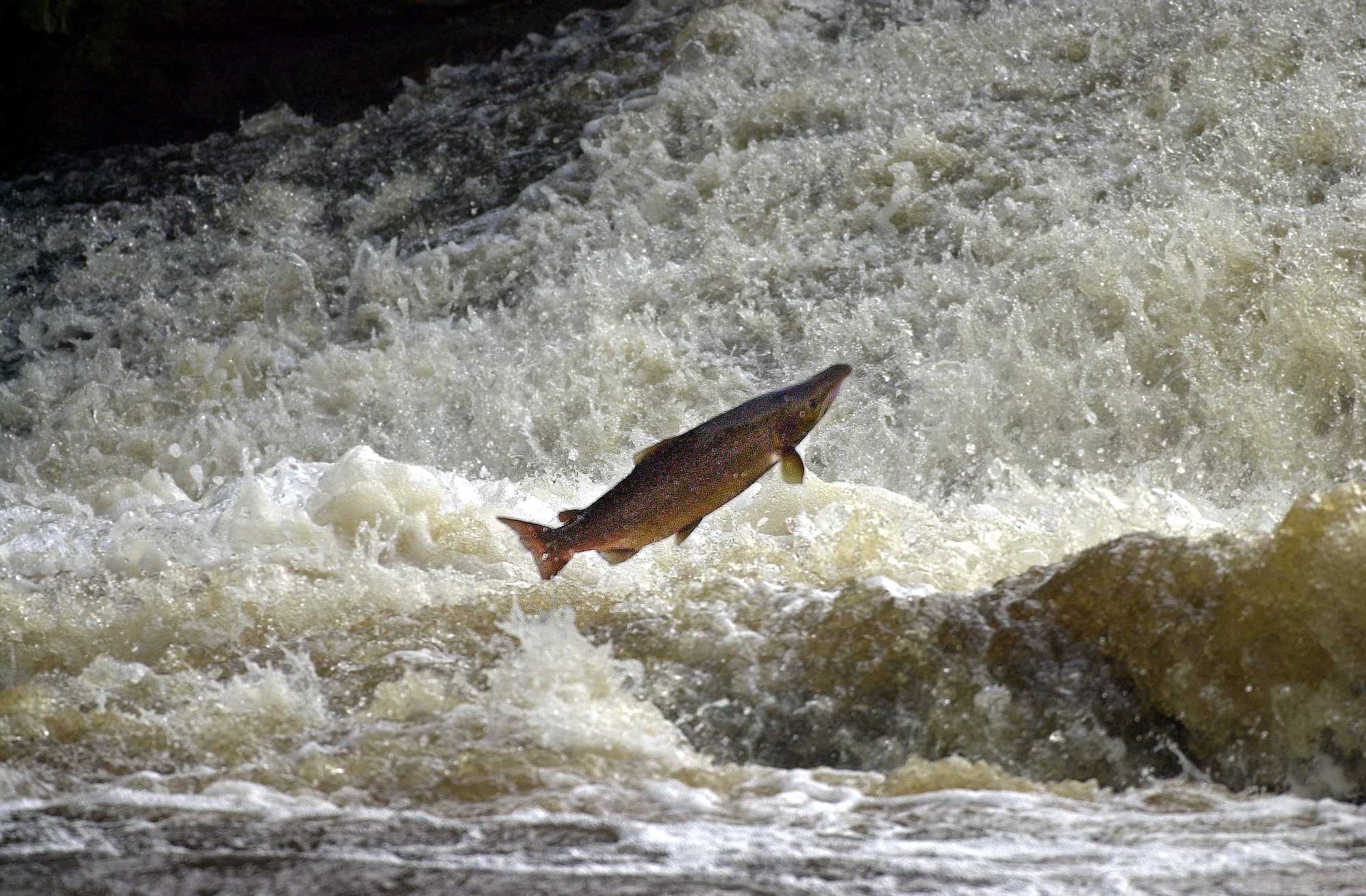
Salmon jumping over the weir on the river Blackwater in Fermoy.
If you walk along a riverbank these days you just might be lucky to witness a wonderful spectacle. It’s all about something which starts life as a pea-sized egg and later heads off to the wild Atlantic.
In the ocean, it can travel for thousands of kilometres before eventually returning as a fully-grown fish to the exact place of its birth. Everyone loves to see wild salmon leaping over various obstacles such as waterfalls and weirs as they come back to spawn.
They are known to jump, some might say fly, as high as three metres as they make their way upstream, for they must return to their birth rivers to complete their fascinating lifecycle.
Growing up by the Blackwater in times when salmon were numerous, we remember the annual spectacle as they made light of cascades on this and other rivers. Getting past waterfalls, weirs and man-made hindrances, salmon provide gymnastic displays until the end of the run in late November.

Early morning and evening are the best times to see them, with a period of rain after a dry spell creating ideal leaping conditions.
Similar to the annual deer rut in Wicklow, the Phoenix Park and Killarney National Park, the salmon run attract sightseers. The Corrib, in Galway, and stretches of the Moy, in Co Mayo, have popular viewing spots.
On the River Bandon, Co Cork, there’s an old weir at Kilcoleman with a modern fish pass to allow salmon and sea trout pass upriver. They can be seen jumping at high water. Anglers around Fermoy and Cappoquin also point to a number of places in the Blackwater that offer the spectacle.
On the homeward journey, parent salmon succeed against all the odds. Entering freshwater, they stop feeding and devote all their energies to reproduction. The female lays her eggs, which she secures under loose gravel on the river bed.
Immersed in legend, the story of the mysterious salmon is as old as time. Nowadays, however, scientists have a wide range of techniques to study its complex life cycle. Tagging, tracking, DNA and the study of habitat and climate change research are all used.
We’ve had warnings for decades about extinction threats to the so-called king of fish, which is under threat from predators, changes in ocean temperatures, poor water quality, illegal fishing and sea lice from fish farms, to give just a few examples. Experts now believe most of the problem are at sea.
Numbers returning to Irish rivers peaked in the mid-1970s at 1.7m, but have dropped to around 250,000. A slight improvement in the situation last year offers some hope, though the salmon still faces almost impossible odds in its fight for survival.