How to use and enjoy small antique tables and desks

A gate-leg table in action in a humble 19th-century home. Look for signs of work clamps from sewing. Henry Peach Robinson's 'When the Day's Work is Done', 1877.
LET'S add to our knowledge well with a little walk through some popular desk and small table buys at auction and antique fairs that you might spot in 2021.
The Sutherland table is said to have been designed in 1822 for Harriet, the Duchess of Sutherland (1806–1861) — a likeable gal-pal of Queen Victoria, who led a group of society ladies against the prevalent attitudes towards slavery. These elegant drop-leaf table types are a dealer’s favourite and would have been one of several small sewing, gaming and tea tables standing ready for duty in a drawing-room. With two hinged flaps resting on gated legs and a fixed trestle, the dainty Sutherland has a really handy, very slim centre plank to the top (15cm–20cm), deliciously long flaps almost to the ground, and can be composed into three layouts.
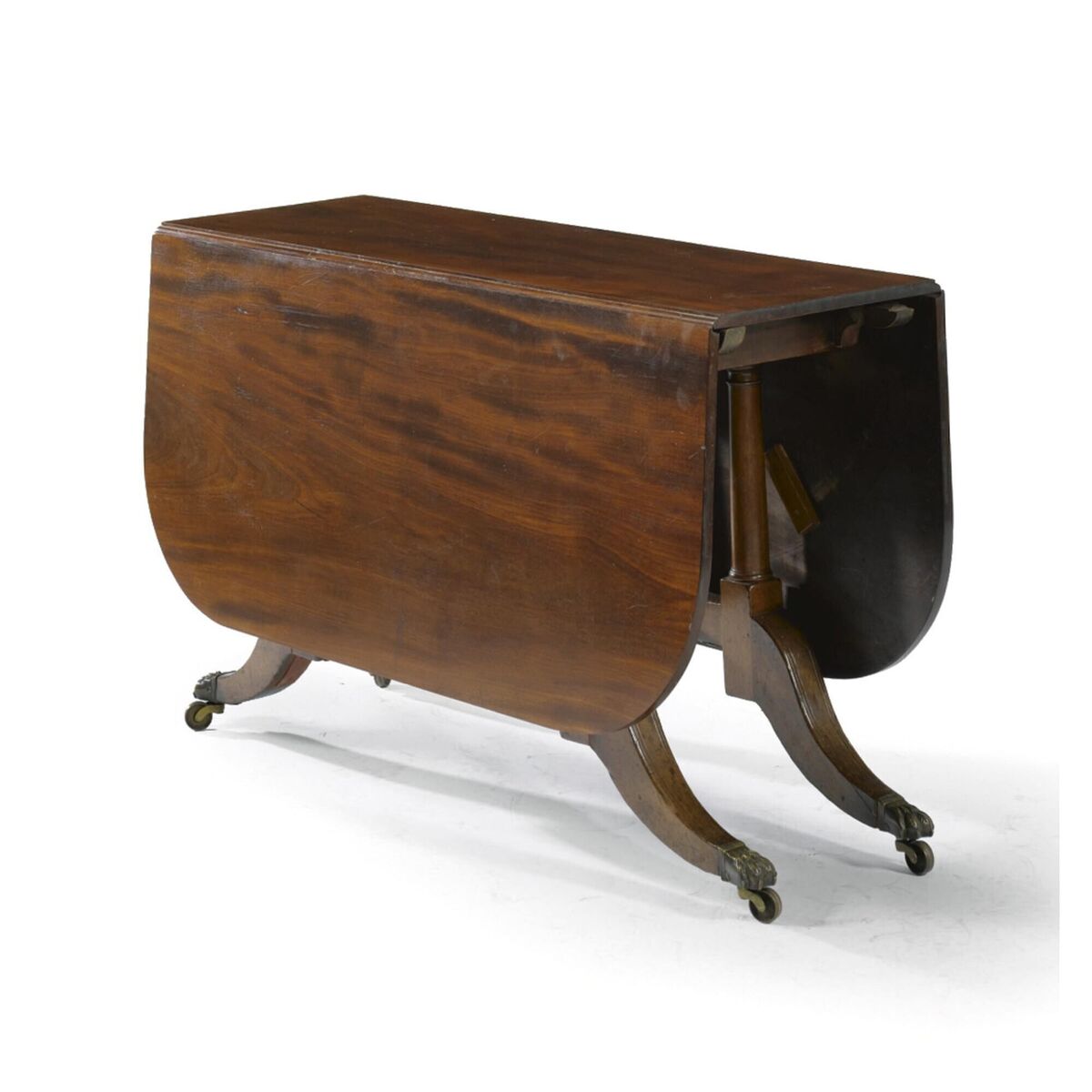
If you have a compact area — a Sutherland is perfect for a versatile serving table and can stage pretty vignettes of ornaments on one or two raised surfaces. At the upmarket end of the drop-leaf division, the timbers used for the top tend to be highly figured - ideal for sending characterful glow out of a dark corner. Look for early 19th century pieces with scrolled and/or turned gate-legs and stretchers without a wobble (burr walnut mirrored veneer is gorgeous but look out for worm). Later Edwardian examples in oak and even mahogany can be picked up cheaply and with less fussy lines, are a great buy from as little as €100. A serpentine top, cleaned, waxed and polished well, could push the price of a Victorian Sutherland into healthy four figures. Take advice.
Connected to another aristocrat, the 9th Earl of Pembroke, Henry Herbert (1693–1751), the Pembroke is a useful, handsome design of table, superb for setting by a wall, in a corridor or using as an alternative to a sofa table behind a low couch. Some historians argue the design of the Pembroke is even older dating to the time of Mary Herbert, It-girl and Countess of Pembroke (1561-1621) — a wild entertainer of artists and poets in her home. A must-have in iridescent satinwood from the 1770s, it’s another drop leaf, but this time with four fixed legs and a much wider top. With a drawer at one or both ends and two stout flaps floated up to suit the occasion — you could dine from a Pembroke, write on it or use it anywhere in the house where another surface was needed. Casters allowed it to be rumbled around, providing extra seating for cards or gaming.
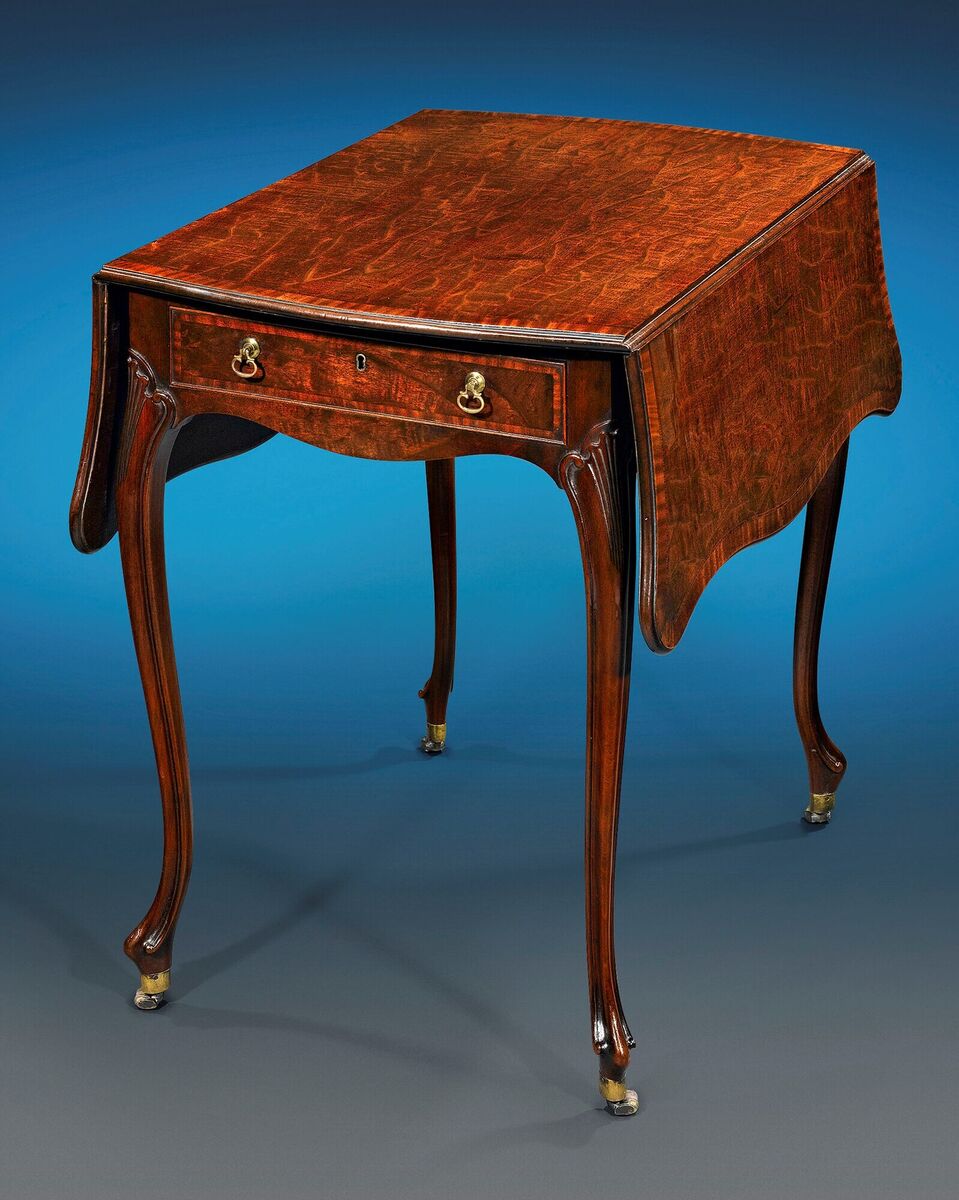
The design trickled down through society in the 19th century, interpreted by country joiners and celebrated cabinetmakers alike. Old oak pieces are as hotly sought out as exquisite veneered Hepplewhites and Sheratons. Today, fine Neoclassical Pembrokes are often seen in pairs, butted up against a roll-top sofa as luxuriant end tables or even deep bedside tables — muting the action of one flap. Take a look at the legs to date your Pembroke, which may be turned or tapered with a variety of feet and caster types. Explore country tilt-top tables and other oak occasional in plainer forms for something to slip into even a modern room-scape.
A variation on a Pembroke table, most sofa tables today sit facing out along the back or side of a sofa rather than wearing a wall. Sofa tables are treated as decorator consoles, and seen covered in hefty books and vintage bits and bobs behind a low backed sofa. This belies their original purpose, which was to slip into position for tea in front of the seating area — hence the castors, drawers on both sides, and set-back sabre legs. To recognise a sofa table, look for short rectangular flaps to the short ends of a long side table and one or two frieze drawers on the front (with matching dummy drawers) — flashy carving/turning to the legs, capped brass casters and some cross-banding, stringing or another inlay.
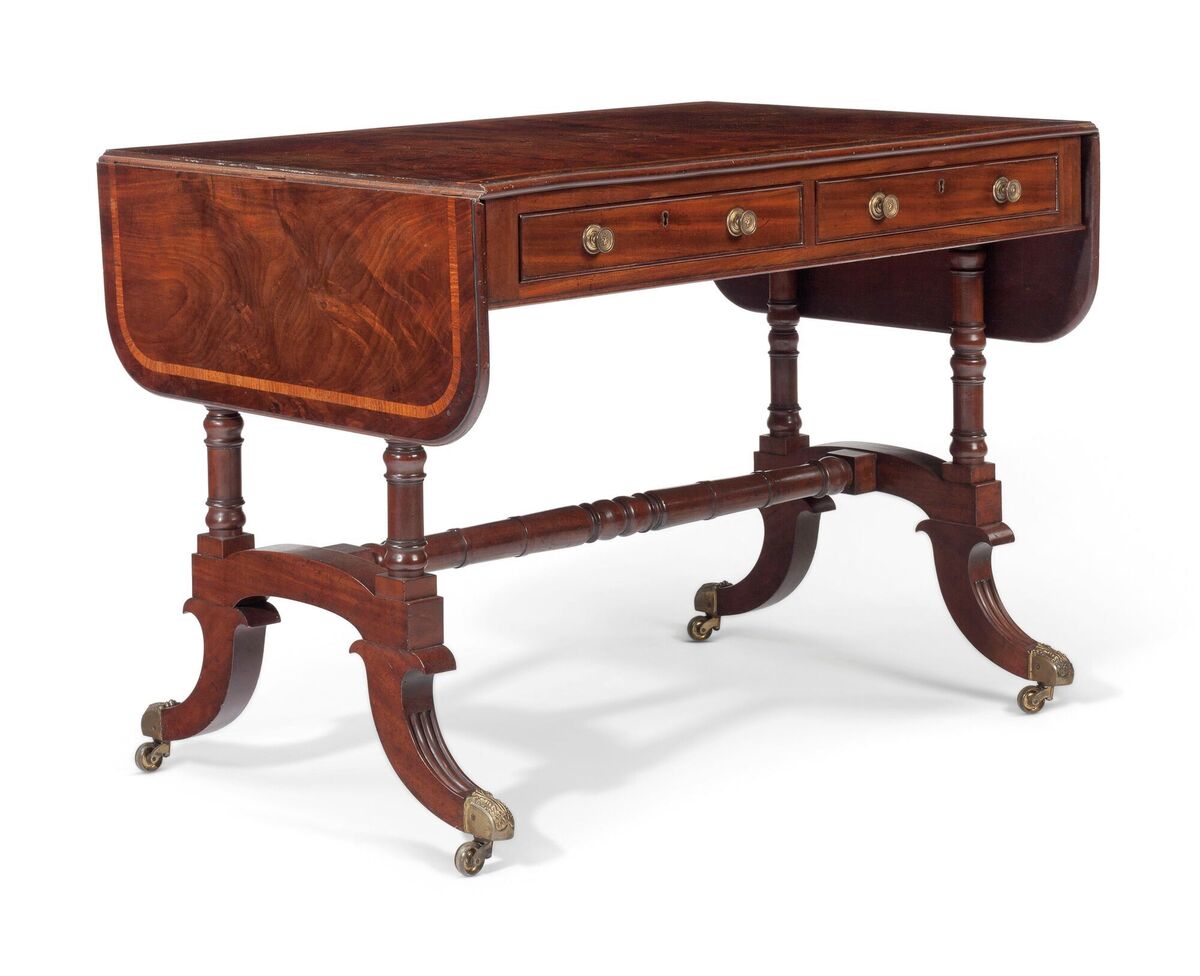
Generally larger than the Pembroke, sofa tables make sumptuous hall tables and consoles — just don’t dump down vases of flowers on any withering veneer. 19th-century sofa tables often have central supports. Some people use their sofa table as a desk — fine if any stretcher is set high enough, and the surface is stable and at least 600mm wide. Be careful about expecting a piece of antique or vintage furniture to suit a modern job. A few millimetres off in height (generally in the area of 712mm to 762mm) can lead to serious back-ache. Rosewood sofa tables demand a premium for their almost violet shade of figuring — auction stars.
The Davenport desk is one of those pieces that’s hard to position unless you have hectares of nostalgia room in a great big, period house. Imagine an old school desk where you write on a lift top slope finished in leather, juiced up into a grown-up piece of furniture with side drawers to the ground and slightly obese front supporting pedestal legs. There was sometimes a galleried top piece allowing for little nooks and drawers over the writing space — it looks rather like a little piano. Davenports with finished backs were intended to stand in the middle of the room.
We know exactly where this desk type came from — as the Davenport was a commission for the furniture makers, Gillows of Lancaster in about 1810, by a Captain Josiah Davenport 1771-1836. He was a ship owner — so may have intended this small writing table to go onboard — no one is certain. Again, it became popular as a Bonheur-du-Jour type of private desk, where a woman could sit and write a few letters and settle household accounts.
Find out about this and other girly scene stealers here
A late-Victorian mahogany like the bosomy "duchess" dressing table is a regular victim of amateur re-polishing to an eye-watering tangy orange. Expect to pay at least €1,500 for anything of age and quality from a knowledgeable dealer. Looking for a decorative console table to throw letters and keys or lean a nice painting? Don’t be afraid to re-imagine various forms of lumpen brown antique furniture — dresser bases, chests, cabinets, chiffoniers, credenzas, bureaus, gate-legs and side-tables — often orphaned bargains at sale, with perfect joints and tough as hobnail boots.


CONNECT WITH US TODAY



Be the first to know the latest news and updates