Richard Collins: Dogs’ behaviour inherited from wolves
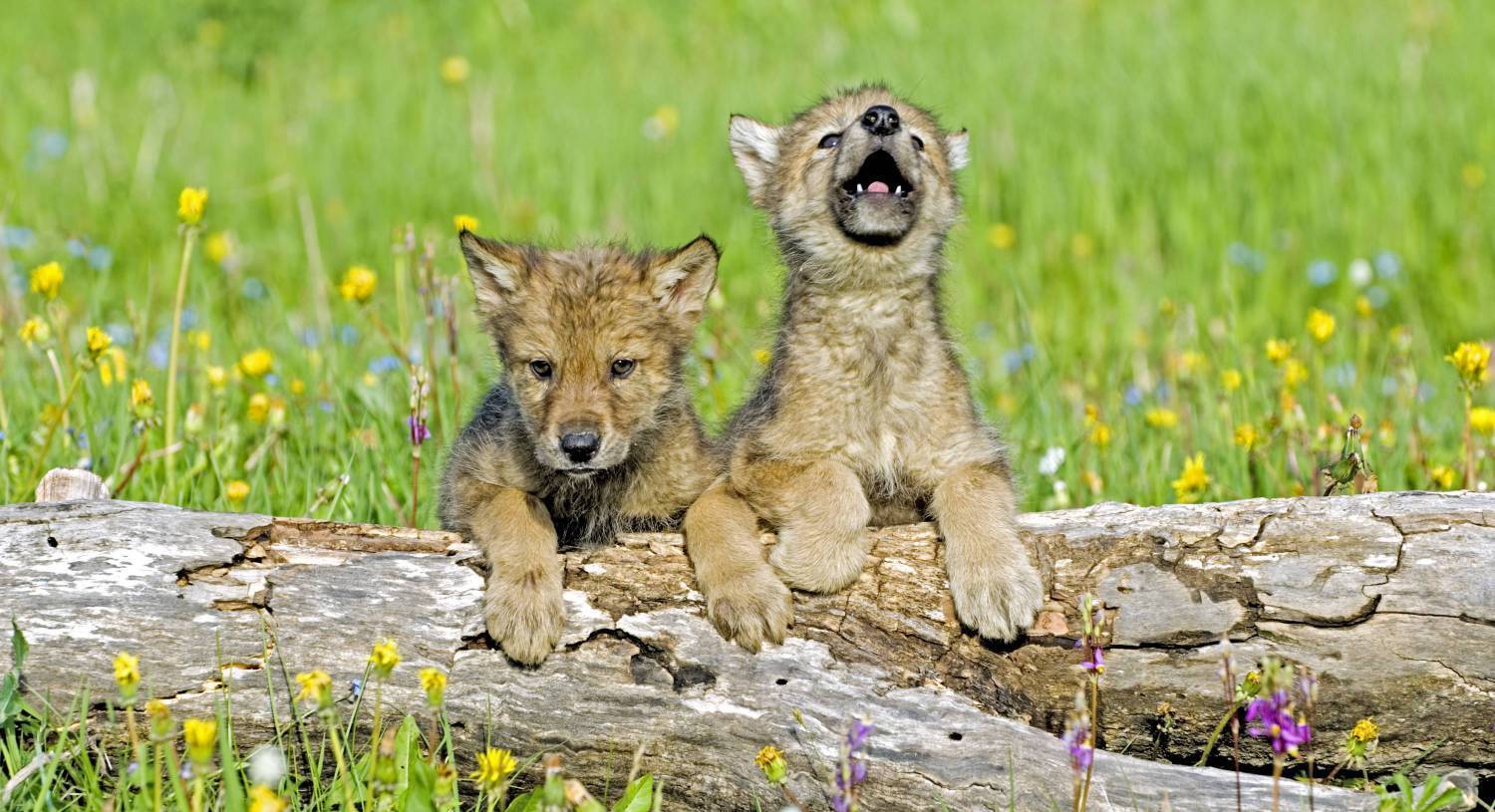
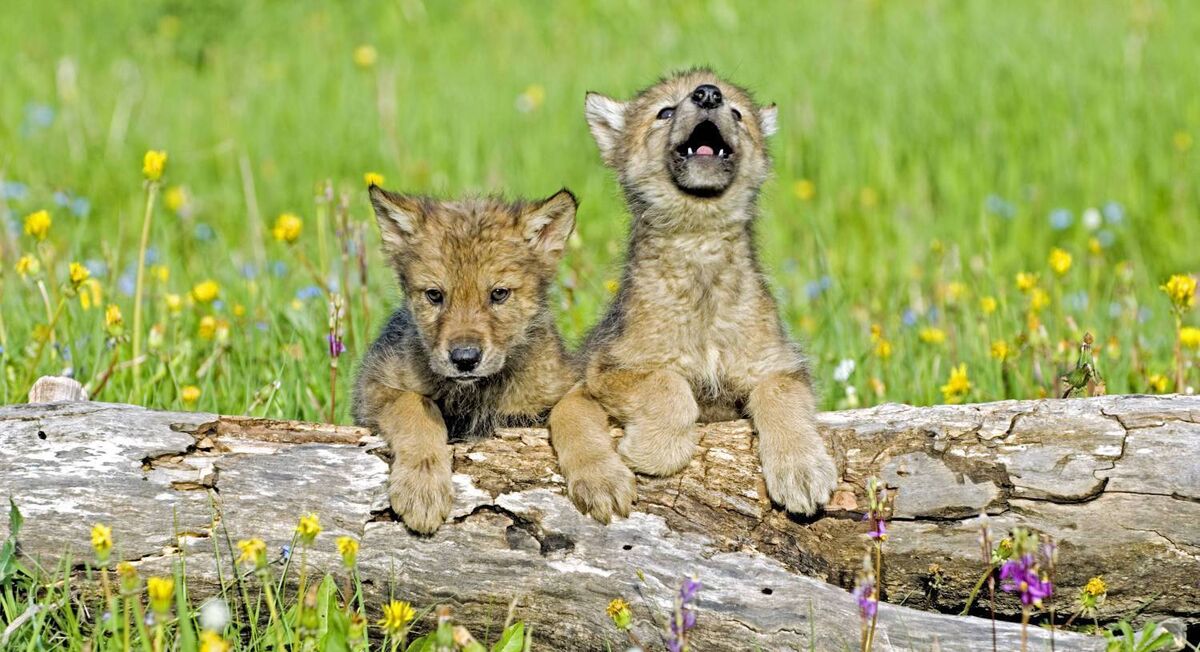
DOGS love to chase a ball. Were they taught to do this by our ancestors? An animal able to retrieve carcasses would provide a valuable service during hunts, as wildfowlers’ dogs still do today. Pups responding well to human commands could have been selected and trained. Now, however, a discovery made at Stockholm University is challenging this idea. Retrieving, researchers there claim, is not an artificially acquired behaviour. It’s innate, inherited from the dog’s ancestor of at least 15,000 years ago, the wolf.
Christina Hansen Wheat and Hans Temrin have studied the effects of domestication on both dogs and wolves. Her team hand-raised dog and wolf puppies under identical conditions and compared their performances in behavioural experiments.
In one test, a ball was thrown across a room. Dog puppies were encouraged to retrieve the ball and most of them learned to do so immediately. Then the test was given to wolf pups from three different litters. Those from two of the litters failed to respond to the ball, but some of cubs in the third litter did. Three of 13 eight-week-old puppies “showed interest in a ball” and, when encouraged to do so, fetched and returned it to their handlers. They did so even when the ball was thrown by “a perfect stranger”.
Wheat and her colleagues were astonished. “I literally got goose bumps,” Wheat told Science News, “it was so unexpected”.
The behaviour showed that fetching, and the ability to respond to cues given by humans, are innate in wolves. Retrieving things thrown for them is, therefore, a behaviour which dogs inherited. It was not just the result of training. Wolf puppies, capable of human-directed behaviour, “could have had a selective advantage in the early stages of dog domestication”, says Wheat.
This is not the first occasion on which wolves have got one over on dogs. Three years ago, researchers at the Wolf Science Centre in Vienna claimed that wolves have a better understanding of cause and effect than dogs. A team there investigated the cognitive skills of 14 dogs and 12 wolves.
The dogs and wolves were given a specific task; to find food hidden in one of two boxes. Both species responded to visual cues given by experimenters as to correct box; the animals would go directly to a box pointed out to them. However, the helper had to maintain direct eye-contact with them when doing so. Without eye-contact, neither dogs not wolves responded to pointing.
Faced with finding the correct box on their own initiative, the wolves proved more successful than the dogs.
An empty box, for instance, is not noisy when shaken, whereas one with food items inside it rattles. Wolves, but not dogs, grasped this.
Such tests, the experimenters conclude, indicate that wolves have a better understanding of cause and effect than dogs.
Not everyone agrees. Wolves must fend for themselves in the wild, whereas dogs have their food served up to them by their owners. Perhaps dogs are just ‘laid back’, out of practice when facing the kind of task wolves encounter constantly in the wild.
CONNECT WITH US TODAY



Be the first to know the latest news and updates