Unique ambience of Dursey Island under threat
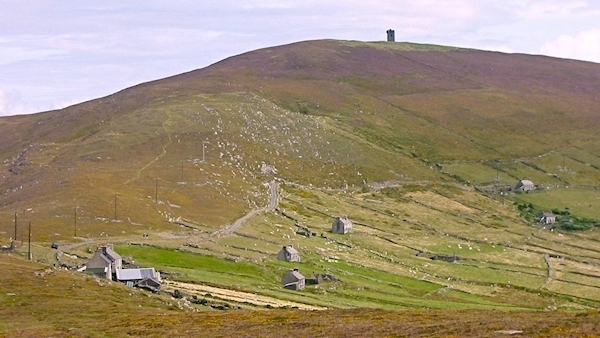
In our country we still have places that bear no evidence of disturbance by man, that are in their pristine state and rich with all the elements that feed the spirit and deliver us into the world beyond the skin of the time and circumstances we live in.
Dursey Island, isolated in the sea at the tip of the Beara Peninsula in west Cork, is one of those places. The sparse evidence of human presence is historic, generic and part of the view.
The island is known for being served by Ireland’s only cable car, a stout box that transfers its few residents and, hitherto, the animals that graze its wind-shorn acres back-and-across 26m above the tidal race of Dursey Sound. Its isolation is its wealth, a boon for those that walk the lonely coast beside the infinite ocean, under the sky empty but for birds.
Now, suddenly, everyday commerce and ordinariness, business and stress threatens its unique character and essence. It is adjacent to The Wild Atlantic Way and, by the tenets of that ‘goldmine idea’, is ripe for exploitation, a pawn in the game.
As in other places ‘transformed’ by the cash-in visionaries, not everybody is happy with the idea.
The value of the spiritual uplift delivered by sites such as Dursey is not to be had elsewhere. The stones of ancient abbeys and earthworks, the poignancy of ruined, unplastered houses lost against the fields, the scutch grass, gorse and heather above the shimmering ocean have a potency that only time can create but money can quickly take away.
The ozone in the lungs, the sights entering the eyes, the peace entering the mind, the cries of the birds in the ears, together they can transport us from the bubble of ‘now’ into a dimension beyond the solely physical and cerebral worlds of everyday. We are told that time spent in the world of nature brings peace. But we can’t find that world if it is no longer there.
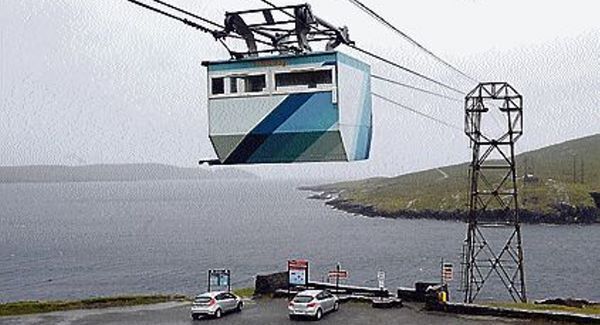
Cork County Council, if it succeeds in transforming Dursey Island and the adjoining mainland into a tourist mecca, will be selling something unique for something ordinary. The very character that attracts visitors to the island will be gone. This is self-evident. So why would any responsible authority propose it?
The €7m project involving twin cable cars built to carry 300 passengers back and forth per hour, a mainland ‘terminal’ with cafe, carparks and souvenir stalls, an island ‘terminal’ across the sound; these will suck out the magic of Dursey. The dark choughs with their red legs and beaks, their shiny, ragged feathers and their piercing cries as they tumble in the air symbolise the island’s wildness.
Since visitors numbers have increased, their numbers have declined. In the tourist mecca, the pathways will be choked with humans seeking a wilderness experience no longer, like the choughs, to be found.
It is our own Cork tourist enterprise board that proposes the end of the rough-hewn gem of Dursey Sound and the majesty of Dursey Island. We have seen the crowded boardwalks on the Cliffs of Moher, The Moher experience is no longer awesome, less a revelation and more like a visit to a shopping mall.
When visitors come to Beara, they come to see the beauty of landscape and seascape and to feel the sense of ‘otherness’ that inhabits such places.
It is invisible, yet tangible. It is powerful and often indelible in the memory of the traveller, a moment when there was no noise, no distraction, only the presence of the land, its weather, its ghosts, its history, itself.
“Silent upon a peak in Darien”, John Keats, the poet, wrote of a Spanish adventurer upon first sighting the vast Pacific Ocean: the view of the Western Ocean across Dursey Sound from the tip of Beara is, for those who first see it, a similar moment. It will not be so when cafes and carparks and mecca-seekers fill the view.
As to the real and present danger, Tony Lowes of Friends of the Irish Environment tells me he cannot believe Bord Pleanàla would ever grant permission for a project that clearly will change the character of the island beyond recognition. Readers of this column and conservationist that I know say the same. Visitors, yes, of course must be allowed (that is axiomatic) but numbers can and must be limited and scenic impact minimalised; there is no other way.
I hope readers who feel as I do will demand Cork County Council itself, or Bord Pleanála, stop the thing.
Otherwise, another iconic piece of our coastline will be more lost than if it were washed into the sea.

CONNECT WITH US TODAY



Be the first to know the latest news and updates