Not just squirrels that go nuts over hazel and for good reason
on his love for Corylus avellana, its bounty of its food medicine and gardening materials
I ama big fan of hazel (Corylus avellana), I like the look of it, I love its bounty of food medicine and gardening materials and it is among the ‘plandaí’ of my psyche. My favourite story as a kid was the salmon of knowledge in which this tree features as the source of wisdom of the salmon and later as a teenager one of my favourite poems was the song The Song of Wandering Aengus by WB Yeats, in which this tree also features with prominence.
The hazel tree has a bit of prominence in my garden. I have a large specimen which once upon a time was brought up from a ditch in Kerry to be part of a garden I designed for bloom. It bears fine nuts and the pruning’s supply me with garden supports. I also have a few coppiced bushes which supply even more fruit and even more rods to weave boundaries between herbs or help hold peonies aloft.
From August to October the hazel’s long ovoid fruits begin to appear — encased inside the green lobed, thick husks are edible nuts. The nuts begin to ripen in mid-September usually simultaneously with the yellowing of the foliage. If you haven’t a garden specimen presenting this weekend, you can forage some in our abundant hedgerow of which hazel is a prominent if not even a protruding feature.
From wherever you may harvest, do keep the bounty dry — best to keep in shell until needed — to prevent the kernel from drying out. The nut is such amazing sustenance: Weight for weight with hen’s eggs, hazelnuts contain 50% more protein, five times the carbohydrate content and seven times the fat.
A real vegan/vegetarian hero. Don’t fret the fat — it’s the good type; monounsaturated fat. Plus it comes with sterols, vitamin E and dietary fibre — all of which support coronary and circulatory health. Monounsaturated fat is the fat type that helps to lower bad cholesterol. For every ounce of hazelnuts, there is roughly 12-14 grams of monounsaturated fat.
They also contain a decent quantity of manganese which supports good cholesterol production/balance. So a handful now and then is a great health boost. Hazelnuts are nutrient-dense and a great energy source, they feature in trail mixes because they get you to the end of every hike without a belly grumble — whether you grumble about the view, the company or the wrong shoes is down to your own psychology.
The nuts are full of vitamin b which help with energy levels and also nerve function. Those b-vits also help assist the metabolism of other foods we intake during the day. The high protein is good to instigate satiety — so less snacking and more feeling of fullness but it also helps build lean muscle and body strength.
The ideal garden snack for a day of digging over, trench making or other effort requiring projects. So, this is a perfect weekend to get some bare roots or even container hazels and expand your garden larder. Hazels do not like acid soils, prefer and perform better on neutral to alkaline. They like a well-drained, fertile soil. Plenty of humus added now will mimic natural habitat and supply fecundity for years to come.
They like sun but are well adapted to yield in partial shade too. They are a woodland edge plant so you could incorporate that into a forest garden type production, or you can grow in a row as you might blueberries or gooseberries. Roughly 2-3 metres apart. A row is great if you intend to coppice.
This is best carried out in early spring. Coppicing can often double the life span of the plant.
Some gardens prefer to keep as an open shrub rather than a hard cut back as one would cane fruits. Either or is a matter of style. A hard cut back will rejuvenate but it is not essential every year. You can just prune to shape. A hazel makes an aesthetic addition and will form a tree if left to it.
That can be down to space or it can be a matter of do you want to pick nuts or shake the tree? Pruned bushes are traditionally kept at 2m height.
Hazels do contain both male and female parts but are not considered self-fertile in a productive sense so a second or third plant will greatly improve yield. The male flowering parts are known as catkins and are packed with yellow pollen from late winter until spring, the female parts are often less visible but are beautiful red frills upon the tips of buds. I say this as it adds to the plants splendour but also to highlight a caution if you have allergies at home.
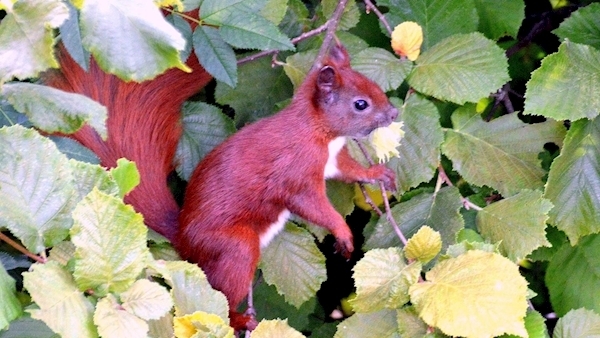
You will get hazel plants this weekend in your local garden centre but if you want to try some thrifty propagation you could sow some nuts — gleaned from the wild or even that trail mix. These can be sown by broadcasting and covering with suitable soil/compost and possible some chicken wire or device to keep the rodents from lunching. Squires are the main distributors of our native types and they don’t bury deep.
Alternatively, you can container plant up individual nuts to double depth and place in a cold frame to over winter and germinate come spring. Best planted out after one year growth. Hazels are not that problematic once established just keep a watch for aphids, honey fungus and powdery mildew.
CONNECT WITH US TODAY



Be the first to know the latest news and updates