A second bite at the cherry: Your guide to a valuable fruit
As a child, channelled his inner Indiana Jones in pursuit of this jewel-like fruit.
WHEN I was a young kid, a neighbour a couple of houses over had some cherry trees and an apple tree in their back garden.
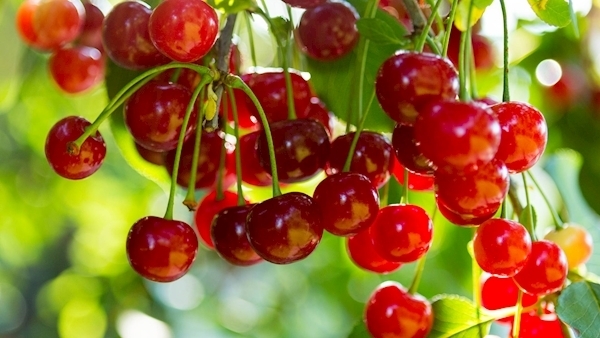
The apple was cooker variety but as yellow as the eyes of the first Klondike millionaire. The cherry was sublime in flower and gorgeous in fruit; lovely shiny red orbs that glistened like jewels and darkened over summer. You could see both over the tip of their wall, tempting a raid.
The problem was they had a fast-snapping spring-gate, a high wall and a faster and snappier dog. The other problem was that even after you channelled your inner Indiana Jones, either of those plucked jewels was in contention for the sourest thing on the earth — your mouth would be puckered for a week — but a dare is a dare.
And that’s the thing — there are both sour and sweet cherries. Sour tend to be a variety of Prunus cerasus. While the sweet are cousins of our native Prunus avium, our native wild ones tend to be not so sweet — best to go with a cultivar for raw edibility. The sweet are generally eaten raw as a savoured fruit, while the tart ones tend to up in tarts — just like the cooker apple; sometimes even with.
Both are easy to grow and readily available in garden centres this weekend. Both will round out your garden pantry, but also your edible medicine. They are rich in heart-healthy minerals and nutritious too. The anthocyanins that supply the red/purple in each type are super health agents.
Those plant pigments have been studied to lessen blood pressure, to lower cholesterol levels and to stabilise sugar metabolism — but it is a fruit, so in moderation and without your weight in sugar to make it into a jam or pie. Anthocyanins are also antioxidants in the human system, so a healthy inclusion of them in our diet can mitigate some ravages of aging and lifestyle illnesses.
What I love about cherries is their capacity to inhibit those pro-inflammatory cyclooxygenase-1 and 2 enzymes — in the same manner as many prescription and over the counter anti- inflammatory drugs.
Every now and then they will crop up as a treatment option for sore muscles after a workout, but they are viable options too for other pain syndromes and even neurological diseases. In fact, they have long been used as a remedial food.
Cherries eaten at night also have a folk use as a sleep aid and it turns out that they are a natural source of melatonin which in plants is an anti-stress agent that helps foliage and fruits adjust to drought and high ambient temperatures — but in humans it is a different sort of anti-stress; soothing nervous system irritability and easing the firing of brain neurons and so prepping us for rest and sleep.
For humans, the presence of melatonin normally released at night is the hormone signal that informs, one might even say commands, our body and brain that it’s time for bed.
All cherry trees belong to the rosaceae family, so if you have grown roses or plums, then your garden or plot is a natural home. You will need two trees to pollinate or select a self-fertile variety. Sour and sweet types won’t pollinate one another, so don’t fall into that trap.
Don’t think an ornamental variety will pollinate your edible one either — especially if they bear double flowers which have been bred to yield extra petals in place of stamens and pistils (the reproductive parts).
Most commercial edibles are grafts on a rootstock that will manage the right size for your garden with varieties coming in between 2m to over 10m. They can also be trained as cordons, and many will tolerate north-facing wall — though they may fruit less and later.
Cherry trees have a short fruiting season anyway and one that is also a moveable feast depending on recent climatic conditions. Most often coming in around the end of June to start of July but they can be a whole month earlier or later some years.
They prefer well-drained soil — and I find they yield better in sun with some shelter but many grow happily in light shade. They can split if the weather is wet and they don’t appreciate late hail. However, they are hardy and good with frost except frost at flowering time. Net curtains or horticultural fleece are great if you have a small tree but impossible if you have a proper large canopy tree.
To manage protection and yields, most commercial growers here will grow in a large polytunnel or covered set-up. If you buy lower growers or cordons, you can net against birds. Hungry birds are the biggest thieves of your crops — not the skinned-kneed kid with your dog clamped to his behind. Have a heart before you throw the trowel at him.
Varieties you might like: Stella — sweet self-fertile, Sunburst — sweet self-fertile, Morello — cooking self-fertile, Black Oliver — sweet, not self-fertile, Early Rivers — sweet not self-fertile (requires pollinators), Summer Sun — eating and cooking partially self-fertile (pollinators Stella, Sweetheart), Sweetheart— eating cherry, self-fertile and a pollinator.
CONNECT WITH US TODAY



Be the first to know the latest news and updates