We’re still not sure whether to love or fear bears
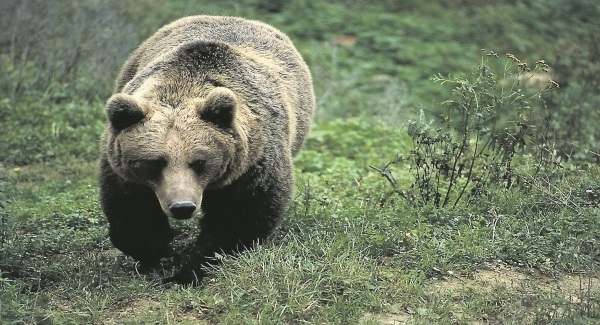
William of Auvergne, a 13th-century French bishop, claimed that ‘bears make love face-to-face, as human beings do’. Whales, dolphins, and sea-otters copulate front-to-front, but almost all other mammals, including bears, do so front-to-back.
His lordship’s mistake was understandable; bears resemble us in so many ways that we humanise them.
Most small children have a teddy. In the Goldilocks story, however, the bears are both friendly and ominous.
The power of the tale lies in its uncertainty; we aren’t told whether Daddy or Mammy Bear would have harmed Goldilocks; she ran away before we could find out. We both love and fear these cuddly creatures.
Cautious and shy, bears give us a wide berth. They may attack people, if threatened, but incidents are few. Bees cause many more deaths than bears.
Sheep and cattle are sometimes harmed by bears, but raids on crops and beehives are more frequent. A few rogue individuals are responsible for most incidents; once the culprits are identified, and ‘taken out’, peace descends.
The misdeeds of a few led to a jihad against bears throughout Europe. This, and habitat destruction, resulted in their demise. The species was rendered extinct in Germany two hundred years ago.
Small populations remain in Italy, Spain, and the Pyrenees. Most of Europe’s surviving bears are in the Carpathians.
Two of seven Neolithic sites excavated at Lough Gur, County Limerick, yielded bear bones. Remains less than four thousand years old have not been found. Absence of evidence, however, isn’t evidence of absence.
Irish has eight names for ‘bear’. Yet, the language didn’t reach our shores until the Iron Age, by which time bears, presumably, were long gone. If so, why were there so many names for an animal not present? It would have been impossible to eradicate bears back then, in a country with extensive forests.
Europe’s largest carnivore has a certain mystique. Its presence enhances the atmosphere of a pristine wilderness. There is increasing goodwill towards the great beast in Europe and a new willingness to tolerate the damage it does.
Anne Scharf and Néstor Fernandez, of the German Centre for Integrative Biodiversity Research, have studied brown bear populations.
Using all available data, they have produced computer simulations of bear distributions, past and present. There are currently 17,000 animals, spread over ten populations, in 22 countries. Numbers are increasing in 70% of these. Groups, confined to isolated pockets, are threatened by inbreeding.
However, bears occupy only 37% of a million square kilometres of available habitat. Scharf and Fenandez’s distribution maps show locations to which bears might return. However, apart from areas in the Alps, it’s unlikely that many will re-colonise naturally. Bears may need our assistance.
Whether they return of their own accord, or are helped, the traditional objections to their presence remain. Not everybody would welcome their arrival; ‘come back brown bear, all is forgiven’ is a sentiment expressed mainly by urban, rather than rural, dwellers.
Preparations should be made in advance, the researchers suggest, or the recovery of bears will end in tears. Damage-prevention measures, and compensation payment schemes, must be planned.
Beehives may need protective barriers, while guard dogs and electric fences would help secure livestock in potentially sensitive areas.