Richard Collins: Islands seeing decline in number of seabirds
There were plenty of fulmars on the cliff-ledges of the Blaskets last week, but the waters off Inishnabro and Inishvickillane had fewer seabirds than I remember 30 years ago. With ocean temperatures rising, due to global warming, fish are moving to cooler waters and birds are following them.
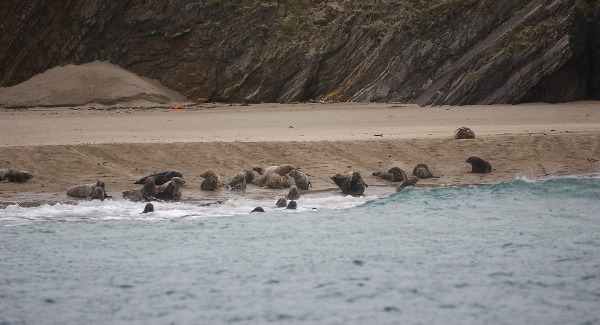
About 400 grey seals dozed in the early morning sun on Great Blasket’s Trá Bán. The rón mór, once persecuted, is now thriving. Its story on the Blaskets, however, is not a very happy one. In November 2004 sixty seals, mostly pups, were shot, stoned to death, or had nails driven into their skulls. Then, in 2012, came another public relations disaster for the area. ‘Bloodied heads of young seals nailed to entrance of sanctuary’ ran the headline of Donal Hickey and John O’ Mahony’s piece in the Examiner on June 8 June that year. Grizzly photographs and TV footage went far and wide, tarnishing the image of Dingle, with its famous dolphin resident.
Seals are less vulnerable to such attacks nowadays, but they remain wary. The ones on the beach took to the water when camera-holding day-trippers approached them. Now a major tourist attraction, the country’s largest ‘rookery’ is paying its way, atoning for past sins against the fishing industry.
Manx shearwaters call in the dead of night around the ruins of the Great Blasket village. These burrow-nesting seabirds breed on the outer islands but did not do so on the larger island when I was there in the 1980s. Tomás O Criomhthain, of An tOileanach fame, knew his birds; if these noisy nocturnal creatures were present in his day, he would surely have mentioned them. The village now has some restored dwellings, including the guesthouse where I stayed. Choosing to venture so close to human habitation seems odd for a bird which normally prefers the most remote islands.
The 5m-long Blascaod Mór has other new residents. Somebody has released hares there. While such introductions are not recommended, the hares, among the most approachable I ever encountered, seemed at home on the hilly grasslands.
American mink were first recorded on the island in 2009. Who would want to introduce so destructive a creature; it’s more likely that these predators arrived under their own steam. Nor would it be the first such invasion of an Irish island. Ten years ago, evidence came to light that mink had reached Puffin Island, BirdWatch Ireland’s sanctuary off the Iveragh Peninsula. Four years later, carcasses of shearwaters and a storm petrel were found there. In 2011, what appeared to be a mink skat was discovered on Great Saltee, off the Wexford coast.
Puffin Island is 400 metres from the mainland; it is just about plausible that mink managed to swim to it. Reaching Great Saltee, 5km out, would seem impossible, but could mink make it to the Blasket? According to the local boatmen, the tidal flow in the sound off Dunquin is notorious, as the sailors of the Spanish Armada discovered in 1588; two of their ships were sucked into it and wrecked. A mink, trying to cross it, risks being swept away by the current. Even at the most favourable state of the tide, it would still face a 2km swim.
The chief victims of the mink invasion will be rabbits but ground and burrow-nesting birds, such as shearwaters, would also be helpless facing of these voracious hunters. Will the predators now try to reach the outer islands, which support internationally important seabird breeding colonies? A trapping programme is helping to control mink numbers on Great Blasket.