Richard Collins: Finding ways to save birds from wind turbines
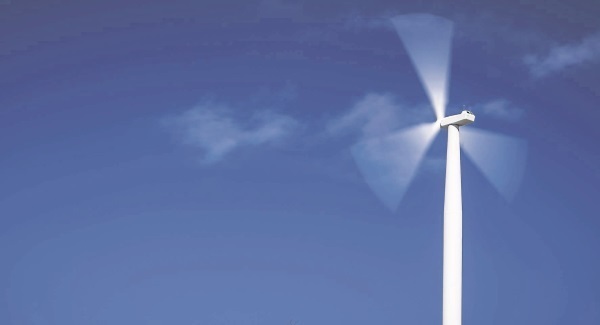
Technology created the problem. Can it do anything to reduce it? asks Richard Collins

Richard Collins: Finding ways to save birds from wind turbines

Technology created the problem. Can it do anything to reduce it? asks Richard Collins

‘FOR he commandeth and raiseth the stormy wind, which lifteth up the waves thereof,” declares Psalm 107. If only we too could command the stormy wind!

Burning coal and peat in power stations is environmental vandalism, for which we will pay richly-deserved fines under international climate-change agreements. There is no excuse for us; Ireland is one of the world’s windiest countries and electricity from windfarms is virtually pollution-free. Yes there are downsides: turbines are noisy, output fluctuates unpredictably, unsightly transmission networks scar the countryside and windmills are visually intrusive. However, wind remains our most promising source of green energy. There are, alas, no free lunches.

Birds collide with turbine blades; large raptors are frequent victims. So, if we install enough capacity to meet the country’s electricity needs, will hen harriers, buzzards, and our newly reintroduced eagles go to the wall? Is there a way to protect these birds, to have our loaf and eat it? In the Sierra de Mariola, last summer, I watched eagles and vultures, lifted high on updrafts in the merciless Spanish sun. Giant wind turbines were strung along a nearby ridge, their 50m-long blades resembling jumbo-jet wings. A soaring raptor, its eyes scanning the countryside, stands little chance against a slashing blade with a tip travelling at 300km/h.

The bird-strike problem is less acute in Ireland; hot-air thermals are not our thing. Birds of prey here tend to fly below the levels of the larger turbine blades. However, fatalities do occur. Technology created the problem. Can it do anything to reduce it?

Engineers at Oregon State University have developed a multi-sensor system which may be a first step towards addressing the problem. A vibration-detector, mounted on the hub of an experimental turbine-blade, records bird-strikes. The generator housing has a computer-controlled camera which tracks birds, while an acoustic sensor on the windmill-tower records their calls. This integrated system, the researchers hope, will even be able to identify particular species.

Tennis balls, simulating bird-strikes, were fired at the experimental turbine using a compressed-air gun. During 29 field tests, the impacts of 14 balls were successfully recorded. These tended to occur along the leading edge and outer half of the blade. But what use to birds is a system which only records the impacts which kill them? The object of the exercise, surely, is to prevent casualties occurring in the first place?

However, the system is not as useless as it seems. Obtaining reliable statistics for bird-strikes is notoriously difficult. Counts of carcases found beneath turbines are not a reliable measure of mortality; finding them is a hit-and-miss affair. A bird may come down some distance away from the point of impact. Bodies can be hidden by vegetation or carried off by foxes. Proponents of windfarm construction play down the extent of the collision problem while opponents tend to exaggerate it. A multi-sensor system, logging collisions at source, could provide more reliable figures. It would be useful at off-shore locations where the carcasses of victims fall into the sea and can’t be retrieved.

Being able to monitor what is going on is a first step towards addressing the collision problem, but where do the engineers go from here? Birds of prey are notoriously shy of people. If computer-operated cameras can spot and track approaching birds, they could trigger visual and acoustic “scarecrows”, deterring potential victims from approaching windfarms.

Such a guardian angel, or barking watch-dog, approach to the bird-strike problem seems a long shot but it’s worth a try.

n Congcong Hu et al. ‘Wind turbine sensor array for monitoring avian and bat collisions’. Wind Energy; 2018.

x

More in this section

Revoiced

Newsletter

Sign up to the best reads of the week from irishexaminer.com selected just for you.

Cookie Policy Privacy Policy Brand Safety FAQ Help Contact Us Terms and Conditions

© Examiner Echo Group Limited