Mammy, I want a pony
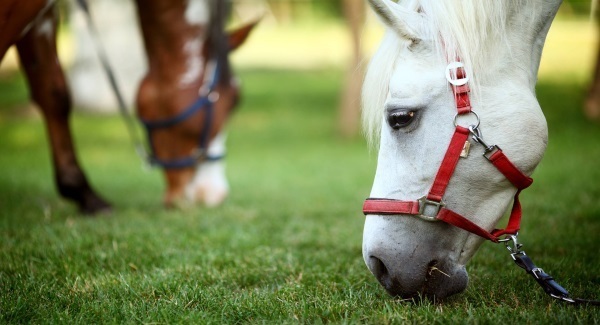
considers if and when you’re really ready for a gee-gee outside the window?
I have spent too many of my leisure hours wandering around woodland on a lightly psychotic gelding.
Rising at dawn, killing the Whirlpool with filthy numnahs, stinking lightly of horse wee, and laughing off occasional hospital visits — I remain a demented, unreliable, happy hacker.
I throw most residual money at a Follyfoot fantasy I just can’t shake. We’re down to two hoofed souls now — progress.
Families with the facilities to do so often transition from a riding school experience to the intense desire to keep their first equine at home. This is nothing short of a life-altering decision and not one to take in a haze of emotion.
Gemma Horgan is chief riding instructor and proprietor at the AIRE-listed Bridestown Towers EC, between Rathcormac and Glenville, Co Cork. She teaches children and adults not only how to ride, but how to handle and keep their horses and ponies safely.
“The right time for someone to buy a horse or pony is the big question,” says Gemma, “and the answer depends a lot on the experience of the child or adult involved.
“Experience can mean many different things, but it really is animal experience. If there is a natural instinct with animals, it is a much easier job.
“There must be a pure love for the horse and a willingness to work hard to provide for it at all times — hail, rain, or shine. After that, getting a horse or pony is just about being willing to learn and being patient.
“Take advice from knowledgeable people always and remember you will never have all the answers.
“Routine is the cornerstone to keeping a horse/pony healthy and happy. Feeding and watering at the same time every day. Mucking out at the same time every day, et cetera. Remembering to put their needs in front of your own.”
You don’t legally need land to keep a horse in Ireland. Still, it’s tricky to keep a horse adequately fit and, frankly, sane without turnout. Almost 40m years of evolution have made them herd animals intended for desert conditions, constant movement, and trickle-grazing over large areas. Zero turnout (rather than limited winter turnout) is a completely unnatural life for a horse, physically and psychologically.
Estimates for field sizes vary depending on the ground conditions, but in general 1-1.5 acres per horse (with rotation and supplemental feeding in winter) is a minimum.
Paddocks should be divided and swapped out to facilitate fertilising, rolling, topping, spraying for weeds, and occasional reseeding. Constant clean water must be provided and perimeter fencing must be stock proofed — most owners electrify even post and rail fencing to avoid rubbing by the horse. Cheaper, electric temporary fencing is used as a divider, hitched to a mains or rechargeable battery.
Yes, there are lone rangers who will live alone, but most horses crave company and will become actively distressed without at least one buddy. Two buddies or more, switched out regularly, prevents annoying, pair bonding — completely natural, but it can lead to horses becoming ‘nappy’ — not wanting to leave their friend when you want to catch, handle, move, or ride them.
Many owners rent land or set up share arrangements with other horsey friends, a polite win-win — or regular human screaming matches.
Most importantly, explore the reality of where you intend to safely ride: Fields, woods, roads, an available arena?
All horses, winter and summer, require shelter. Outdoors, this can be a nice blousy stand of hedging and overhanging trees where they can get out of the wind, rain, sun and flies.
Invest in a structural shelter and you can enjoy watching them take an exquisite scratch on its creaking €1,500 timbers. Rugs in winter are important for a clipped horse, and even in summer many will need a light, impenetrable fly-rug for comfort.
If you know what you’re doing and your horse is a Christian, they can potentially be kept out 24/7 and ridden straight from the field.
Stabling comes in two general forms: Standard stables, with the horse’s head out to the yard, and loose boxes set inside an enclosing Dutch barn with an indoor access corridor. Dutch barns (more costly and high), are extremely useful for staying out of the weather and containing all your equine adventures in one, well-drained building that neatly locks up. For buildings over 200m and anything in an urban setting, you will need planning permission. Apply if you’re unsure.
A standard horse stable is 3.6 x3.6m or 12’square , so with two and a modest 3.6mx3m/12x10’ tack room, that adds up to a 9x4.5m building. Prices in timber, start at €1,200 for a wood frame building with a shallow overhang of 0.9m/3’, OSB kickboards, erected without footing, automatic water units, and gutters.
Block buildings must be carefully detailed to be strong enough to sustain the weight of a horse’s kicks and regular scratching without collapse.
Other varieties in steel frame, common in agricultural circles, are gaining attention as they are extremely robust and can take on a variety of attractive finishes.
Rubber mats and poured floors that soften the going and reduce bedding, start at €250 per standard stable, excluding installation. Bedding on straw, paper, shavings, dust or grasses means there must be a place for your waste bedding (up to 19kg per day) which has to be sited close by and detailed to prevent effluent run-off.
Some owners muck directly to a skip, which can be regularly removed and spread.
Husbandry aside, having horses or ponies at home can be expensive, intensely lonely, and potentially risky for the unwary.
“A novice rider should not get a novice or young horse/pony,” warns Gemma Horgan, “I also think first-time owners should have their equines kept in a livery yard where routine will be essential and knowledge and advice will be on hand all the time.
“If you do get a horse/pony, please don’t give up on your lessons as your instructor can help you at the beginning to iron out any issues that may arise. If problems are not fixed straight away they will only grow and become unfixable.
“Much as we love them, a horse/pony is not a pet,” says Gemma. “They can live long lives (25 years-plus), especially when they are cared for correctly. This can lead todifficult situations when it’s time for them to move on to their heaven, and a loving bond has developed between the owner and animal.
“If your teenager has grown apart from the whole horse-riding thrill, maybe enjoying a more social life, or has even outgrown the horse/pony, then again putting the horse/pony’s needs in front of your own, you must think of moving the animal on to its next owner so that it can be part of a routine of care and exercise.”
Riding alone or occasional joint hacks, jumping leagues, camps, excursions with the pony club, and summer shows are not the same as the bustle, support, company, and fun found at a riding school or livery yard.
With thanks to Gemma Horgan of Bridestown Towers EC. Further information: Facebook.com/bridestowntowers.
CONNECT WITH US TODAY



Be the first to know the latest news and updates