Vintage View: A 20th century classic
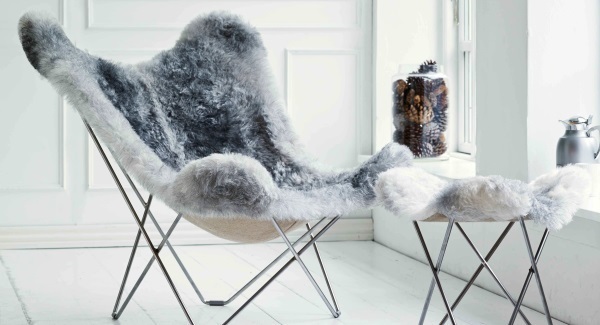
FOR furniture with a laid back attitude, the Hardoy Butterfly chair (trend grammar — the BKF) is a sling-seated, super star.
Dropping down to the yawning cradle of hide, your knees are cocked asymmetric and akimbo. Slouching is seductively suggested. The arms sit loose and relaxed.
Elbows propped in fledgling angles as the weight tautens the skins, it’s difficult to efficiently use your hands. Almost perpendicular, tea slops onto the chest in gentle rhythms with your breathing and a battered acoustic guitar or hookah seems the only fitting ornament.
In sheepskin— I’d love that glorious design aristocrat — despite pitching me up in angles up like an indolent frog. Most of us equate the BKF immediately with the 60s — ruffle shirts, foot long sideburns, King Crimson drivelling poetic metaphysics on the Bang & Olufsen.
In truth the chair has a longer pedigree, springing from designs in 18th to early 20th-century campaign furniture.
These pieces were made for upper class military men subject to their adjutants setting up civilised, smartly furnished quarters under tenting as they moved across the face of war torn Europe or the colonies.
Campaign furnishings are full of ingenious touches way ahead of their time, packing down, in the case of chairs and beds, to slip into crates, or canvas and oil-skin bags that could be carried easily by cart, porter or horse.
Even Thomas Chippendale has a go and by the late 19th century, Ross & Co Dublin, were considered the best cabinet-makers for top ranking portable barracks.
In the late 1877, the Paragon or Tripolina chair by British engineer Joseph Beverly Fenby appears — a commercial, domestic interpretation of the earlier foldover, canvas military sling.
Based on 4 hinged V shaped elements, its collapsible wooden frame was opened in seconds to support a cover of leather or canvas slipped up onto each corner. As a hammock, the weight and limbs of the sitter gave it stability, providing the 5th and 6th legs.
The KBR, our louch mid-century favourite was interpreted from the Paragon and patented in the 1938, the principal difference being the leg weight and materials.
Architects Antonio Bonet, Juan Kurchan and Jorge Ferrari Hardoy took the relatively lumpen Paragon and American-style Fenby chair, refreshing the shape with slender metal hair-pins. The team, it’s said, may have met up at the atelier of Le Corbusier in Paris, the cliff edge of new lines.
Their new chair was part of the total design theory for a building in Buenos Aires, at a time when architects were taking control of every element of their design, from door-handles to light fittings and furniture.
This trimming down of the supporting frame was visual magic, delivering an instant design classic. Selling well, including at the palace of posh – Harrods, by the 50s its legs, look and provenance were right on trend.
The Museum of Modern Art, brought four Hardoy chairs to New York in 1940, and one of them went to Fallingwater in Pennsylvania (c1935) a domestic buildings conjured by Frank Lloyd Wright. In terms of due praise and lineage - this chair as it all.
When buying a used Butterfly, keep in mind just how popular it is and has been. Carried by Knoll of Great Britain and reproduced by other makers and faked heavily since WWII by the millions, a genuine Hardoy or Knoll in good vintage condition will be hard to come by.
New suppliers of Hardoy style chairs argue that early Butterflies are actually uncomfortably small to sit in as a lounge chair, scaling their pieces up by as much as 30%. Buying old or new, look for undamaged legs in solid enamelled steel, that sit level, and then examine the size of the chair.
Butterfly styles come in slightly different sizes, so you must measure it out, open, when ordering any new cover. Flaccid fabrics, hide or sheepskins look dreadful, and take away from the silhouette of the chair. Too small and the cover will pinch the frame slightly shut, so your money is best directed at full grain Italian leather made up by an upholsterer who knows what they are doing, with the frame in hand.
It’s relatively simple, demanding only four pattern pieces if you want to have a go working from the old cover or an online guide (try livefreecreative.co/2016/05/leather-butterfly-chair-cover-diy).
A new patented Pampa Mariposa by Cuero Design in 12mm Swedish steel and vegetable dyed leather, starts at €980 with slip-on pillows to support the head from €100, great for creaky aspirants not made to float with our knees directly up our noses.
Ambientedirect.com.
For a Knoll original with a nicely battered cover supporting an honestly rubbed, sexy patina, expect to pay from €1,000 to €2,500 from a good online antique portal such as 1st Dibs.

CONNECT WITH US TODAY



Be the first to know the latest news and updates