Breaking the rules to find your home's perfect interiors vibe
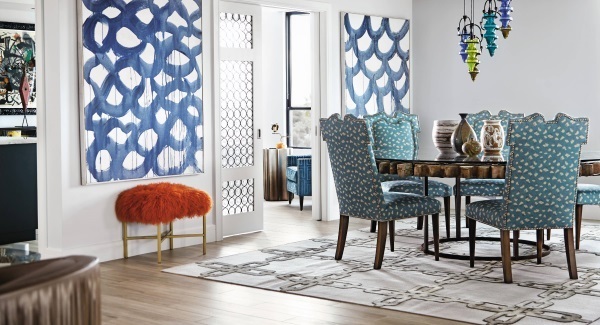
When it comes to interior design, most of us assume there is a divide between the modern and the traditional, a chasm which can’t be crossed without stepping into the territory of conflicting styles and bad taste.
Our interiors are either minimalist, clean-lined and filled with light, or they are richly decorated, packed with antique forms and textures. For some people the first is cold and featureless; for others the second is confined and cluttered.
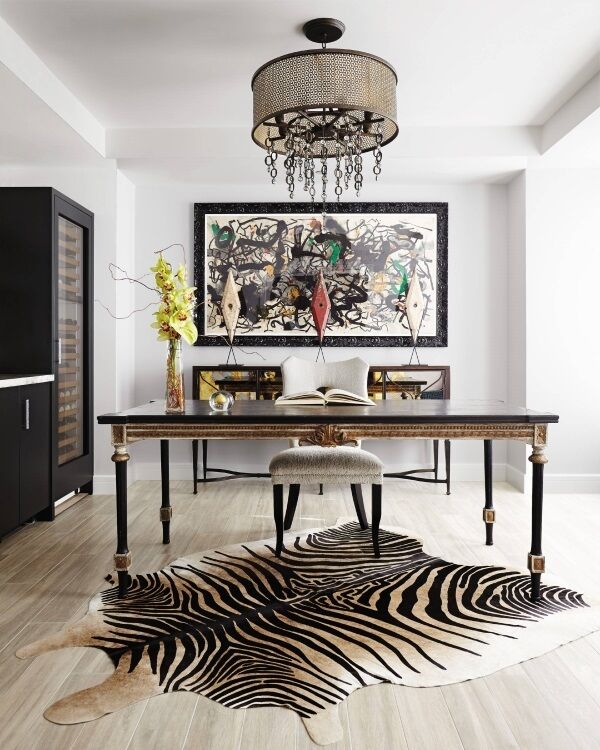
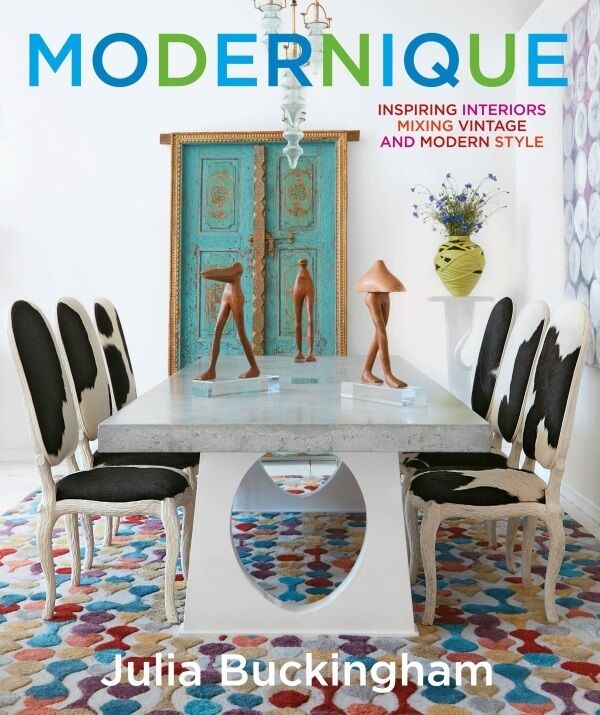
But for American designer Julia Buckingham it’s a false dichotomy. In her beautifully illustrated book, Modernique: Inspiring Interiors mixing Vintage and Modern Style, she argues the case for blending old and new, and, as she puts it ‘figuring out your interior aesthetic for yourself.’ None of us, she says, should be afraid to ‘buck the so-called rules of design’.
One of those rules, something every citizen of western culture clings to as religiously as an 11th commandment, is the tyranny of the ‘matching set’.
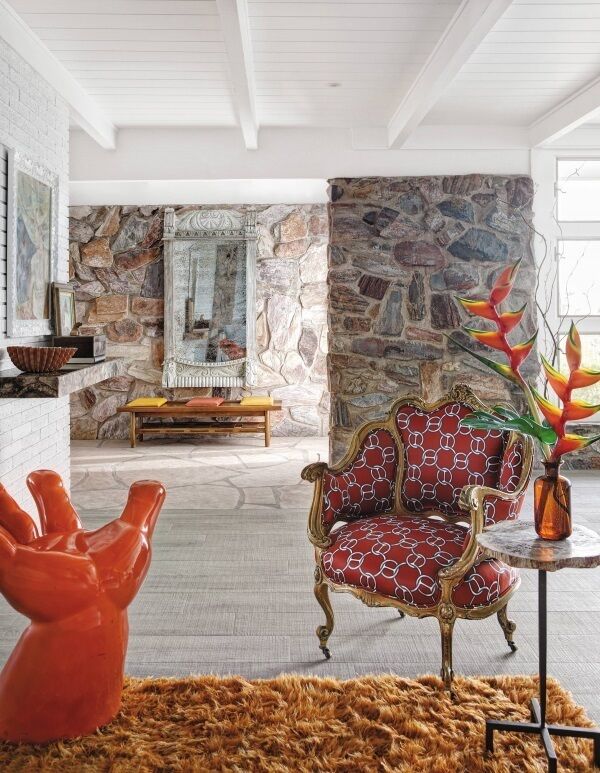
The idea that colours and shapes must conform to each other so that a room comes together as a unified theme is long accepted, but in her book Buckingham ask her readers to consider the pleasure involved in putting together a mix of both functionality and elegance, of contrasting colours and conflicting textures, to produce an interior which is purely personal, a product of the imagination.
While combining styles — and even historic periods — in the same interior can sound like a recipe for design chaos, done properly it is a technique which offers endless opportunities for invention.
One of her basic principles is layering: Furnishings, fabrics, finishes, light fixtures and even accessories are consciously placed to enhance the room, but for Buckingham enhancing is a matter of avoiding uniformity. Throughout her book, predictability is a dirty word.
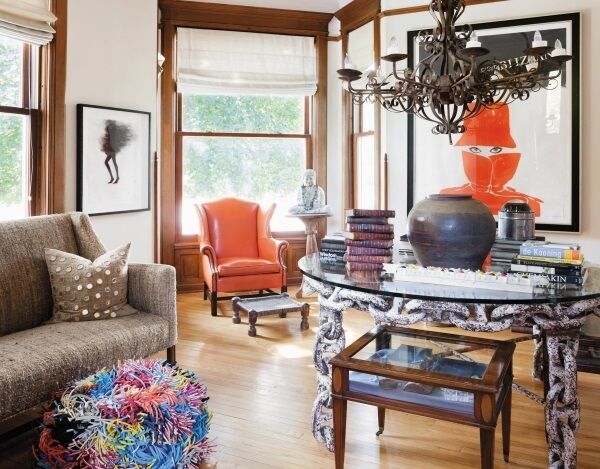
Instead, she advises combining various metals with wood, crystals and glass with leather, monochrome walls with multicoloured rugs. For her, there are no wrong choices, only unexpected ones.
Being alert to inherent contrasts is the one over-arching tenet of the Modernique approach. Abstract art can hang in traditional rooms, and old furniture can stand in modernist spaces, as long as the balance is right.
Taking inspiration from nature is routine advice when it comes to themes, but for Buckingham it is a ‘nature that is a little outsized, a little over the top’. As a result, there are rooms here which might not be to all tastes – gilded ostrich eggs in tablescape arrangements, the carapace of a giant tortoise displayed like a work of art, or a striking lucite console table with an edge resembling icicles.
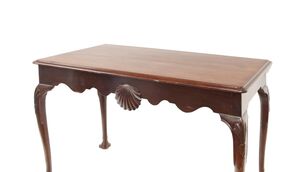
However, it’s not just quirky shapes and objects — Buckingham is a fan of bling too. Shiny reflective surfaces capture light and can be used to direct the eye toward feature accessories such as beaded candlesticks, hammered metal bowls, and even, for the ambitious, mahogany sideboards given new life in minimalist settings.
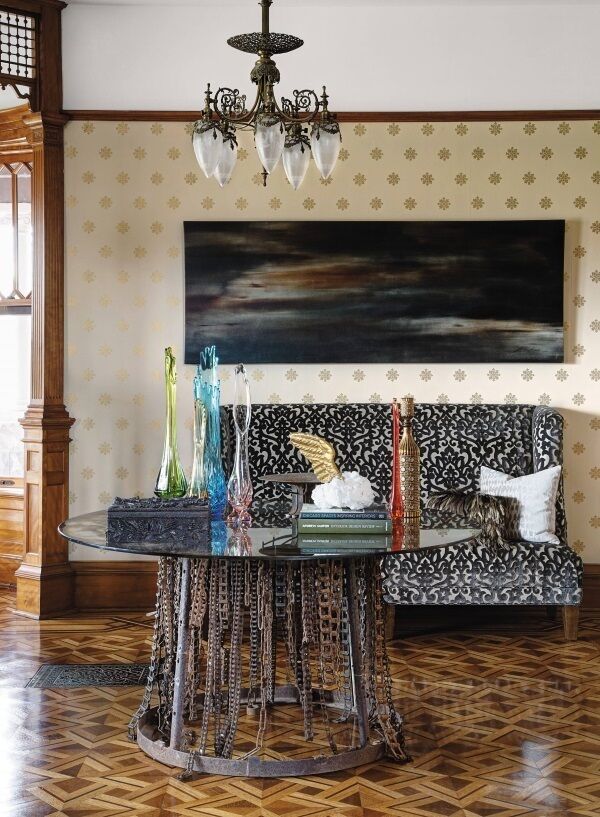
Draping antique necklaces and trinkets over mirrors and tabletops might seem over the top to most of us, but for the author they act like spotlights on the objects they adorn.
There are chapters devoted to chandeliers — probably something most of us haven’t considered as ceiling centre-pieces in our living rooms or apartments — and to fashion as an inspiration for soft furnishings, with lots of pleats and ruffles, but where the Modernique approach is at its strongest is with the incorporation of the new and the old.
One of the greatest pleasures of an interest in design is learning how every century had its own particular style. Buckingham has no-nonsense advice for anyone who buys an older house: Never strip away the historic details.
Even if a decision has been made to demolish and rebuild, always keep some elements of the original design for reuse. For her, it’s vital to salvage and incorporate, as old beams, fire-surrounds and architectural features, any element that can provide the basis for an entire look. Mouldings can soften edges in a stripped-back room, while old wood can warm up a cold one.
It comes as no surprise, when, toward the end of her book, the author tells us she’s a fan of car-boot sales, charity shops and auction houses. For Buckingham these are treasure troves where character pieces can be picked up — the kind of furniture or room accessories that can lend personality to an interior.
Few books on interior design have been so devoted to the art of juxtaposition and contrast as Modernique, and while there is much here that won’t be to everyone’s taste, it remains an inspiring look at how to blend the vintage and the new that will appeal to anyone attracted to the quirky and the unpredictable.

CONNECT WITH US TODAY



Be the first to know the latest news and updates