Fermenting foods - it's more than just cababge
Fermented foods, the good news goes on. I am one of many thousands, indeed millions of people on the planet who has been diagnosed with a thyroid problem.
My symptoms began about six years ago when I was living through a very stressful time. It has been said that stress can often “kick it off’, as well a pregnancy and childbirth.
For anyone who isn’t familiar with thyroid problems, here’s the broad strokes of how it can it can look.
Mine began with pains in my shins, like splints you might get when you go out running, except this wasn’t when I was running, I don’t do running, this was just being out for a walk around town, the pain was so bad I could hardly make it home.
Next up was the tiredness, I’d have to go for a lie down around 5pm and I never felt fully awake, doing something before 11am was a big ask.
The weight gain was a surprise as it wasn’t really like weight but more like someone inserted a bicycle pump somewhere the sun don’t shine and filled me up with air.
I had a big, puffy ‘moon face’ and moon body, I had no clue what was happening.
The fun didn’t stop there, then my short term memory went, I had no clue where I left my car parked, I forgot the functions of my phone, my voice broke so that I could be a bass singer in an all male choir.
To put it in a nutshell, I felt like I was aging rapidly and was very scared in the process.
We can take too long to go to the doctor for blood tests and when I finally did, my thyroid hormones were so out of whack and low that I was just happy to get a diagnosis and went straight on the meds.
It took a while for them to make me feel any better and the readings on my blood tests still showed that my levels of Thyroid Stimulating Hormone and my T3 and T4 were still way off.
People who are diagnosed with an underactive thyroid may have an underlying condition called Hashimoto’s disease, which is a thyroid-related, auto-immune disease.
This condition is rarely tested for, unless strongly requested and there are differences in its profile.
It was around this time, swimming in a sluggish sea of bad health, that fermented foods came up on my radar.
I had heard of the GAPS diets, one that’s used to treat many conditions from depression to anxiety and more in between.
GAPS means Gut and Psychology and the the diet focuses on using unadulterated foods from nature, broths, organ meats, fats and ferments to heal the gut and in turn, treat the cause of the condition.
The gut is big news now and we are recognising the part that our microbiome plays in our mood, our sense of well-being and even our sense of selves.
Initially, while still waiting for some improvements in my symptoms via the thyroxine medication I was on, I went on the GAPS way of eating and I did begin to feel better.
Many would say that a person who embarks on a plan of healthy eating, be it paleo, vegan etc, feels better because they are no longer eating processed food, and there is some truth to this.
Even if you eat a diet high in raw veg, juices, and lots of ‘superfoods’, you may not be getting the nutrients you need from your food because your gut isn’t producing the digestive enzymes necessary to assimilate what you need from your food, in other words, your expensive, organic grub is going in one end and out the other.
Eating fermented foods was the one thing I did which made a notable difference to how I felt.
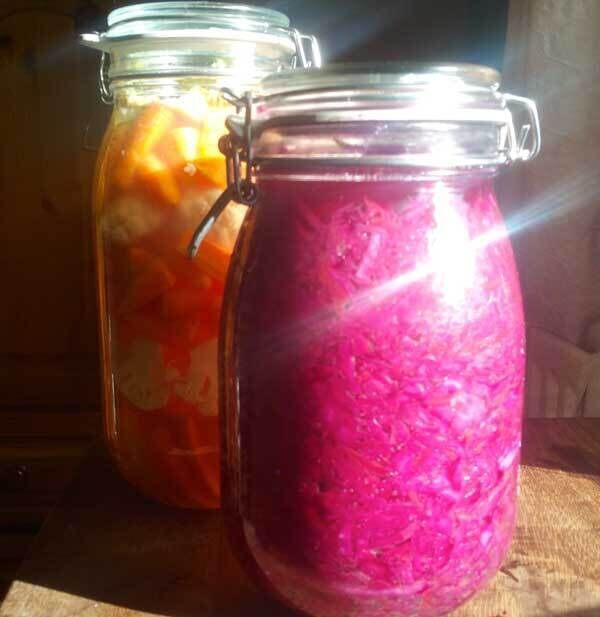
About two weeks into a new regime of sauerkraut, kimchi and kefir, my energy and clarity started to return, the bloating went and I started to feel like my young old self again.
This is the reason why I became so obsessed with these amazing foods. Most of us want short cuts to everything in life, that’s understandable, life is hectic, but with reduced anxiety and better mental clarity that can come from feeding your good gut bacteria, change can be closer than you think.
Please note — I’m not advocating replacing medication with cabbage, I am still on thyroid medication but am working to reduce the dose as it was increased over the years when little changes were seen in my bloods. How I feel is what matters to me and I feel better when I eat these foods.
We also need more fermented foods than we think, a spoon-full of cabbage will not cut it, to get the different strains of bacteria you need for a good gut ,you need to have a minimum of four ferments a day.
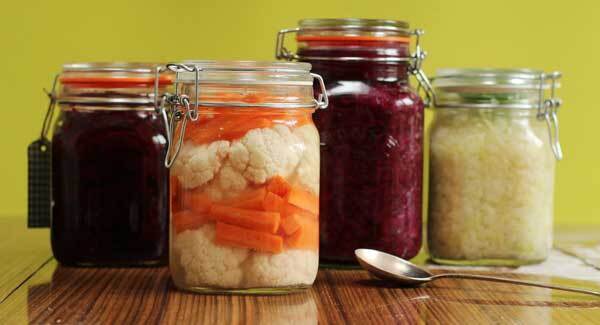
These can be in the form of sauerkraut, kimchi, kombucha, kefir, miso or any fermented veg. Wine doesn’t count! You can buy many of these from health food shops, but here are the easiest recipes to get you started.
You will need one 2 litre sterilised jar/ or any decent sized jar to get started
One cauliflower, broken into small florets
2-3 large carrots, washed and scraped/peeled and cut into sticks of about
1/2 inch thick
1-3 tsp sea
salt
1 litre spring/filtered/boiled water — do not use chlorinated tap water, it is a disinfectant
Prepare and wash your veg in clean, ideally filtered or boiled water.
In a clean jug dissolve the salt in the water Layer the veggies tightly in your jar, leaving a space, or about one inch at the top of the jar Pour over the water mixture and press them down with a small jar/weight, and close the jar.
Put on a plate and leave at room temperature for 3-4 days, open once a day to let the gases out.
Once the gases have subsided you can remove the weight in the jar and transfer the ferment to cold storage.
Tastes much yummier than it sounds, simply peel and grate a large turnip and mix it with one tblsp sea salt to get the juices flowing.
Pack it into a clean (as above) 1litre jar and weigh down the contents with a smaller jar or weight.
Place on a plate and leave to ferment for about one week, opening the jar every day to let the gas out.
Valerie is giving her next class in fermenting on March 14 in Limerick, check out www.valskitchen.com
For an alterntive viewpoint on GAPS, see: reclaimyourhealth.com.au/why-the-gaps-diet-can-mess-with-your-health
And for current research on the microbiome see: www.britishgut.org
CONNECT WITH US TODAY



Be the first to know the latest news and updates