Time for summer bulbs
Except for the earliest of the daffs, snowdrops and crocus, most of the spring bulbs haven’t flowered yet, though we can see their shoots and leaves poking up through frosty soil.
However, the work is done with them, they’re in the ground and preparing for their show over the next few months, nothing to do now but sit back and enjoy.

It is time, though, to look at summer 2017 and to start thinking about what we can do now to provide colour then.
In years gone by if you didn’t have your tulips, alliums or daffodils planted in the autumn, then that was it, you had to wait until the next autumn when the window of opportunity would present itself again.
Not so nowadays, as, like with every other walk of life the consumer is king. If somebody wants to buy some crocus or daffodils in full flower during February and March, then they are available.
You will pay for that convenience, of course. In the autumn, a flower bulb will cost cents, but during the spring you will pay euros for the same bulb with a bit of compost, a plastic pot and the fact that someone else was organised a few months previously.
Many of the summer flowering bulbs, corms and roots will start arriving in garden centres over the next few weeks. I never understand why more people don’t plant these during January and February. I’m not sure if it’s that we don’t think about them or that not everyone realises that so many plants are available in this way.
Whilst spring flowering bulbs available to buy in bloom may be a relatively modern trend, the summer flowering counterparts have always been available to buy in flower. Top of the jobs list in the autumn is the planting of spring flowering bulbs and what should be top of the ‘to do’ list in late winter is the planting of summer flowering bulbs and perennials.
It’s not just tuberous begonias, gladioli and dahlias that can be grown now, though they are by far the most popular and most commonly grown summer flowering bulbs.
However, the list of varieties available in this way is vast. Convallaria majalis or Lily of the Valley is an early summer flowering plant that for me heralds the start of the oncoming summer. There is something so simple and pure about the little nodding white, strongly scented flowers.
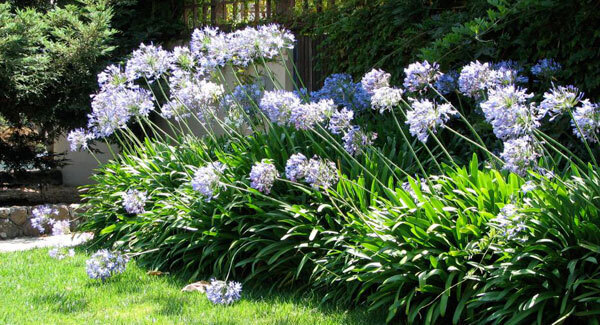
Dicentra too will start to flower relatively early, from May onwards. Agapanthus will provide the garden with blues and whites later in the summer and even bring you into the autumn.
Planting ‘bare root’ plants is a tradition that has nearly died out, except for trees and hedging plants, however it’s only relatively recently that all plants were sourced and grown in this way, for its not much more than 40 years ago when the first containerised plants, that is, plants grown in pots, became available through garden centres.
Although trends may change, nature doesn’t and whatever way they are packaged, plants continue to grow in the same way now as they always have. All the roots available from now in bright packaging are in effect bare-root plants and so do be careful that what you are buying looks healthy and not dried out and desiccated.
Some will last out of the ground in plastic bags for longer than others, so I would advise being the veritable ‘early bird’ and getting the freshest of plants now.
Bare root Lily of the Valley won’t last anytime on the garden centre shelf, so as soon as you see them available, bring them home and plant them immediately in pots of compost or out in the garden soil.
So too with the Agapanthus, try and feel the growth buds through the sawdust or compost in which they are packed; these buds should be firm to the touch and maybe even be sprouting.
If in doubt, leave them behind. When you look at the cost difference between these roots and the potted plants, you’ll soon realise why it’s worth being organised and planting them now. Many of these packets will be available for two or three euro for a few bare roots, and one potted Agapanthus in flower could cost between €10 and €15 euro later in the year.
It’s a great way to bulk plant particular varieties or a mixture of different varieties in the garden and other plants that you can grow in this way include Gypsophila, Alstromeria, Nerine, Astilbe, Hosta, Eremerus and Astrantia. Summer flowering bulbs should no longer be the poor relation of their spring flowering counterparts, they’re more than just lilies and dahlias.

It’s not too late to get planting
If your pots and planters on the patio need a bit of a lift then its not too late to plant winter flowering pansies and violas. These, dainty pretty little flowers still have masses of pleasure to give, flowering away from now right up to the summer.
Do be careful that you get healthy plants with no sign of black spots or yellowing on the leaves and plant in a good well-drained compost and then they will tolerate the harshest of our winter conditions.
For something a bit different try the relatively recently introduced ‘cool wave’ pansies (right). These are trailing forms available in several different colours which will provide masses of colour to the pots and window boxes over the next few months and help to lift the dreary January gloom.