Magnolia's bright colours give everyone’s spirits a lift
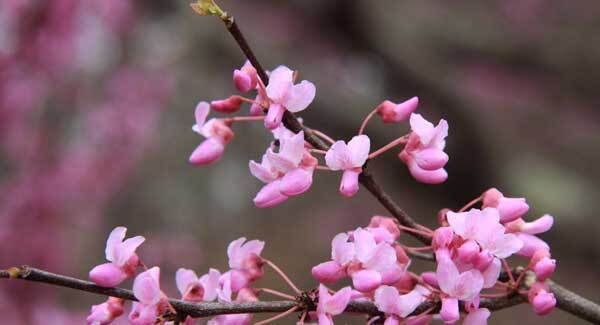
Haven’t the magnolias been stunning this year? Better than ever I would think.
Please don’t ask me why, for I do not know. Was it the lack of any severe frost?
Perhaps it is thanks to the very wet winter.
Maybe the high amounts of rainfall swelled those flower buds which have been on the stems since last autumn.
The only other meteorological factor over the last few months has been the amount and severity of high winds we have experienced and I cannot think for one moment how this could have helped the flower buds on the Magnolias.
Whatever the reason, they do seem to me to be performing much better than normal in 2016.
Magnolias are, for me, one of the ‘must have’ plants in the garden.
Though their flowering period is short and over too soon, they are still an essential part of spring, as necessary as the daffodils, hailstones and changeable weather.
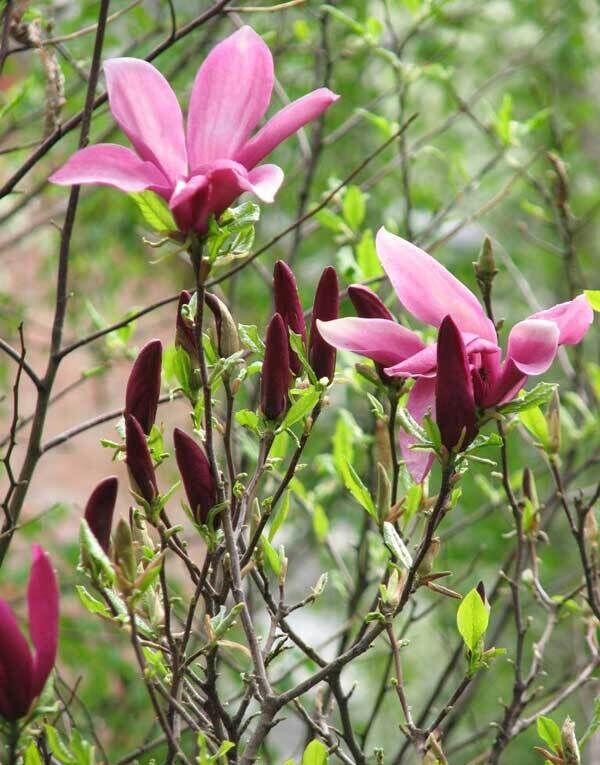
Be careful though when choosing a type for your garden for even though, as stated their beauty early in the year is striking and invokes feelings of fresh starts and new seasons, you do have to think of the garden for the other ten months.
In a small garden magnolia soulangeana will be a very imposing feature, offering a commanding presence over the entire garden.
This presence can be breathtaking during the flowering period as M. soulangeana produces the classic tulip shaped white magnolia flowers with a pink throat.
However when not in bloom, whilst not ugly in any way, it doesn’t offer much to the garden in terms of aesthetic beauty.
Magnolia ‘Susan’ with her dark pink, nearly purple blooms will also get too big. In short there are other trees to look at for a small garden that offer more all year round and not just spring blossoms.
Far better in a small garden to perhaps go for the fresh and vibrant magnolia stellata. Pure white flowers are produced in profusion during March and April.
As the name suggests the flowers are star shaped and not the traditional tulip shape that you might associate with the classic magnolia such as M. soulangeana but most importantly for a small garden this species will not outgrow its space.
It will reach about two metres in height when mature with a spread of about one metre. When flowering is finished is the correct time to cut this back and thus ensure that it never gets too big for your garden.
One of my own personal favourites, M. ‘Leonard Messel’ also produces star shaped flowers but tinged with pink and it is definitely another for a larger garden as it can reach as much as seven metres in height.
If your garden only has room for one tree then one that possibly offers more over a longer period than the magnolia is Cercis Canadensis ‘Forest Pansy’.
Similar to the magnolias and many other spring flowering shrubs, this beautiful North American native announces the start of a new season with striking pink flowers opening up along naked branches.
The branches are mahogany brown in colour and the contrast with the pink flowers is, for me one of the trees most attractive features.
Watching new life explode through dormant stems be they, magnolia, forsythia, edgworthia, cercis or others is truly one of the annual miracles of the garden.
When the cercis has finished flowering new heart shaped leaves are produced en masse, the colour of dark red blood.
It can grow up toeight metres in height with a similar spread when mature with a lovely airy and open shape. But it is the colour of the foliage and stems which makes it more valuable in the garden for the rest of the year.
Such a rich red/purple in the garden acts as a great backdrop and contrast to all the other garden plants. You see we can all too easily get caught up with and blown away by the blooms on a tree or shrub without giving enough thought to what that specimen can bring to the garden for the rest of the year.
If you are relying purely on flower to be the point of interest of a plant then you are relying on a finite period. Far better to look at something like C. ‘Forest Pansy’ which offers so much more during the whole year.

CONNECT WITH US TODAY



Be the first to know the latest news and updates