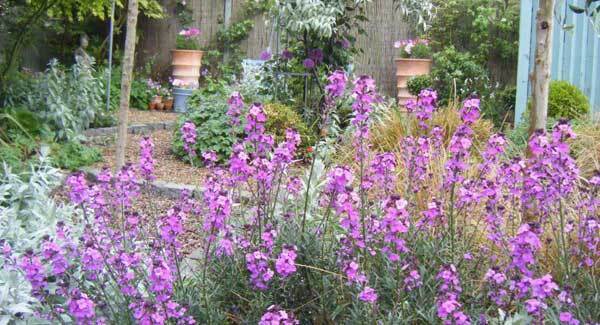
Peter Dowdall loves his wallflowers for their stalwart work in the garden
On returning from a recent trip to Ikea I had to ditch the habit of a lifetime, I gave in and read the instructions.

Peter Dowdall loves his wallflowers for their stalwart work in the garden

Being a male I’m not naturally pre- disposed to reading these ‘unnecessary’ publications and also being a gardener I am inherently of the ‘give it a go and let’s see what happens’ persuasion.

This really is the best way to garden as if you live by the text book then you don’t give yourself the opportunity to trust your instinct, to truly connect to the energy of the garden and to learn from that most basic of things, experience. However, Ikea beat me and instructions needed to be read.

When it comes to the garden another reason not to live by the letter of the text book is that there are so many variables.

A book written by someone who tends a garden in northern England or Scotland will be less accurate to somebody tending a garden in West Cork or Co Kerry. Plants that would be regarded as tender in their part of the world may not be so here.

If you look at when to prune a perennial wallflower such as ‘Bowles Mauve’ in any gardening book or even on the RHS website rhs.org.uk you will be advised to ‘trim lightly after flowering’.

The problem with this advice is that these perennial wallflowers don’t ever stop flowering. Last year I still had flowers on Christmas day, so when could I have pruned them if I was waiting for the flowers to stop.

Wallflowers bring such value to the garden in terms of colour they are worth their place in any bed but alas if you don’t keep them trimmed back they will, similar to lavender tend to get leggy and woody and after a short year or maybe two they will have outlived their usefulness and their space. So when do you cut them back?

Well, my advice is that you should keep trimming them back constantly throughout the year with a more serious pruning around now as the new growth is starting.

I cut mine back last weekend and even though I was sacrificing some blooms and plenty of healthy-looking growth I know that if I didn’t do it I wouldn’t have a nice neat evergreen flowering perennial, instead I would have a long ungainly looking bunch of stems with some shoots and flowers at the tips.

The good news is that these prunings will make excellent cuttings which will root very easily and thus ensure that should you need to replace any, you will always have a ready supply of new healthy plants.

Most of the cultivars that we grow here are native to southern Europe and being of the family brassicaceae they are prone to similar fungal problems that affect cabbages and other brassicas, such as clubroot.

Often a healthy specimen will start to fade, the growth will become weaker and slightly distorted, the plant will become loose in the soil and simply curl up and die.

When you take it out you will see a gnarled clubroot. There is no satisfactory control for the infection. However a drenching with copper sulphate will help and they will be less likely to develop the infection in limey or alkaline soils.

The afformentioned Bowle’s Mauve is probably the most well known of the perennial wallflowers. It really is a stunning plant producing masses of purple flowers and even with regular pruning it will grow to 70cm.

However, there are some other great varieties worth keeping an eye out for. One stunning cultivar is ‘Constant cheer’, a lower growing form, it won’t grow higher than 30cm and produces flowers brown/orange in bud opening up to a dusky pink.

‘Winter orchid’ is similar in colour but growing to about 70cm in height and for the traditionalists winter passion produces flowers of a burnt red colour and winter party is orange/yellow.

There are few plants that I can think of that can match the Erysimum for sheer vibrance and colour in the garden but if it is a zero maintenance garden that you’re after then this is not the plant for you as it will need attention from you on a regular and consistent basis.

From experience, when putting together flatpack furniture, it’s best to open the instructions, but when in the garden, go with your instinct and throw away the rule book.

x

More in this section

Revoiced

Newsletter

Sign up to the best reads of the week from irishexaminer.com selected just for you.

Cookie Policy Privacy Policy Brand Safety FAQ Help Contact Us Terms and Conditions

© Examiner Echo Group Limited