Medical uses for fragrant plants
This week I have been sowing some Sweet Cicely (Myrrhis odorata) seeds which benefit from a few months of cold winter temperatures to prompt successful germination come next spring.
I grow it as a kitchen herb for its sweet and aniseed-like flavour from foliage and flowers. The roots are edible too — raw or cooked — and I have seen old recipes with the seeds included in spice blends. Long before artificial sweeteners or stevia came on the market, sweet cicely was helping those in the know use less sugar in their rhubarb tarts and damson preserves.
It is a brilliant natural sweetener, so if you are a diabetic gardener — or just health conscious — it might be worth investigating. It is abundant in hedgerows, but it looks so much like some of its poisonous cousins (cow parsley and hemlock), that unless you are an expert forager I recommend you grow your own — it saves a mouthful of blisters and that old social faux pas of killing all your dinner guests.
What I love about sweet cicely, apart from the name, is the fragrance it brings to the garden. In fact, its botanical name is more about the fragrance than the sweetness — ‘myrrhis’ meaning ‘smelling of myrrh’ and ‘odorata’ meaning ‘fragrant’.
I use fragrances a lot in my horticultural therapy work; to calm anxious minds, to enliven the dejected, to stimulate appetite in depressed and over-medicated patients, to generally promote a sense of wellbeing.
The olfactory bulb that detects scent is linked to the limbic region of the brain where memories and emotions are activated, so fragrance can be a direct hack into emotions and even catharsis, but also it can be a switching system from suffering to joy.
I briefly mentioned last week how I use the fragrances of the garden to bring myself into mindfulness when the winter blues begin to deepen beyond navy blue. In summer it’s easy, there are aromatic herbs and fragrant blossoms everywhere but how do we perfume the garden in winter — for pleasure or for prescription?
Well, while we may have less choice, what we do have is quality over quantity. In fact, winter-flowering plants are perhaps the most highly scented of all — pollinators are thin on the ground in winter months, so our winter perfumeries really have to pack a punch to get some attention. No big blousy petals, no garish colours just fragrance concentrated.
My mum grows a well-clipped Daphne bholua ‘Jacqueline Postill’ near her front door and you can smell it from the gate, you can smell it sometimes from neighbours’ gates five doors down.
It nearly Febrezes the whole street in late January or early February, when the gorgeous white flowers burst out from their tiny pink buds. It likes shelter and does suit city gardens and walls. There is an earlier flowering and equally intense daphne — Daphne bholua ‘Darjeeling’ — which can start flowering this side of Christmas, often this very week.
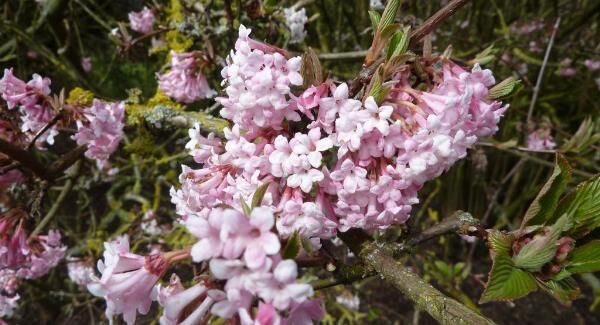
Another pink-to-white flower flowing with fragrance this weekend is Viburnum × bodnantense; there are several cultivars and all sweet. The sweet thing, however, is that they are much hardier than daphnes; even if a frost hits hard, they repeat flower soon after.
My own has been delivering since last month and I expect it to go until March or even April next year. It’s also not that fussy.
When I moved to where I live now, I inherited a stretch of Sarcococca confusa — it’s a total thug — colonising more and more ground each year. I like it as a low hedge where it is, but I am ruthless in cutting it back beyond where I want it. Yet, still it comes.
I keep it because it’s evergreen, it fills a shady dry spot really well, and also for its amazing fragrance. I could rip it all out and replace with the neater and more mannered Sarcococca hookeriana. Both are known as sweet box or Christmas box and both fill the air with delightful fragrance.
I grow a few varieties of witch hazel (Hamamelis × intermedia, H. japonica and H. mollis). Great colour show in their autumnal foliage. Gallons of homemade witch hazel can be extracted, and best of all a clean fragrance exudes from their stunning winter flowers.
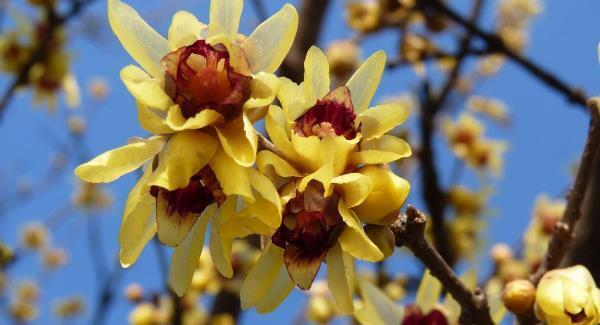
It likes it a bit acidic, so I grow it in large pots and top dress with tea leaf compost and pine needles. I grow wintersweet (Chimomanthus praecox) too. It can take a few years to establish, but it’s worth it. It has medicinal, cosmetic and culinary applications, but as a cut flower in December it will fill the whole house with a deep floral aroma — as strong as jasmine. It is an extract used in some popular perfume blends.
Right now, Mahonia plants are doing their glorious thing — fireworking yellow candles in the diming light and, on closer inspection, wafting a little Lily-of-the-Valley scent. They will flower all through the winter and then follow up with blue-black berries that are edible, full of vitamin C and which supply a piquancy to savoury rice, curries, pies and jams. And when it comes to mindfulness, their sour berry really bursts with the reality of the moment.
Considering fragrant bulbs, it is not too late to plant some real Lily-of-the-Valley (Convallaria majalis). It might be an idea to grow it in the front garden if you have wild garlic (Allium ursinum) in the perennial veg plot out back. Apparently, a lot of people mistake the two and die or almost die – at least that’s what people often tell me when I talk about the great medicinal value of wild garlic.
Totally different in flower. The leaf shape is similar, but if you can’t tell the difference between the almost cloying sweetness of lily of the valley and the full-on almost gym shoe waft of wild garlic, then maybe natural selection has a plan for you.
For the rest of us, Hyacinths can go in now, for spring scent. As can the musky Muscari spp and the aromatic Narcissus ‘Thalia’, all of these are traditionally forced for indoor fragrance on the run up to Christmas. But for indoor scent you can’t beat a scented geranium (Pelargonium spp) or Chinese jasmine (Jasminum polyanthum). The latter will be profuse with winter blooms from now until the new year’s resolutions have become a bore. The former require a rub if not a crushing of the foliage. Indoor jasmine performs better with cool temps, so not by the radiator.
The Sanskrit word ‘ghraf’ means both kiss and smell. The Persian word for smell ‘bujad’ also means yearning. I get it. So frosts, floods or gales permitting, it’s not too late to plant some fragrant shrubs and bulbs, including bareroot roses that will kiss the face off you next summer.

CONNECT WITH US TODAY



Be the first to know the latest news and updates