The challenge of picking the right Christmas tree for your home
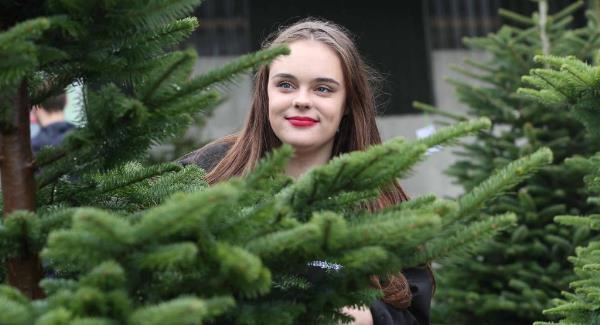
No matter how convincingly green, pert or resplendent with fake sparkle the imitators are — for many of us, it’s back to nature when it comes to a Christmas tree.
According to a recent survey by the Irish Christmas Tree Growers Association (ICTGA), around a third of Irish families, are expected to bring a real tree indoors to celebrate Christmas this year, and the percentage may be as high as 44% if those still considering a real tree follow through.
The scent of a Christmas tree in the house was the number one reason why the majority buy a real tree, while tradition and the experience of picking out the tree were apparently rated as a great reason to drag home the spruce or fir.
Sales of smaller, easily handled three- to four-footers was up last year, with some families buying two trees — a smaller one to stage in the children’s bedrooms and host presents from Santa, as little eyes flapped open on Christmas morning.
The ICTGA campaign — Love a Real Tree (lovearealtree.ie) has also launched a tree labelling system, which include tips on how to care for trees grown here in Ireland, as well as getting the very best of them throughout the season. The association conducted its survey as part of a determined effort to encourage more consumers to return to the soul-deep joy of a real Irish-grown tree this Christmas.
And it throws a light on the frenetic annual activities of this highly specific area of farming. From September forward, the race is on to bring this quality product to market in perfect condition, with a shape and size of tree to suit everyone.
In Europe, the Christian tradition for placing a coniferous, cherry or hawthorn tree or large limb indoors at Christmas is at least 1,000 years old. The pagan use of the evergreen, to give hope of renewal over the Winter Solstice, may be far older.
More than 5,000 acres are now devoted to the growing of Christmas trees in Ireland, with 300,000 trees harvested by reputable Irish growers every year.
The UK, Holland, Belgium, France and Germany import Irish trees and 75% of these are Nordmann Fir, Abies nordmanniana, the ‘needle-fast’ variety, followed at 15% by the Noble Fir, Abies nobilis, with its heavenly scent and gorgeous shape.
The growers not only make or supplement their living in the trade, but argue that they enhance the biodiversity of the countryside with an important protective cover and a habitat for a range of wildlife during the seven to 10 year growing span. So with patience and a lot of work involved, what brings people into this specialist pursuit in the first place?
In 1989, teacher Joe Flynn planted 1,500 Noble Fir plugs on some spare ground behind his house and was astonished to sell the whole crop to Des Nagle in Cork. What followed was a harsh learning experience of
matching the right tree to the right ground and site conditions, but Joe did his research and made enthusiastic visits to Oregon, Denmark, Germany, and Austria to meet growers and to find out what cultivation methods made for a perfect tree.
In 2004, Joe and his brother Robbie bought a 40-acre site outside New Ross, and Wexford Christmas Trees really got down to business. Their entire crop is now Nordmann Fir.
I asked him about his well documented prowess at the recent tree hurling event staged by the ITCGA.
“Yes, I had a go at this daft competition at the field day in October. It was for a bit of a laugh to kick off proceedings and to get everyone together — and it certainly worked! Sadly, grower Martin Kelleher took the honours on the day.”
Apart from aerodynamics, why does Joe rate the Nordmann Fir so highly? “A chap could wax lyrical about the aesthetic qualities of this variety of Christmas Tree. In truth, it’s really about money. I have had some very expensive lessons over the years, particularly when growing Noble Fir.
"A ‘successful’ crop resulted in 60-70% of the trees planted getting to market. Our strike-rate for Nordmanniana is well in excess of 90%. It is easier to control style features, such as taper, density and producing a perfect top and its butt isn’t prone to swelling.”
I asked Joe for a favourite encounter with a customer in the season, and it reveals how little most of us know about the process of propagating trees of any kind: “I was asked by one buyer (and this was not a child), ‘so, you grow non-shed Christmas Trees — does that mean that they were not grown in a shed?’”
So what drew Joe to growing trees, and persisting through what he laughingly refers to as retirement.
“It was for the contrast — the tree will stay where you put it and it won’t argue! In truth, I just love the silence, the green colour all around, the country sounds, and the surprises, such as a fox walking along a couple of feet behind me, birds’ nests in the trees — and even a fully grown stag no more than ten feet in front of me on one occasion.”
John White of White’s Christmas Trees, grows, and skilfully tends a modest plantation of some 2,000 trees near Dundalk. He sells half his Noble Fir and Nordmann Fir direct in Dundalk and Sligo town with the help of seasonal workers. Like most specialist farmers, he has responded to local conditions with research, instinct and ingenuity.
FLOCK of beautiful Shropshire sheep are on duty year round to graze vegetation and grass down around the firs.
This breed has found favour all over Britain, Ireland and Europe over the last 20 years as a planet friendly alternative to heavy use of herbicides in tree growing as they are ‘tree safe’ and don’t generally strip off the bark or nibble at leaves.
By taking away wind born leaf litter these woolly workers also reduce fungal growth. “We found with the soil and weathering up here in Sligo that the sheep nipped things down nicely but left some growth, which makes harvesting a lot easier.”
Does he have families visiting the farm every year? “We sell most of our trees at our stands, but I have some customers who have been coming up and cutting their own trees here for 12 years now, which is fantastic.”
Samantha and Padraig Sugrue of Belfield Christmas Trees and Christmas Shop, grow at Farmersbridge, four miles from Tralee. They cultivate Noble Fir, Nordmann Fir, Korean Fir and the Lodgepole Pine, an elusive and rare offering once top of the trees for the indoor experience and still popular in the West of Ireland.
Padraig and his team cut the trees by hand and can work as much as 100 hours a week in the run up to Christmas and his enthusiasm for this sector is clear.
He enthrals me with his science around the ‘leader’ of every tree: “The leader is the spike on the top, this is the amount the tree grew in the summer just past. It does most of this in four to six weeks in June and early July. As the trees get bigger, about four foot, they sometimes grow too quickly and the top of the trees gets gappy and open — not what the customer wants. We control the amount of height it puts on by using a hormone on the leader.”

Reflecting on the natural highs of their open days when customers have the chance to see the harvest and pick a tree he say: “It’s the wonder and excitement of the children, and an urge to run up and down between the rows of trees. They can hardly wait to get on the wellies. They love getting involved in dragging the tree to the edge of the field and helping to net the tree. The smaller ones love to show how ‘big and strong’ they are getting year after year.”
He suggests building on that tradition within the family: “Buying a real tree can be something that certain members of the family can do together — perhaps a father and daughter buy the tree each year and as the daughter grows up it might be the only activity they still do together at Christmas.”
So beyond all this excitement how can wejudge quality trees? Dermot Page, a grower in Grangecon, Co Wickow, and chairman of the ICTGA explains: “There are individual classes of quality tree, and we class our trees. We strive to produce a full, well shaped tree with great colour that the majority of consumers want, not every tree will be like this and the different tree densities will fall into different categories.
What would he like to see in the future for Irish growers? “I would like to see Ireland recognised as one of the top Christmas tree producers in Europe, and to see the industry continue to grow as more people choose a real Christmas tree.”
With determined passionate growers like these who cherish their customers as well as that magical crop — I think, here in Ireland, our chances are evergreen.
* For all you need to know about finding, choosing and caring for your Irish grown Christmas tree go to: lovearealtree.ie
* A freshly-cut, healthy Christmas tree will last longer than one that’s been cut weeks ago in another country and shipped to Ireland.
* Gently stroke a branch on the tree to make sure that the needles are flexible and remain on the tree. Lift up the tree a few inches and drop it on the cut trunk. If the outer green needles fall off, you probably shouldn’t buy the tree.
* Trees can burn so be careful and place away from all heat sources. Corners are good places to put a tree because this keeps it safe from knocks and bumps.
* Cover the floor where the tree will be placed. You can use a properly sewn tree skirt or be budget-savvy and use Christmas-themed paper or a piece of satin fabric. This will help protect the floor in case any water splashes out. A skirt that goes over the cradle prevents pets from attempting to drink the water in the base.
* Using a small handsaw, cut about a half inch to an inch (1.3cm-2.5cm) off the bottom to aid water absorption. Don’t cut the base at an angle, in a V-shape, or drill a hole in the base. None of these methods help water absorption and they may make it more difficult to hold the tree safely in the stand. Do NOT cut the tree with a reciprocal saw or any blade that moves so fast that it will create friction. If the cut gets hot enough, the sap in the tree will seal the end and make water absorption impossible.
* Mount your tree within eight hours of cutting the base. That is how long a fresh tree can go without water before absorption is jeopardised. A Christmas tree should never be mounted dry. It is much better to place it in a container of water that is replenished on a regular basis. The tree should be provided with 1 quart (950ml) of water for every inch (2.5cm) in trunk diameter.
* Don’t whittle down the bark of the tree just so that it can fit in the stand — that outer layer is the part of the tree that absorbs the most water.