A very unusual recipe with Nasturtiums
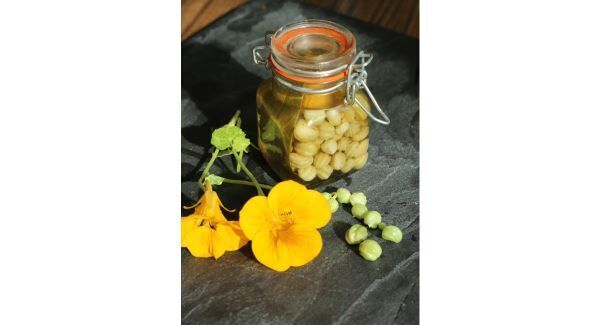
As calendula and nasturiums make one last ditch attempt at a good show, now is the time to gather seeds and leaves. Nasturiums aren’t just pretty flowers to look at, they grow so prolifically that in some places they are sometimes considered the prettiest weeds.
These flowers give much more than colour however. Nasturtium flowers are edible and are bought by many chefs to put on dinner plates in fine dining restaurants across the world, sometimes it can cost as much as €5 for one carefully packaged bloom, out of season.
So next time you see these beautiful flowers, from yellow to orange to a vampy, blood red, pick a few and toss them on your salad or your desert plate. You’ll suddenly find yourself eating a very valuable meal. Nasturium seeds have a hidden use, other than being the seeds for the next year’s flowers, they can be pickled or fermented to make what’s known as poor man’s capers.
The seed pods are very peppery, just like the flowers and need some time in brine or vinegar to reduce their fireiness and make them more digestible. So the next time you see those unusual looking, plump seed heads like little brains popping off your own flowers, gather them up.
They will willingly fall from the plant with a little nudge when they are ripe for the picking. Then you can make some delicious and interesting preserves from more of nature’s free food. Don’t wait around however, now is the time to get these nasturium seeds before they fall to the ground or dry up.
Nasturium leaves are bursting with peppery flavours too and make a great addition to salads as well as being very pretty to look at. You can easily make a zingy nasturium pesto or oil for enjoying with pasta or on a fish dish or salad. Blackfly love these plants so be sure you’re not making your delicacies with a bunch of aphids.
For one pint you will need a jar that fits this volume, a bit less than one litre. Clean and sterilise it by putting it in the oven at 160C for ten minutes or putting it through a dishwasher cycle without a tablet. I made this with, and without the garlic, the alium really takes over the flavour, but if garlic is your thing then go nuts and pop in plenty.
11/2 cups of seeds
Garlic — optional
Sea salt
Collect your seeds
Dissolve 10g salt in 250ml water to make your brine for fermenting
Rinse the seed pods and peel the garlic cloves, pack the cloves into the jar and top them with the seeds
Pour over the salty brine until it just covers the seeds
Weigh down the seeds with a weight that fits inside the jar, I usually use a smaller jar. It’s important to keep the seeds under the brine or they will go mouldy.
Pop a lid on the jar and put it on a plate to collect any liquid that overflows. Place this somewhere — ideally with a temperature of 18-20 C, however I find that ferments work in general, no matter where you put them.
Let any gasses that might build up, out of the jar and after 5-7 days the ‘capers’ will be ready. Keep them in the fridge where they will stay fresh and crunchy for months.
Make yourself a delicious and nutritious treat with this vibrant green pesto, smothered on lots of wholegrain spaghetti and decorated with some gorgeous nasturium blooms. Makes 2 jars or one big jar
4 cups packed nasturtium leaves
2 cups packed nasturtium flowers, if you only have leaves thats ok too.
1 1/2 cups olive oil
5 cloves garlic
1 cup walnuts or brazil nuts
1 cup shredded Parmesan cheese or similar hard cheese Sea salt to taste
Simply pop everything into a blender and zap it until you have a lovely, vivid green paste, taste the seasoning and add a little salt if needed
Spoon the pesto into clean jars and level off the surface, pour on some extra olive oil and pop the lids on. This will keep in the fridge for a couple of weeks.

CONNECT WITH US TODAY



Be the first to know the latest news and updates