Get your tile style right with this practical insider guide
Tiles offer visual impact, superb practicality, and great value for money.
Before you grow bleary eyed at the fascinating hectares of products on show, get to know what you’re looking for and what’s likely to be involved in a tiling project.
In short — choose carefully and invest in perfect installation.
It might seem a ridiculous blunder, but in hysteric excitement, people do buy wafer- thin wall tiles and attempt to put them on the floor, and weighty herculean floor tiles to encourage up onto dainty stud walls.
Tiles are manufactured with a depth and density intended for a certain loading and situation. If you find a wall tile you like, chances are a larger outlet will have a floor tile to marry up to it, if that’s what you fancy.
A room set or even a large board, set with out with the range including decorative panels, dados and mosaic choices is ideal to take a real scale look at the products.
Styling boards can (with a little muscle) be moved around to see them flat or raised to the wall too.
If the tile is going to get wet it makes sense to choose something with a slight ‘key’ to prevent dangerous slips.
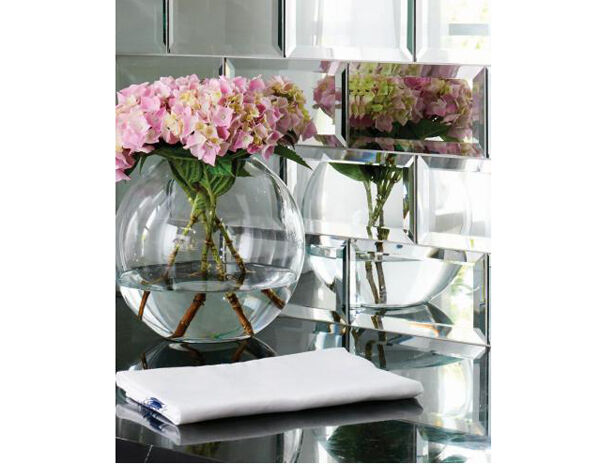
High glazes are not ideal underfoot but too much texture can catch bare feet and gather grime. On walls, a shiny tile adds light-bouncing reflection — useful for a pinched space or north facing room.
When you find something you like, check the batch numbers on the boxes, as there can be slight colour variations, especially with ceramics.
Ceramic tile remains popular for its endless variety and economical price.
It can ape stone and rarer materials like terracotta with ease. Examine the tile closely to see the quality and resolution of its screen printed design.
For durability, strength and investment potential choose porcelain — it’s denser, less porous, and chips are almost invisible as it’s baked in one colour all the way through. Busy patterns and embossing are highly seductive.
Still, these are elements you can so easily introduce with towels and accessorise without the commitment of a fixed element that may stay in the room for 10-15 years.
Smaller tiles will require less cutting used together, but larger tiles reduce the stutter of grout lines.
Sitting in the bath, nose level with a ripple of un-level tile is both visually disturbing and financially disappointing.
If you’re going to cement anything into place in your home, it has to be right first time. We all know that the cost of installing tile often matches or even exceeds the price of the tile itself.
Beyond a bit of DIY fun with a small tiled splash-back, this is a specialist job and for heavier materials such as natural stone slab, crucial for a level, beautiful finish.
Tiling on floors can cover or surround essential services such as heating, water and waste pipes, so getting it back up if adhesive fails, plumbing goes beserk or a delicate tile chips — this is a messy, expensive job.
What if the floor or shower walls fail in even a year or two? Without perfect, matching tiles to replace the ones being hammered out — you’re facing a complete refit.
If you cannot competently level a floor or install cement board, step away from the job. Put yourself in the right hands from the get-go.
A good tiler will have a full understanding of sub-floor and wall preparation, and will suggest ways of getting past unusual obstacles or odd spaces.
They should be familiar with the sealing of wet-rooms and showers, and bringing the wall to the tile with up-tiling.
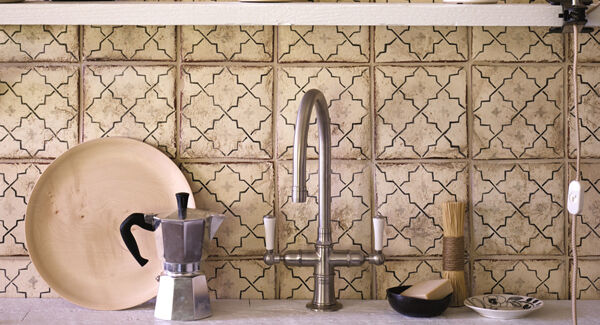
Ensure you have a full on-site conversation with the tiler, preferably with the tiles in hand. What size are the grout gaps if any?
What colour is the grout? Which way will the tile run, and where does he suggest the tiling should start on the floor or wall?
It’s not the tradesman’s job to tell you if a rectangular tile should be laid in one way or the other — take time to try it out on the floor yourself.
If you are not sure how many tiles you need, ask your supplier to work it out based on the measurements of the room, and the size of the tiles, then add at least 2m² for even a small floor.
There’s nothing worse than a tiler looking for an extra box of tile that are two weeks away in Portugal. Most tile houses will take back tiles still in their packaging, with a receipt in perfect condition. Ordering times can be anywhere from two to six weeks for something not in stock, so plan well in advance.
One retailer I spoke to, relayed horror stories of well-meaning builders installing dedicated decorative panels of expensive tile the wrong way up behind sinks and toilets, largely because the client never had that vital conversation with the contractor. If you’re going to be out on the day — leave a sketch taped to the wall.
In a build, renovation or extension, the trades will be scheduled and if the tiler, the plumber and electrician need to talk, that should be organised well in advance of any work.
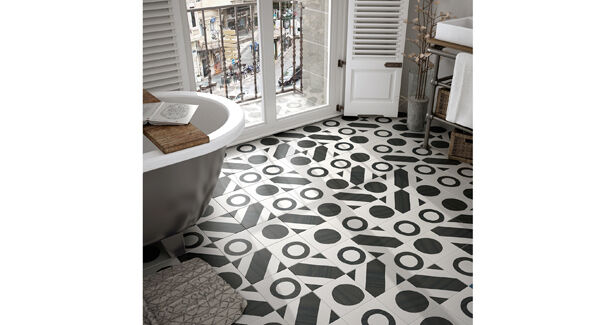
If you’re having a go — always, always use spacers. Spacers give the tiling consistency and a professional finish, and you can use them to alter the look of the finished job.
Except in the case of rectified tile laid closely together, spacers ensure your tiles are equidistant. Choose from for 1mm to 5mm gaps by laying the tile out (dry) in a test panel.
2mm is the recommended minimum for walls and 3mm the minimum for floors. Using larger spacers can help where the walls are not square to minimise the discrepancy and number of small cuts. Spacers are removed before the adhesive fully dries and before grouting.
For small tiles of 10x10cm, expect to use in the area of 220 T spacers and 110 plus style spacers per square metre (they are cheap!).
Grout will fail and stain over time, and can be repaired or independently ripped out and replaced if you are still happy with the tile itself.

CONNECT WITH US TODAY



Be the first to know the latest news and updates