VIDEO (WEEK 6): When planting, work with nature as opposed to against it
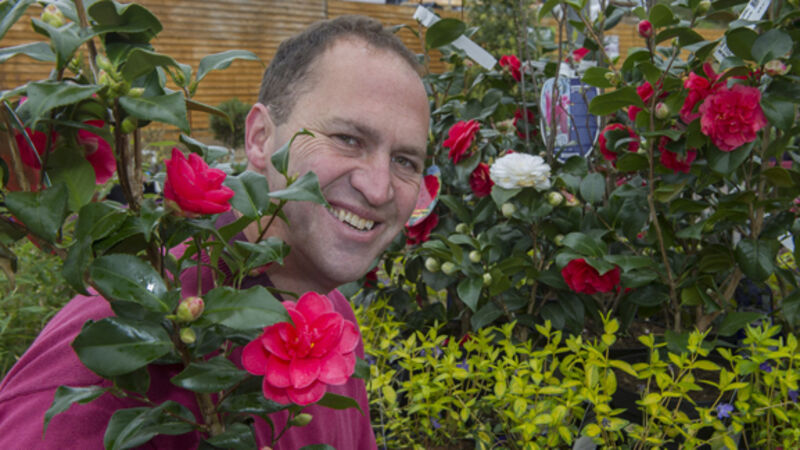
WHY do we want what we can’t have? For example, the elusive plant that is just so rare it cannot be sourced: a specific-coloured Hellebore, perhaps, or the most dwarf of pines.
You may be restricted from growing certain plants in your garden, because of the environment: too windy, too shady, too sunny, or maybe your garden is no more than a balcony or a paved or decked area, and so your gardening is confined to containers.
The curator of a windy garden lusts after the delicate, finely cut foliage of the Japanese Maple, Acer palmatum Dissectum, but, of course, cannot possess one, as it will surely shrivel up in the gales.
Too much shade removes so many summer-flowering beauties from the list, such as roses, lavender, orange blossoms and many more flowering specimens.
PH stands for power of hydrogen or potential hydrogen (the ‘p’ is being disputed by scientists) and it is important: the pH of your soil and tap water will determine what plants you can grow.
Many of our spring favourites, in this part of the world, are acid-loving plants: that is, plants with a pH of less than 7 and thus aren’t suited to alkaline or limey soils.
Do invest in a soil-pH testing kit, if you’re unsure of your own garden. You may think it alkaline, but pH levels can vary significantly in different parts of the same garden.
I love words and language and Calcifuge is the Latin term for a plant that won’t tolerate alkaline or limey soil. The word comes from ‘calcis’, the Latin for chalk, and ‘fugio’, to flee, literally meaning ‘flee chalk’.
Calcifuges are most often referred to as ericaceous, because the most common plant that will not tolerate alkaline conditions is Erica, the heather.
For best results in the garden, work with nature as opposed to against it. This logic is the basic and most fundamental precept in gardening. When we start interfering with the great tapestry, then things start to crumble.
Many gardening books will explain that it is possible to grow acid-loving plants in alkaline soil. Dig a big hole. Line it with plastic, to stop any lime from leeching in. Line that plastic with ericaceous compost and then plant your sought-after Camellia or rhododendron. However, nature will always win out and the plant won’t thrive long-term, and so I would advise you to grow these specimens in pots.
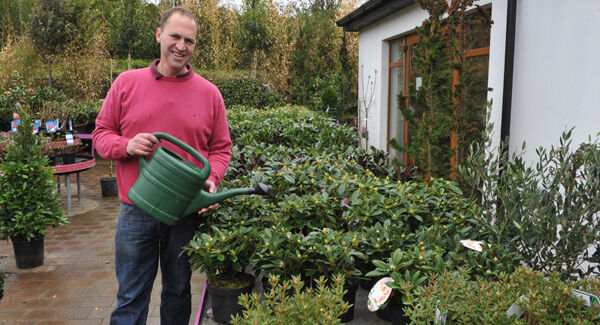
A rhododendron or Camellia growing in a soil with too high a pH will look miserable. It’s unlikely to die from being in the wrong soil, but it certainly won’t thrive.
It will be weak and more susceptible to disease and infection, and will produce poor-quality flowers, if any. The most noticeable sign, however, is in the leaves. Instead of a good rich-and-dark, strong, green colour, the foliage will look pale and wan and more yellow than green.
Technically, this isn’t because the plant can’t cope with the pH, but more that iron tends to be locked or unavailable to the plant at this pH. You can counteract this by applying iron in a form that is available at a higher pH, namely sequestered or chelated iron, or sulphate of iron.
However, the natural world adapts and, every so often, a mutation appears; sometimes, nature takes pity on us. To make life more bearable for the gardener on limey soil, Mother Nature herself intervened in the form of a seedling in a German nursery, over 25 years ago.
The Inkarho rhododendron was selected out of seedlings that had sprouted in near-neutral soil (ph 7 approximately) in a nursery.
One of the seedlings was doing remarkably better than all its siblings in the same location. This seedling was subsequently propagated via tissue cultures, guaranteeing plants with identical characteristics to the parent plant.
These selected plants are now used as rootstocks to create lime-tolerant rhododendrons.
All rhododendrons can be grafted on this rootstock and thus we can grow lime-tolerant Rhododendrons on alkaline soil.
An Inkarho-grafted rhododendron will grow equally well on acid soils and even develop healthier leaves with more vivid-coloured blooms.
All Inkarho-grafted rhododendron are sold with a distinctive Inkarho label, which guarantees that it is the genuine article and can be traced back to that thoughtful German seedling of 25 years ago.


CONNECT WITH US TODAY



Be the first to know the latest news and updates