Vintage view: How to identify real elephant Ivory
Despite its silken, tactile beauty, elephant ivory is one of those subjects that elicits an instant reaction from most people.
A blink, a shudder, a twist of deep repellence — these feelings are well founded. Last year, and for the first time, a top London auction house, Chiswick, was prosecuted for the sale in genuine error of a piece of elephant tusk dating from the 1960s.
The law as it stands is, that unless a piece of ivory was taken from the animal before June of 1947, it cannot be sold under the 1989 Convention on International Trade in Endangered Species or CITES.
Dating a piece, even after discriminating between elephant ivory and other forms of tusk, can be an uncertain business.
This precious material makes any reputable antique dealer very uneasy. Measuring radioactive carbon-14 inside the dentine and pulp that makes up tusk, can closely date an expensive, disputed piece.
This scientific device is now being used to tackle large scale illegal trade from the Word Wildlife Fund’s Forensic Analysis Fund.
Between 2002 and 2013, 65% of the World’s forest elephants alone were slaughtered for their tusks, according to a study by the Wildlife Conservation Society.
Prompted by these depressing figures, US president Barack Obama put aside even CITES certification and banned the importation and even the domestic trade of not just recent, but most antique elephant ivory not proven to be more than 100 years old into, and within the US.
The onus outside the US is now on the seller of a piece to prove the piece is legal with full CITES certification rather than a government proving it is not — that’s a seismic shift.
Unworked elephant ivory (whole tusks and parts of elephant tusks), whatever its age cannot be bought or sold. You can own one, but that’s it. The atmosphere growing against even legal ivory sales is clear.
Bechstein, the world famous piano maker caused media uproar when they applied new, legal ivory keys and veneers to a replica of the original Bechstein created for Queen Victoria to celebrate its 160th anniversary in 2013.
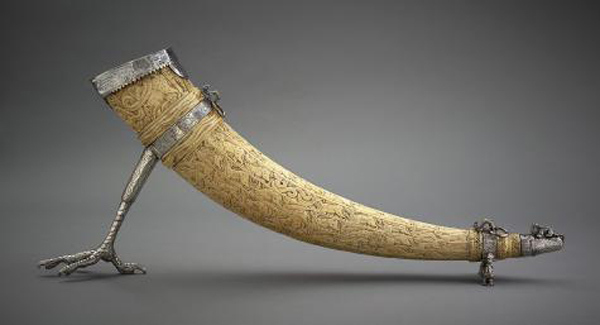
The rogue ivory works that flout CITES appear in smaller items, rather than as, say inlay to a large piece of furniture, or something spectacular or rare such as an oliphant — a hunting horn used in the Middle Ages.
An oliphant in elephant tusk was the single most expensive antique item ever sold in the world, fetching €15m in a Scandinavian sale.
By contrast, in February of last year, 50kg of surrendered ivory pieces (including antique items) were crushed in London by the International Fund for Animal Welfare at the start of a conference on wildlife crime in the city.
Poaching aside, in countries including South Africa and Zimbabwe, elephants can still be herded into small areas and shot on licence by hunters who get their jollies eliminating massive, gentle, iconic wildlife.
This ivory can flow back to the market as can pre-Convention ivory, which has a lively trade within the EU.
China has at least 150 legal shops selling elephant ivory from the government’s stockpile of the pre-convention material, and yet still, the modern poaching crisis centres on China.
There was once a Chinese elephant but it was hunted to extinction in the 6th century BC.
Ivory actually comes from animals other than the elephant, and these include the walrus; wild boar; the whale; mammoth (extinct of course but appearing after thaws and popular in Asia), and the hippopotamus.
Modern and antique pieces of netsuke (small, carved figures) appear regularly in boar tusk and this will be instantly recognisable to an experienced eye.
Be aware that anything you buy that includes elephant ivory must have come together before 1947 to be CITES certified. So, if you buy a knife with an ivory handle, or a piano with ivory keys it must be certified that it had been completed, including any carving or reduction, by 1947.
Rogue certificates are about. In short, don’t buy ivory or supposed ivory from a market stall or boot sale or a private buyer on the unregulated highway that is the Internet.
To have an antique elephant ivory piece or any Annex A specimen material certified for legal sale go onlinto the National Parks and Wildlife Service at www.npws.ie/legislationandconventions/cites
You will be required to support your application with documentary evidence. If you have a piece of antique or vintage ivory, the expense of having it certified may outstrip its value. Keep it, gift it, but don’t attempt to sell it.
If you are abroad, especially in the Far East, avoid ivory substances like the plague.Ignorance is not deemed a defence and you’ll find yourself knee deep in elephant poo if you sneak in something in your case.