Herbs for health
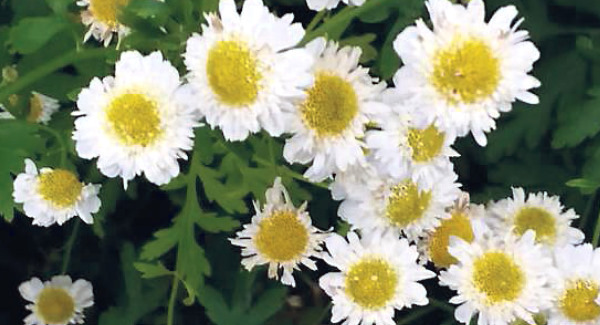
It was strange that she would use that phrase as Tanacetum parthenium is a head herb and is particularly good for migraine headaches.
Tanacetum or Feverfew gets a bad reputation (as most of the herbs I write about in this column do), but as you can see, if it is left to grow is a beautiful flowering plant with flat daisy-like flowers which will add to the enjoyment of the garden, whether it is used as a herb or not.
The flowers of feverfew bloom for a long time and flies and insects don’t particularly like it, so it can be used as a bordering plant for carrots and cabbages..
Feverfew is the one of a small number of herbs used specifically in European phytotherapy for migraine. It is useful for reducing the tension and inflammation that causes the typical thumping that accompanies most migraines.
Because it has anti-inflammatory constituents, it is useful as a topical treatment for arthritic pain too. It has also been used through the ages for menstrual cramps. Menstrual cramps are the result of the uterine lining producing too much prostaglandin, a hormone that can cause pain and inflammation. Because it can help limit the release of prostaglandin, feverfew may have a role to play in easing menstrual cramps. There’s no harm in starting to take feverfew a day before you anticipate that your cramps will begin, to see if it works for you.
Gardeners should be aware that it is easy enough to mistake this herb for German chamomile, one of the differences is that the flowers heads are more conical than the flat chamomile head.
The name feverfew is derived from febrifuge as it was traditionally used to reduce or dispel fevers. It was and is still commonly used as a herb for hysteria and nervousness.
It can be used topically to reduce the pain and swelling of insect bites and stings and it also has to ability to moderate or balance histamine release.
Try a feverfew sandwich, because the leaves can cause mild mouth ulcers in certain people who are sensitive to the Asteraceae family, put a leaf (no more than the size of your thumbnail into a sandwich and eat, this prevents the leaf from coming in contact with the mouth.
Feverfew may interfere with aspirin or other anticoagulant medications so always check with a professional before using and it should not be used by pregnant women.
Feverfew can be used in teas or other recipes, so cut when the flowers are in full bloom. Bundle and tie the stems together. Hang upside down in a dark and dry place until fully dried; store in a glass jar until needed.
Feverfew tea can be prepared by steeping 1 teaspoon dried leaves in 8 ounces of boiling water for 10 minutes. After straining, the liquid can be drunk or used on the skin.
To make feverfew oil mix together four ounces of fresh chopped leaves with one pint of olive or vegetable oil. Heat over a medium heat but do not boil (this is probably best done in a double pot if you have one) for one hour. Let the mixture cool and strain, squeezing out as much of the oil as you can. This can be applied to inflamed areas. It can also be turned into a salve by adding between one and one and a half ounces of grated beeswax to warmed oil which should be stirred constantly as the oil cools down, to get a smooth salve.

CONNECT WITH US TODAY



Be the first to know the latest news and updates