Vintage view: The dining room sideboard
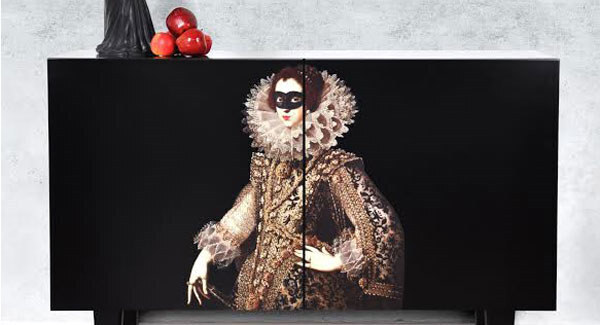
Most of us have a variant of it, be it a low-slung media console, or a crouching buffet of sorts flanking the dining table or celebrated shyly out of place in the livingroom.
Now, cabinet designers have rediscovered the sideboard form in the re-awakened appreciation of mid-century modes and manners. Vintage examples, the best of which date from the 1950s and ’60s in exotic solid woods and veneers, which once lingered for €30-€50 at the back of every secondhand retail cave, now command hundreds and, in the case of great Scandinavian and British names, thousands.
Quite ugly 1970s coffins of teak and baize by undistinguished middle-market makes have shoulderied aside Victorian brown furniture, and appear in every interiors’ shoot from here to Paris and LA.
A sideboard as we know it was introduced in the mid-18th century as an extra surface (board) to stage and store pieces by the side of the dining table. It evolved from various trestle tables and slab shelves of the medieval period to the fluffed-up magnificence of an arsenal required to hold several courses and to facilitate the inherent showing-off of a Georgian evening.
The credenza is a variant of the side-board, named for the Italian for “belief” as these early court sideboards were used to place dishes for tasting to protect the master of the house from any dastardly attempt at poisoning. Ages on and with gothic plots and Scandinavian feasting behind us, the genteel 18th-century sideboard grew slender enough to keep its back politely to the wall, but hefty enough to take platters of meat and game, bottles of hooch and of course (what elegant room would be without one), a pot-cupboard for the men to stagger over to, and relieve themselves openly between courses.
Thomas Chippendale and occasionally Robert Adam are credited with the creation of early sideboards — elegant serving tables made up of two base cupboards mounted with a table surface and two urns. One urn would be lead-lined for rinsing off cutlery, and the other used for ice. Silver was screamingly expensive even in the 18th and 19th centuries. If you had it — you kept it where your genteel peers and aristocratic betters could see every glint of it.
The Victorians, the ultimate period show-offs, could not restrain their social insecurities. For reasons of extreme size and Hyacinth Bucket-pretension, late 19th-century sideboards prickling with decoration can be picked up for a song today.
By the 1940s, material modesty and the love of a more restrained shape signalled the end for Victorian sideboards. But with the survival of sitdown dining in a dedicated room in the 20th century, the story of the sideboard was set to continue.
The mid-century sideboard has been copied, interpreted, and unashamedly reproduced for the last 20 years. Simple rectangular boxes of gorgeous colours and grain were captured in a single sentence of half a dozen clean lines. Square cupboards matched to a handful of drawers were re-shuffled in a thousand compositions of style. Beautifully engineered for stability and purpose, their elastic outline sits lightly in a hall, lounge or kitchen-diner. Stiletto slim legs splay from each corner, Sputnik style, or sit boldly towards the mid-section tapering at right angles in a classic Danish buffet.
The best mid-century vintage sideboard has as much elegance as their 18th century forebears. Look for sharp geometry, recessed ornament, inlays, ergonomic handles, thick veneers, dovetailing to drawers, and roomy cupboards and shelves (they just long to be used).
The 1960s cocktail cabinetry dropped open, Odeon-style as a witty conversation starter, but utterly useless as a practical piece of furniture. Beware of extensive splitting or loss of veneers, and any signs of warping which will undermine the piece’s integrity.
Vintage aside, take a look at the new sideboards. My favourites are the witty and sublime Elizabeth Cabinet from Young & Battaglia, (at €3,356 Mineheartshop.com) and Malerba’s Container Pig, €1,057.50 from Notonthehighstreet.com.