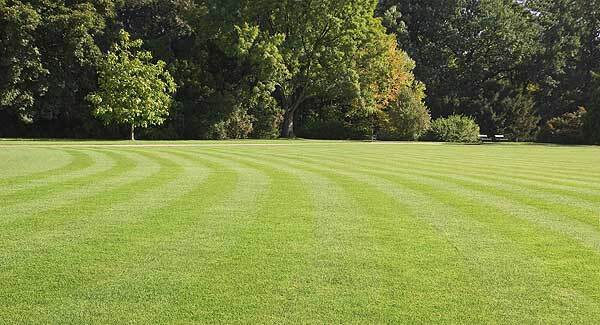
Time for lawn work
THIS year the change in the seasons was as dramatic as it could be, we went from the rain and wind and miserable January like conditions to blue skies and sunshine literally overnight and hopefully this glorious spring weather will continue all the way into 2015. Of course it won’t, but if we get a week or even a month of good spring weather then with both hands grab the opportunity to get out into the garden.
We are a very forgiving bunch when it comes to our climate, just two or three days of beautiful blue skies and forgotten are the long weeks of miserable, cold, wet and windy weather.
Every year as soon as spring starts to emerge and the harsh winter loosens its grasp on our lives, and with this the increasing temperatures and longer daylight hours, our thoughts inevitably turn to the L word and I am always asked the same question. ‘Can I cut my lawn yet?’ That switch that forces us inwards to hibernate during the winter is pushing us out at this time of the year and we all want to get stuck into the garden once more and for many of us that starts with the lawn.
I knew spring had arrived last week when the first question I was asked on the radio was indeed ‘Can I give my lawn its first cut?’ The short answer to the question is: Yes, however, if the soil surface is still damp and boggy then literally tread carefully as the wheels of the mower and your feet will create ruts in the lawn which will remain. So every garden is going to vary slightly as to when it is ok to go out and start cutting. With the temperatures increasing it is important that you get outside soon to start mowing, but at the same time you do not want to damage the soil surface so you must wait until the soil dries out and the ground is firm underfoot.
With so many people aiming for a low maintenance garden it is worth remembering that grass is the highest maintenance plant of all. There is no other plant in your garden that will need attention once a week. So be aware lawns are high maintenance. But for all that a lawn can make a garden, the green area creating a perfect foil for the beds and borders around the garden.
The most important maintenance is good, regular cutting. Basic maintenance will stand to you so make sure that your mower has been serviced and the blades sharpened. Ensure that you cut in different directions each week to avoid the formation of thatch. This is when grass starts growing horizontally along the ground as opposed to vertically towards the sky. This is caused by the wheels of the mower pushing the grass into the ground every time you cut. This is turn leads to damp conditions and poor air circulation around the soil surface and ideal conditions for the development of moss and certain fungal diseases which will harm your lawn.
It’s very difficult to avoid thatch developing if you don’t take remedial action, so too in our climate it is next to impossible to prevent moss colonising your lawn.
Damp warm humid conditions are exactly what moss likes. Remove thatch and moss by scarifying the lawn to pull up the sideways growing grass and moss. Scarifying is like giving the lawn a good rake scratching the top inch of the soil surface and pulling up everything undesirable. Your lawn will benefit hugely from a good scarifying at this time of the year, allowing more air at the soil surface and enabling the grass to breathe.
There are various products available to combat moss on lawns but, as in all aspects of gardening, if we can work with nature in the garden we are sure to have more success and with that in mind, Pelargonic acid, a naturally occurring extract from Pelargoniums, can be used very effectively to control moss on lawns and on hard surfaces. This is available in a product from Neurdorff — Organic Moss Control for Lawns. You will be left with dead moss which will be brown in colour and can be removed with a light rake.
So maybe it is the part of your garden that requires the most attention, but like the other L word it’s worth the effort as when you get it right it’s so worth it.
Last year 100 artists were asked to explore different aspects of the National Botanical Gardens, the 170,000 different species within the collection, the renowned architectural aspects of the gardens or the well known landscapes within the walls could all be considered. The results, 100 fine art prints, were first shown at the Botanic Gardens in Dublin late last year. The exhibition was officially opened on March 18 by Charlie Wilkins in the Lavitt Gallery in Cork where it will run until April 8.