Vintage view: antique dolls
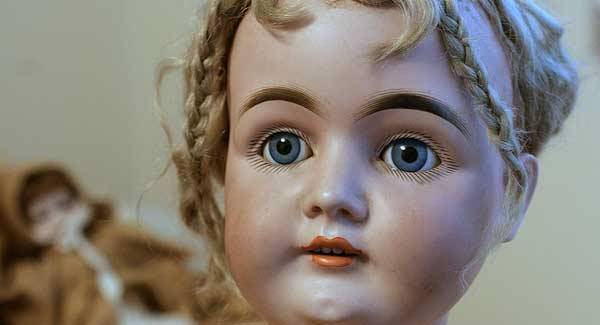
IT feels rather queer, writing about dolls. I don’t dislike dolls — I loathe them. Touring antique fairs in the UK in a camper van some years ago, we parked beside the West Wales Museum of Childhood in Pen-ffynnon. I spent a sleepless night with the roller blinds all but tacked to sills, expecting a hail of tiny balled fists to beat on the windows.
A menacing greeting by a life-size American zombie -style doll which stiffly walked and, even more horrifying, talked, left its mark on my infancy.
Dolls just give me the creeps. However, I know from my many friends who fall apart at the sight of a ghastly little crossed-eyed porcelain face, balding in tufts and cracked from cheek to brow, that dolls are a much loved area of vintage and antiques. With the exception of early all-wood dolls from the Grodnertal area of Germany, prices are down from the heady heights of the mid-1990s, so this is a great time to discriminate those Frozen Charlottes from the Biskolines — if you have the nerve.
Dolls are classified by the material from which the head is made, for example celluloid, glazed china, unglazed bisque (1860s forward), papier mâché, wax or rag. Composite is made up of a pulped wood or paper pressed into a mould, and is very common in 19th century doll heads.
As with all toys, condition is compromised by the fact that these were meant to be used by children with unfettered manners and a burning imagination. If you want to start low, look for dolls shorn of their original outfits and with light wear. 19th century French and German dolls with bisque heads, hands and stuffed bodies are highly desirable as they can be dolled up with some attention to their trousseau. The French ‘Bebe’ doll, made to look like a startled young girl, is loved the world over and much reproduced and interpreted. Replacing eyes, hair and missing limbs or parts can be tricky, and the pricier makes such as Jumeau of France and Bru of Germany will command special attention to detail in their restoration.
Most dolls can be sent away by post for a simple re-stringing. Solid heads can be attached to shoulders (known as a shoulder-head) or just set on a neck to a ball-jointed, peg-jointed or simply padded cloth body. Look for a mark on the back of the head, under the wig, and if you find a sticky label, leave it in place. Cloth dolls are sometimes marked on the sole of the foot. Better early dolls from the 1860s to 1920s carry real hair (cringe) and minute features including pierced ears, individually painted lashes, spiral glass eyes closed by weighting, teeth and perfectly realised lip colour. Dolls with open nostrils are charmingly referred to as ‘breathers’. Most crying mechanisms on early toys are inoperative, and fragile wax faces made in the second half of the 19th century in England are vulnerable to crazing and cracks. Names to look for in truly antique pieces include Heubach, Kestner, Goebel, Simon & Halbig, Recknagel, Kammer & Reinhardt (K*R), Armand Marseille (AM), Jumeau, and SFBJ.
If you’re more interested in the Mad Men period, Barbies dating from the 60s will fascinate with their couture wardrobe, inspired by Dior and Givenchy. Original boxes add greatly to the value of a vintage doll such as Barbie, and collectors’ clubs can tell you what’s in at the moment. Rare models of this cultural icon that haven’t had their noses chewed off by bored big brothers include early black Barbie, and look out for clothes with the character’s name label included. In fashion dolls, collectors have focused on Sindy, Patch, Barbie, Skipper, Pippa, Daisy, Tressy and Toots.
If you think this is all child’s play, it’s worth noting that Barbie in Midnight Red c.1965 sold for €10,786 in Christie’s of London in 2006. In the same year a bisque headed Victorian doll c.1914 by Albert Marque dressed in the costume of the Ballets Russes of Paris, sold for over €225,000 at Theriaults in Atlanta in the US.
Try www.dollreference.com for an illustrated guide to more than 5,000 types of vintage dollies.

CONNECT WITH US TODAY



Be the first to know the latest news and updates