Ireland are where they craved to be, now to prove they're worthy
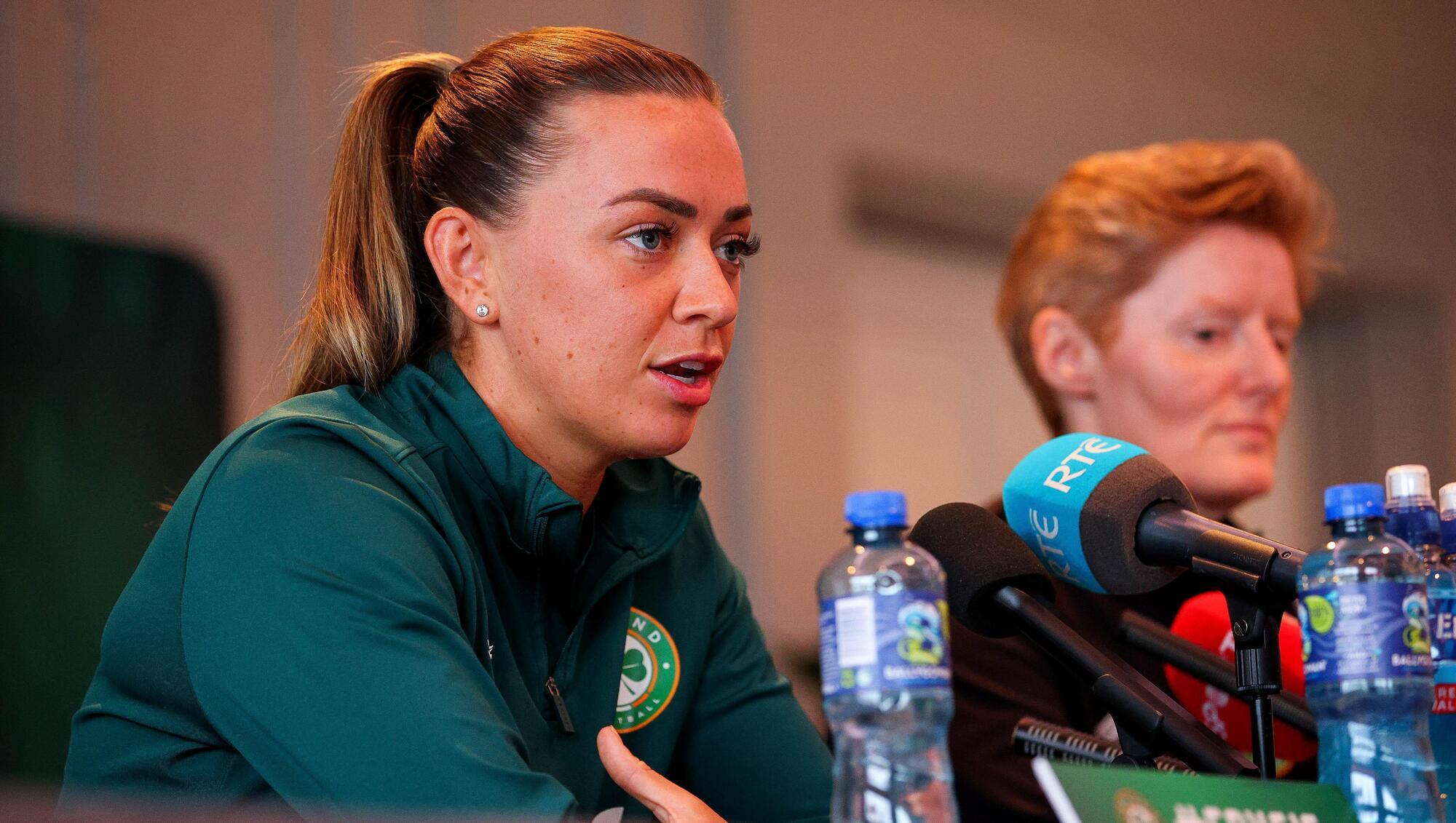
Ireland's Katie McCabe. Picture: ©INPHO/Ryan Byrne
This is where Ireland craved to be and here’s the window to prove they’re worthy of staying there.
Hosting England – the European champions, World Cup finalists and nearest neighbours – was the standout fixture from the possible permutations across the 48 opponents they could meet from the field.
Everyone has been excited about the outcome of the March 5 draw; the new head coach, players and especially an association reliant on spiking ticket revenue to chisel away at their debt mountain.
When the fanciful declarations clear, leaving just players staring at each other come kick-off tonight, the task to scale the footballing peak will become apparent.
Granted, Ireland went to the World Cup but didn’t face a European team in Australia.
Only USA inhabit the top seven positions in the world beyond this continent and England are being kept off top spot by a Spanish team that denied them a tournament double last summer.
Eileen Gleeson’s side share this company through a Nations League system Uefa mirrored from the men’s Nations League with the collective aim of quashing meaningless friendlies.
The majority of matches within the calendar carry substance and for Ireland the metric is how far a team ranked 25 can unsettle a superpower like England.
It was similar stakes in France last Friday, when they kept the margin of defeat to a single goal.
Ireland won’t be judged by pushing three of the powerhouses, including Sweden, for two direct tickets to next year’s Euros in Switzerland.
The playoffs at the backend of the year are when the pressure is on Gleeson, her captain Katie McCabe and the rest of the players to brush aside supposedly inferior contenders in two-legged ties.
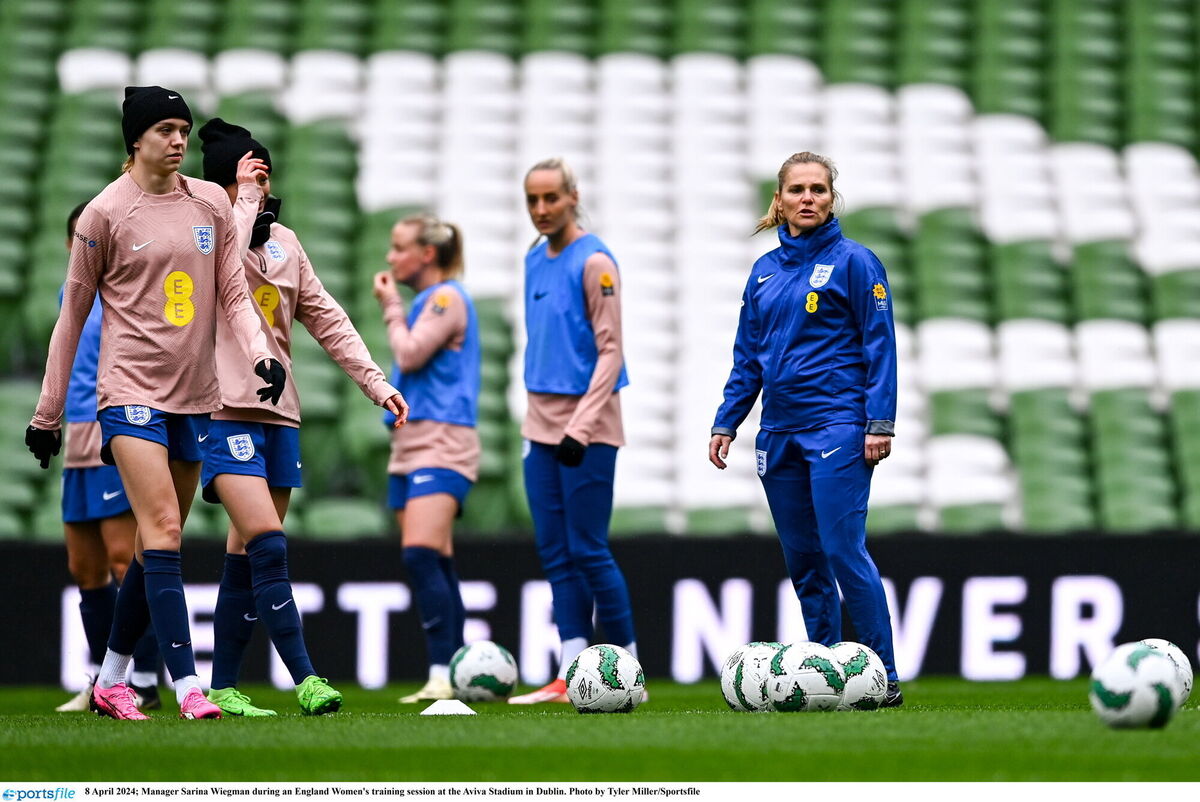
That description featured in yesterday’s final press briefing hosted by the head coach and skipper.
Just because Ireland are only here by easing through their Nations League B group with six points doesn’t mean they’re uncomfortable swimming in the big pond, however difficult it is to stay above the waterline.
Last place in this four-team pool, which concludes swiftly in late July, brings with it the consequence of reverting to where they emerged from.
“I’d probably challenge your word ‘inferior’ because we are not talking about being inferior - only being realistic,” replied Gleeson to a question.
“The psychology around it would emphasise different parts of our characteristics.
“I don’t think it’s the first time an Irish team has been tagged as an underdog. We know we’re a smaller nation but that doesn’t mean we can’t come and compete.
“We don’t ever speak about being inferior. We are realistic about the level of the opposition and then we adapt ourselves and use our own strengths within the squad to approach the game.”
That will be the intriguing element to watch. There was no apology demanded nor provided for adopting a cautious outlook to containing the French in Metz.
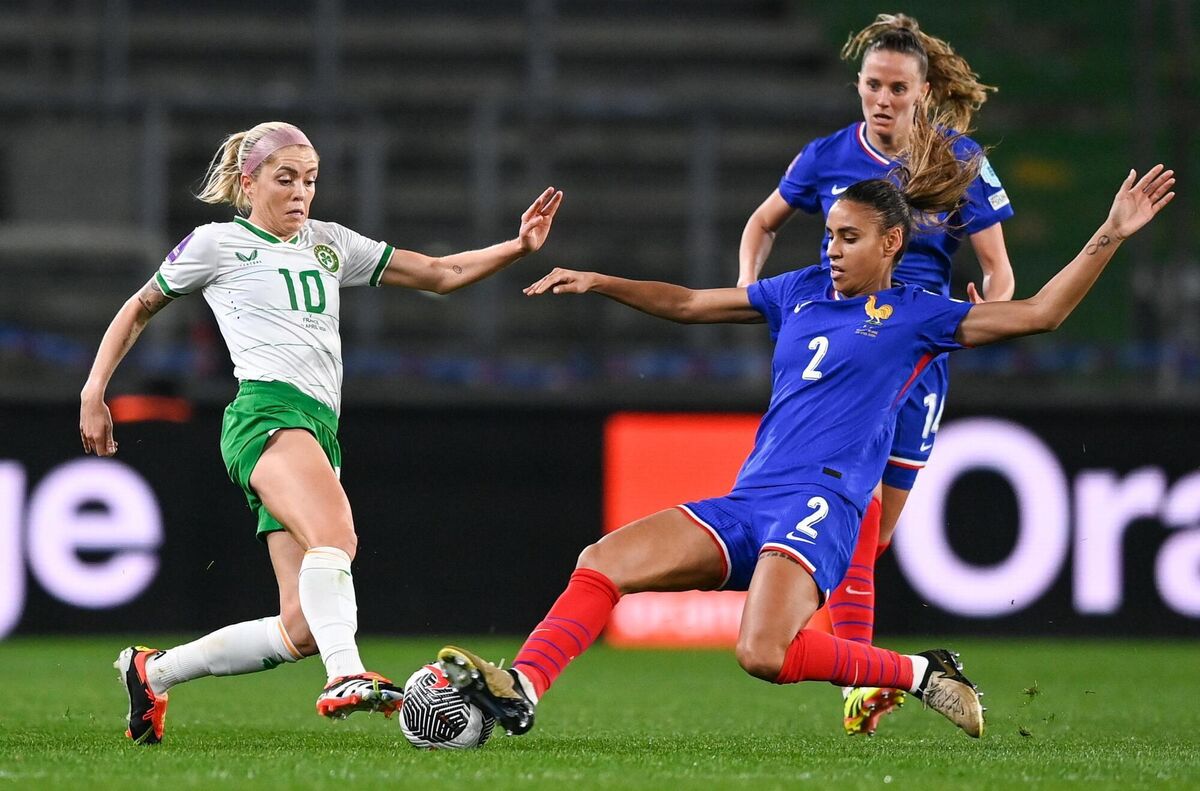
Whether it was through fear or not, there was scant adventure to complement that aspect, restricting Ireland’s forays towards the box through the arms of Megan Campbell’s throw-ins she was strategically brought on at half-time to catapult.
At home, in front of a crowd which the FAI, at least, are anticipating to reach 30,000, a bit extra will be envisaged.
Changes in the team are inevitable due to the three-day turnaround but the lack of game-changers is stark.
An improvement from McCabe and the team’s other world-class figure, Denise O’Sullivan, would instead constitute progress and converge what’s a mismatch, on paper at least.
“We just need a little bit more composure in the transition higher up the pitch,” pleaded Gleeson, confirming the prediction of her English counterpart, Sarina Wiegman, that the ‘approach’ translates into counterattacking.
Both the speakers tried their damnedest to detach the emotion from the assignment.
Since the women’s teams last met in 1987, England and Ireland has been a rivalry to enliven the Irish public, a reservoir that’ll continue later in the year when they clash in the Nations League.
“I guess that's men’s history,” McCabe said, determined to avoid stereotypes.
“You (the media) can make the noise of any rivalry if you want to do that but it’s just another stepping stone towards reaching our first-ever Euros.”
Good and well if people are purchasing tickets at the rate the FAI claims but they’re certainly not buying that interpretation of this encounter.


CONNECT WITH US TODAY



Be the first to know the latest news and updates