Cork's iconic Honan Chapel gets €1m makeover
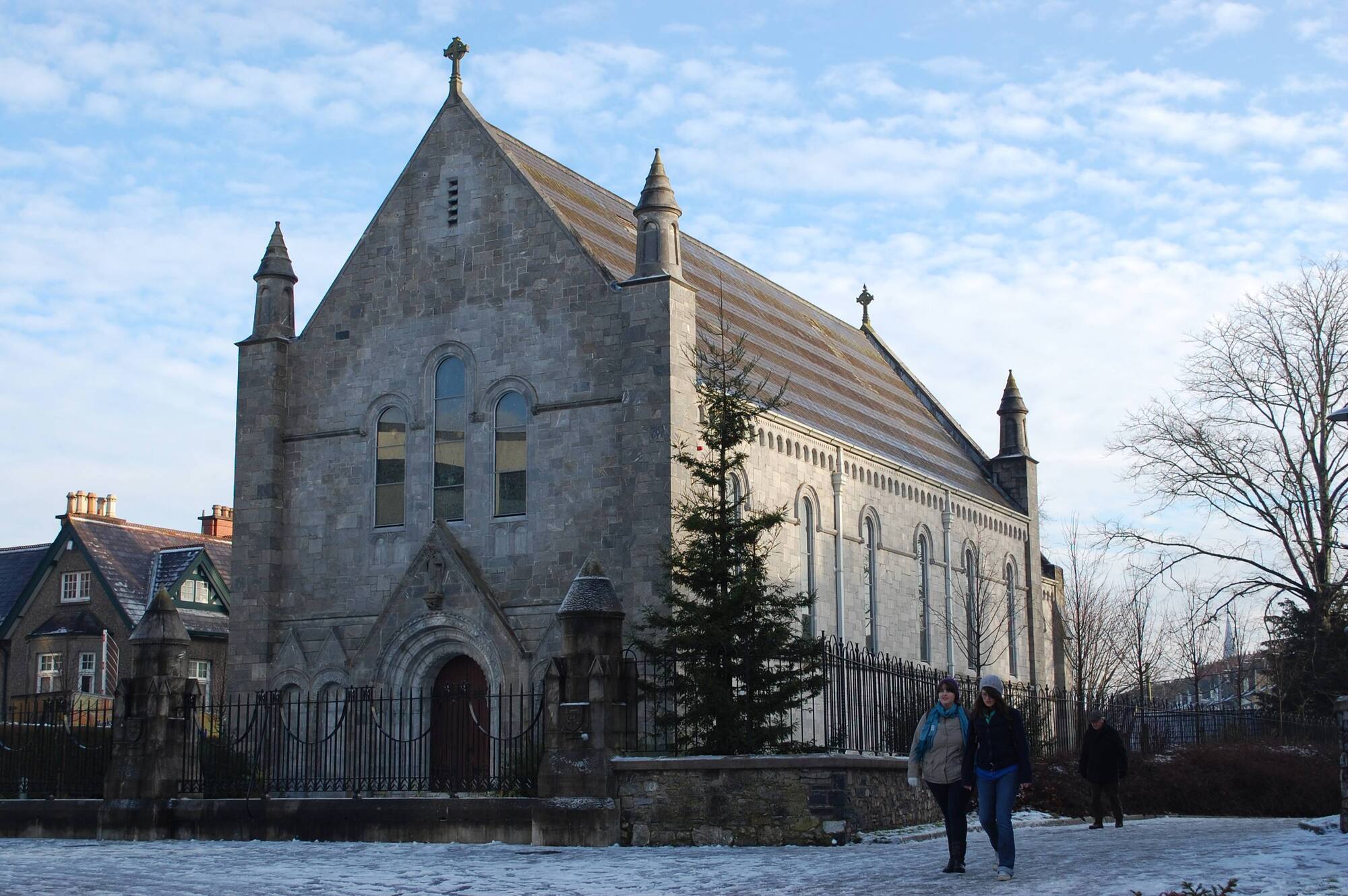
The Honan Chapel, on the campus of University College Cork, is undergoing a €1m+ restoration.
A comprehensive €1m+ restoration project is underway at the iconic Honan Chapel on the campus of University College Cork (UCC).
Work on the project has continued during the current lockdown, with a scaled-back workforce, because of the significant heritage value of the building.
The integrity of the 105-year-old chapel, where countless university students and graduates have exchanged marriage vows, had been compromised by significant wear and tear, according to Fr Gerard Dunne, secretary of the Honan Trust, which owns and looks after the upkeep of the chapel.
“The restoration didn’t happen out of the blue. It was a long process to get to this point and we have been slowed down by Covid restrictions,” he said.
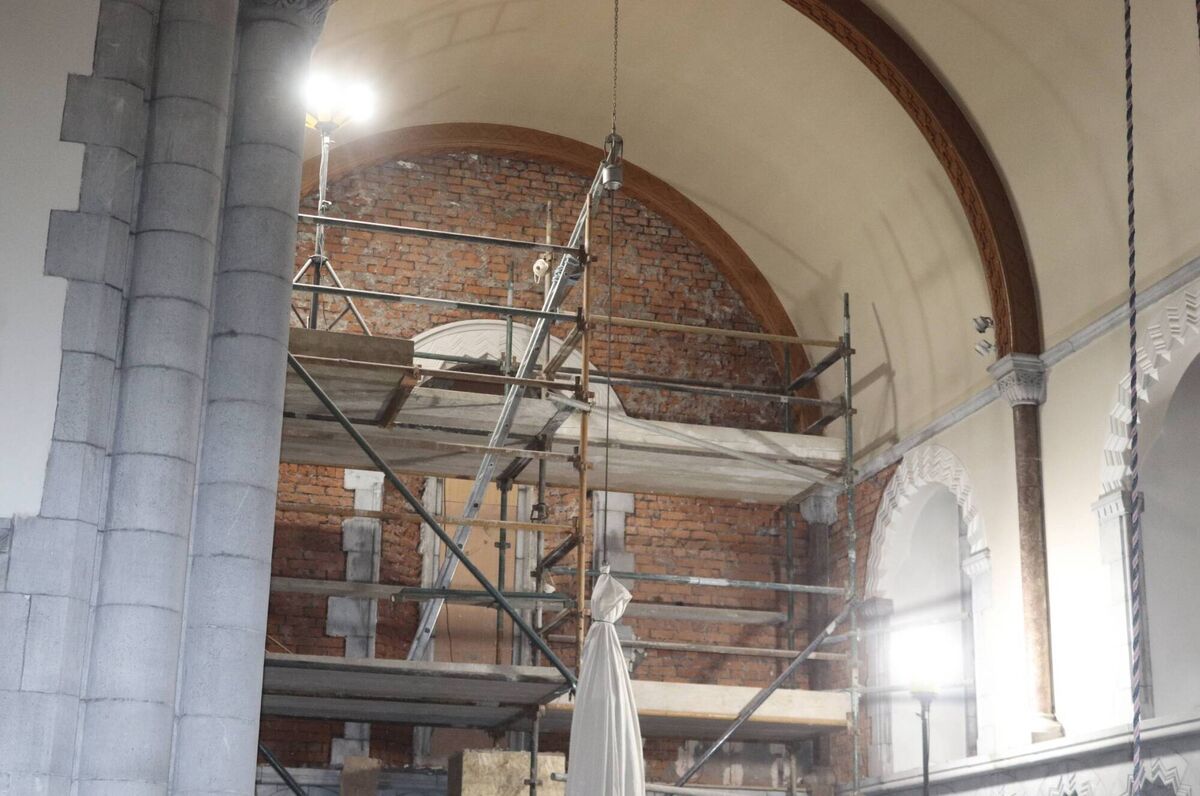
A comprehensive assessment of the building two years ago by conservation experts FMP Architects identified a series of problems, including moisture penetration, discolouration of external walls, slate and lead breakdown in parts of the roof, defective dry lining in sections, plaster defects and cracks in the stunning tiled mosaic floor.
A conservation plan was drawn up, overseen by project architect/conservation architect Peter Murphy of FMP Architects, with a recommendation that the brickwork should be repointed all over (the process of renewing the outer portion of the mortar joint that connects the bricks), with a focus on stopping the ingress of water.
“It was very clear from the investigation that there were pinch points in the building that necessitated remedial action. We had been aware of it for some time, that things were starting to get disfigured internally, and the trust decided on remedial action,” said Fr Dunne.
Work began last November and was due for completion next month, but with just 10% to 15% of the workforce currently on-site — to ensure the building is not exposed to the elements — it’s now more likely to be towards the end of the summer, said Fr Dunne.
The main contractor is fourth-generation masonry conservation expert Joe Costello of Stone Mad Ltd, who is carrying out the repointing work. Mr Costello previously restored the gaol wall and portico at Gaol Cross, which was once part of the county prison.
John Kelleher & Associates Consulting Engineers conducted a survey of the heating system, which Fr Dunne said was about 50 years old, and a new boiler was installed. In addition, all seating was removed due to “a fair bit of woodworm” and this will be treated and reinstalled. The chapel seats 200 people.
Fr Dunne said while the chapel’s famous stained glass windows (11 of 14 are by the renowned artist Harry Clarke) are “in reasonable shape”, remedial work has been carried out on some leadwork and storm glazing has been upgraded by Galway-based Aria Stained Glass.
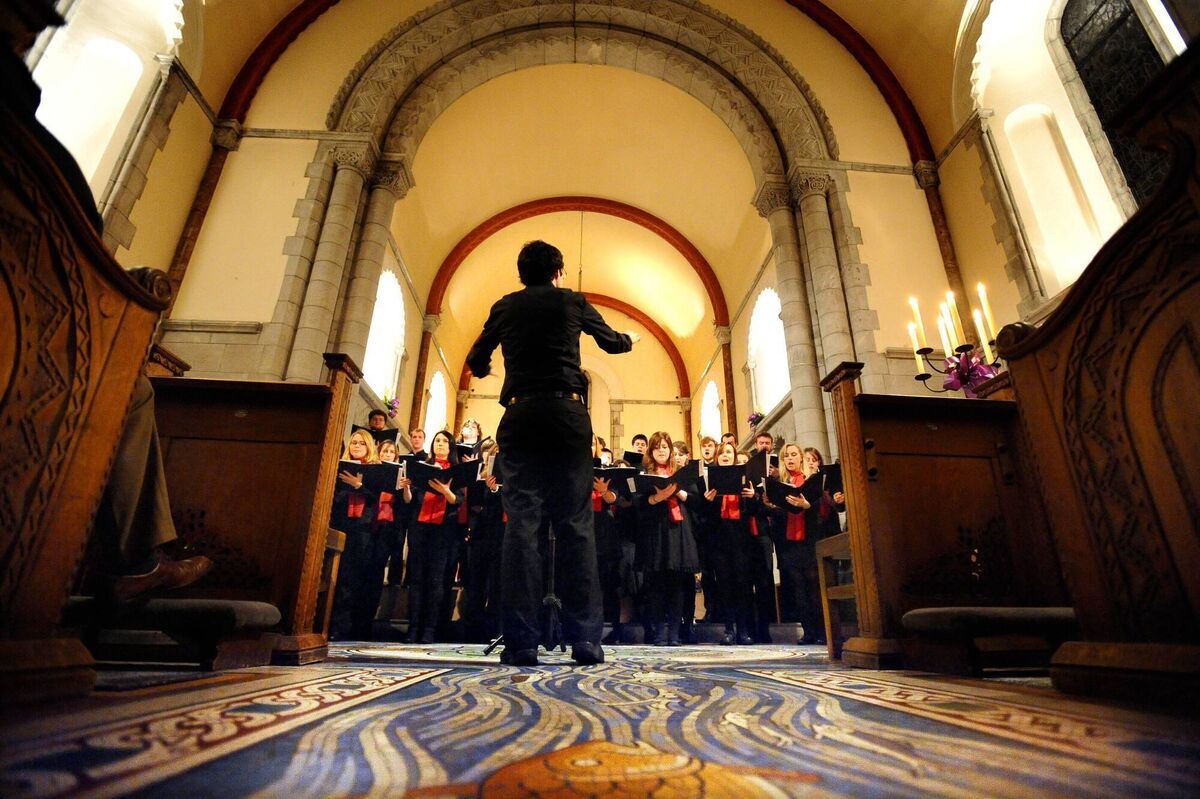
“When all the work is completed, the chapel will look brighter and cleaner and it will be secure, but its appearance won’t have changed,” said Fr Dunne. Money to cover the cost came from private fundraising.
The architectural value of the building is recognised in the National Inventory of Architectural Heritage. It describes the interior as a “decorative feast”, and makes particular reference to the stained glass windows “and the spectacular tiled mosaic floor”, with signs of the Zodiac, by German firm Ludwig Oppenheimer Ltd.
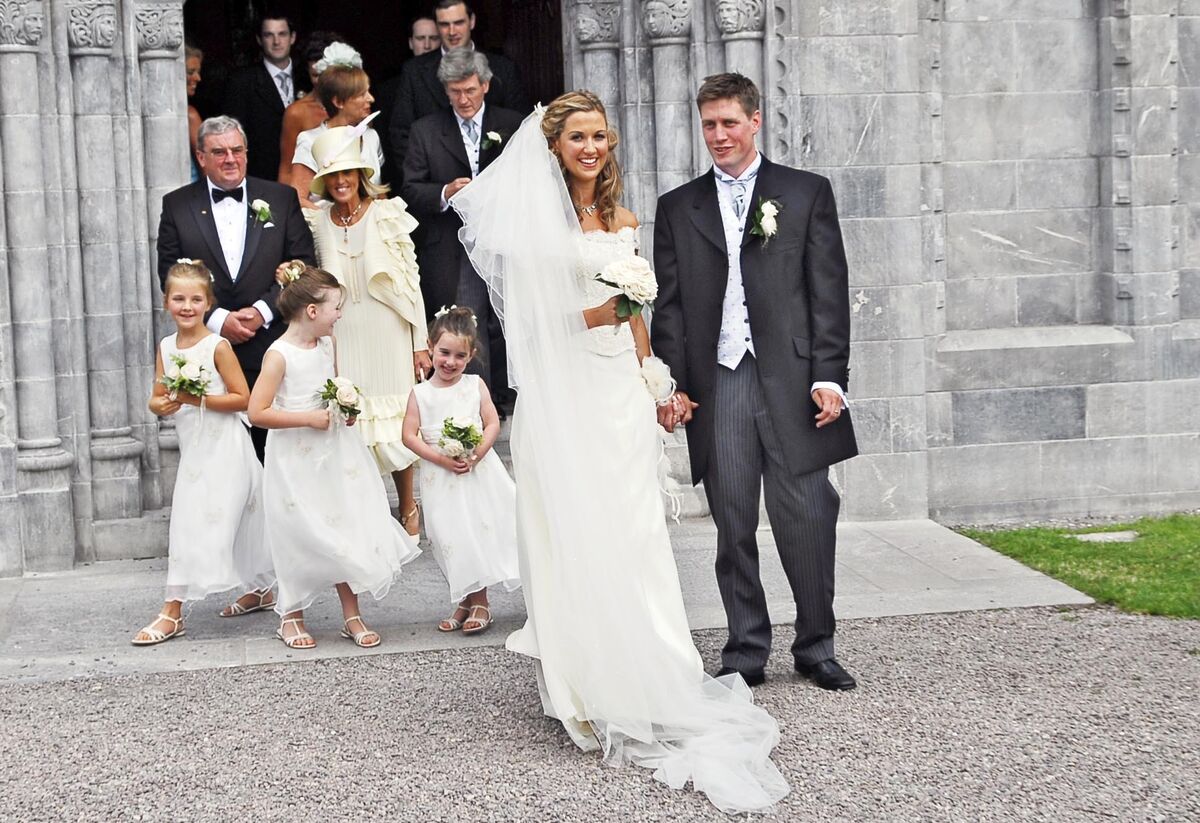
The chapel, formally Saint Finbarr’s Collegiate Chapel, has been the venue of around 100 weddings annually, pre-pandemic, including high-profile events such as the wedding of Irish and Munster rugby legend Ronan O’Gara and Jessica Daly in 2006.
The Honan Chapel, a Hiberno-Romanesque design, was built in 1915 and consecrated in 1916. It was designed by JF McMullen Sr, under Sir John O’Connell, and built by John Sisk & Sons at a cost of £8,000. Its construction was funded by donations from the Honan family, wealthy Cork merchants.
Fr Dunne said the chapel has been the subject of “many PhDs”. UCC graduate Virginia Teehan, CEO of the Heritage Council, has written about its unique place within the Irish Arts and Crafts movement of the early 20th century.

CONNECT WITH US TODAY



Be the first to know the latest news and updates