Breaths of fresh air for post-Covid-19 era in country's first 'School of the Future' in Clonakilty
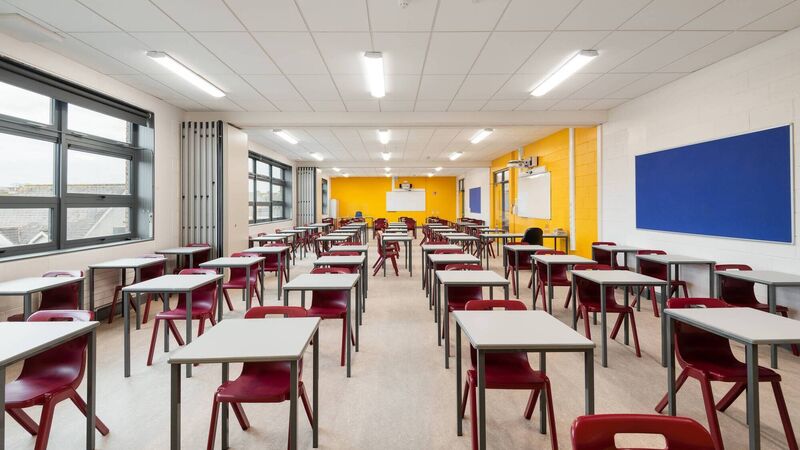
Clonakilty Community College becomes ‘School of the Future’: Cork ETB have unveiled the €10.5 million state-of-the-art extension at West Cork school, designed by KOBW Architects and built by local firm Cahalane Brothers.
AS schools return on a phased basis in the current Covid-19 lockdown restrictions easing, there’s a series of new topics on the classroom curriculum: ventilation, the benefits of fresh air, and adaptable outdoor spaces.
And the arrival of new school buildings such as Clonakilty Community College’s €10.5m extension and upgrade — which is the country’s first completed ‘School of the Future’ delivered under Department of Education and Skills frameworks drawn up in 2014 — shows a way forward.
In Clonakilty’s case, the €10.5m investment, adding 35,000 sq ft with a range of new facilities, has created larger classrooms, circulation, and public spaces centred around a freshly created courtyard linking to the original building and hall. It’s the third extension to the school since first built on eight acres in the town centre in 1980, and with 600 pupils now and 60 staff will allow it to cater for 650 pupils.
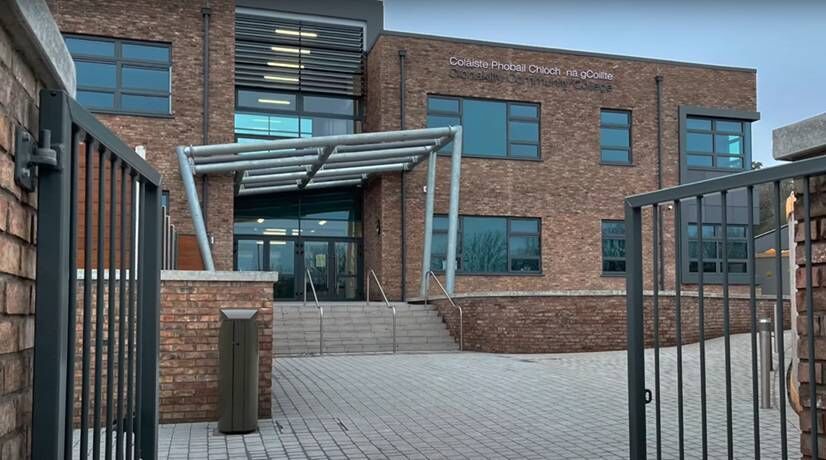
The school’s vibrancy and existing presence in the town centre were factors in deciding not to move to a greenfield site, and planning was sought back in 2015 for a two-storey extension and redevelopment, via architects KOBW: contractors moving on site by 2019 were local firm Cahalane Brothers, working around phases and three Covid-imposed site closures and restrictions, with continuing school use during the period.
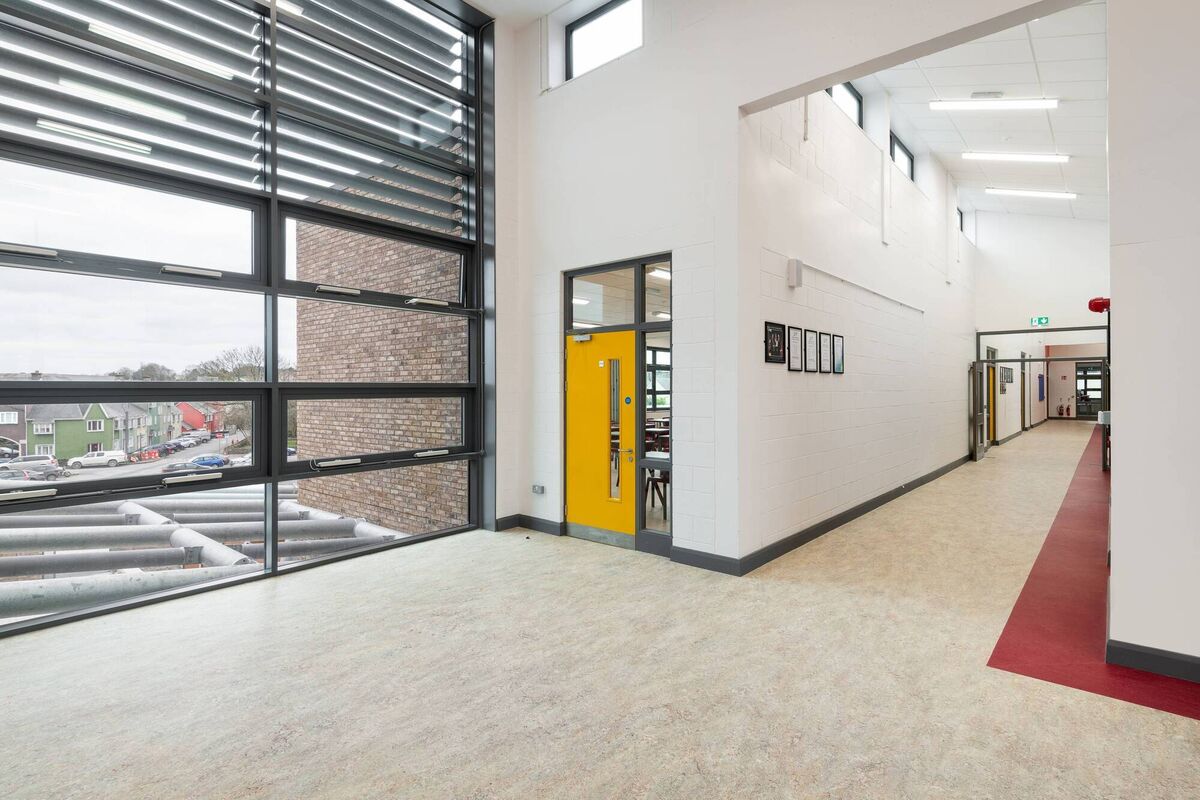
According to KOBW architect Sarah Kelly, the 2014-drafted Schools of the Future has updated and upsized room layouts, where the design allows a greater external wall area for daylight and ventilation, and in the Clonakilty case, classrooms are naturally ventilated, with both high- and low-level windows opening to encourage air circulation and flows.
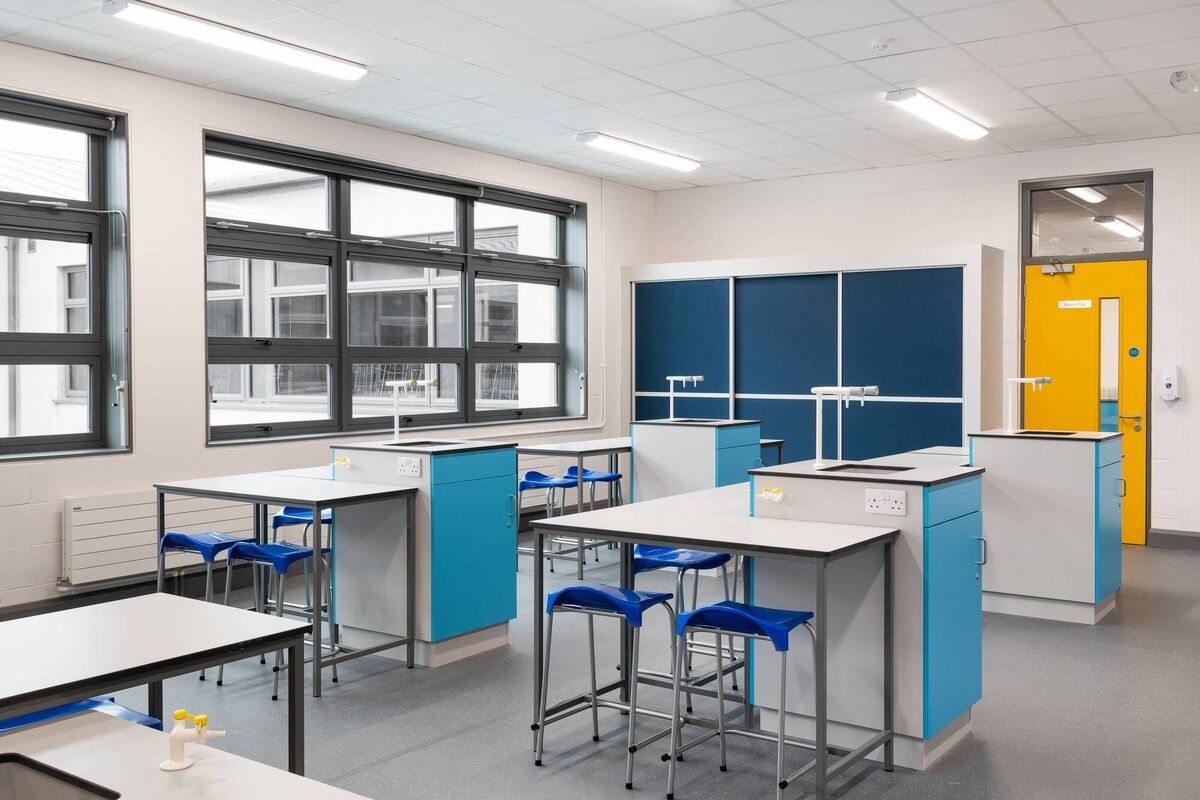
Installing CO2 alarms to monitor air quality/carbon dioxide emissions indicating stale air levels wasn’t part of the 2014 brief, but they can easily be added to classrooms and other spaces if deemed necessary, adds Ms Kelly.
KOBW, Cork Education and Training Board (ETB), and the school embraced what’s seen as ‘current best practice in school design’ with the design team quoting expert Feilden Clegg’s that “courtyards make outdoor space the heart of the school and can create a sense of security and community around the occupation of that captured space. The surrounding buildings can look in and look out, as the school engages with itself or the world outside".
The new learning spaces, from classrooms to workshops, are larger than before to allow for greater spacing and for flexible use to meet changes in educational methods.
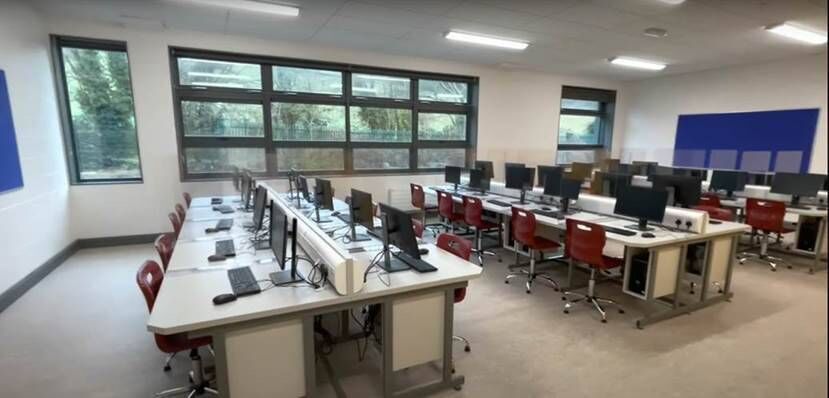
The school is now fully fitted out with wi-fi, for supporting learning both inside and outside the building and “in response to Covid-19, the college developed a plan and the department funded additional facilities, including outdoor furniture in order to provide greater outdoor learning opportunities, located within the courtyard and west of the building, and the design team led by KOBC left scope for yet further, future school expansion to the east, where the three ballcourts could be relocated. Sustainable features of the A3 BER-rated school include rainwater harvesting, and the building is designed to face the sun, with a window to wall area balanced for optimum energy conservation".
“The building was designed to be naturally ventilated. Thermal modelling was carried out to balance passive solar gain against the requirement for heating, and to design window openings to meet ventilation requirements. High- and low-level opening windows are designed to allow warmer used air to rise and exit at high level and fresh air to enter at low level. This makes sure that used air does not build up, but is removed naturally to outside. As well as within rooms, this has also been designed for circulation spaces, to make sure that the air is fresh throughout the building."
As pupils return to classes, the upgrade has been hailed by the ETB and principal Anne Dunne, who said they were "beyond delighted to be the first in the country to unveil the Schools of the Future design concept. Our beautiful new building was made possible through a collective effort between the architects and local contractors Cahalane Brothers, who took a huge personal interest in this West Cork-based project".
The extension provides 10 additional classrooms, along with multidisciplinary rooms, including design and communications graphics rooms, multimedia rooms, science laboratories, construction studies/technologies preparation room/engineering room/art room/music room and a meditation room, along with special needs unit integration in the school's core.
The Clonakilty ETB school’s design team appointed in 2014 included KOBW Architects, QS was Tralee-based Kane Crowe Kavanagh, Malachy Walsh & Partners, Civil Structural Engineers, JODA Engineering Building Services Engineers, and PSDP was Waterman Moylan.
Meanwhile, Clonakilty's €10.5m extension was followed this past week by the completion of a €10m extension and upgrade to Midleton's Cork ETB Community College, St Colman's, by the Department of Education and Skills.
Added over the past four years were three new buildings totalling nearly 60,000 sq ft, with design by Healy & Partners Architects and building by Cfield Construction.
Current enrolment in St Colman’s Community College tops 800 students, and the new extension will allow it to cater for 1,000 students in the future.


CONNECT WITH US TODAY



Be the first to know the latest news and updates