Co-housing offers new ways to build homes
Joe O’Shea meets a collective aiming to drive a radical rethink in the way we approach housing in Ireland.

Co-housing offers new ways to build homes

Joe O’Shea meets a collective aiming to drive a radical rethink in the way we approach housing in Ireland.

Practical, affordable and sustainable solutions to our current housing crisis are out there. And we should start with empowering people to plan, build and grow their own communities.


That’s the mantra of one group of architects behind a collective aiming to drive a radical rethink in the way we approach housing in Ireland.

SOA Research — eight architects with strong Irish connections working in Dublin, Hamburg, Aarhaus and Barcelona — promotes the possibilities for self-organised, collaborative and cooperative housing in Ireland.

With extensive experience in planning and building both in Ireland and abroad, they have looked closely at the best ideas and solutions that Europe and North America has to offer.

And now they are promoting these ideas here in Ireland — talking to everyone from the big banks and building societies to planners and policy makers at national and local levels. But just as importantly, they are taking their expertise and models to the people with the most at stake, those currently locked out of owning a home.

The group are planning a series of “Co-Housing Cafes” — pop-up social events to spread the message and methods of people-led housing development — across Ireland.

They’ll open the first in Dublin, but also aim to have one shortly in Cork, where SOA member Tom O’Donnell — a Leeside native who worked on social housing and amenity projects in Cork before moving to Germany — was a keynote speaker at the ‘Cork Evolves — Building Communities For The Future’ series earlier this year.

“When I was back for the Cork Evolves events, I was really amazed at how enthusiastic people were about exploring new ideas and in particular the idea of co-housing,” says Tom.

“There were a lot of conversations, everybody was getting involved, it was very informal but you could sense that there was great energy and lots of ideas.

We would love to build on that, keep the momentum going. We would like to start a dialogue with the City Council and others about hosting a Co-Housing Café in Cork, to start getting people together and laying out how it all works.

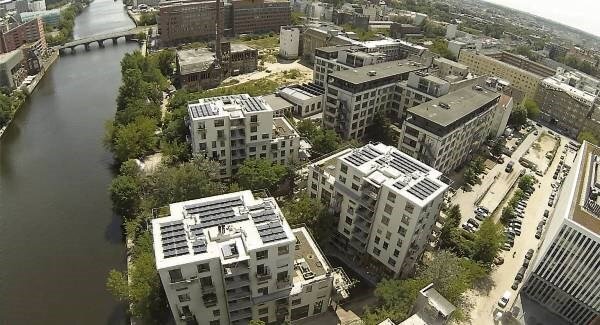
Co-housing projects can come in many forms but they all have one central principal. They are co-operative developments — often small-scale — which are planned, built and run by their residents. Each household is self-contained but they share common facilities and amenities — such as garden, leisure or child-care spaces — and manage the entire development as a collective.

Residents are involved in the planning from day one. Effectively, they are the architects, developers and owners of their own homes.

To take one example — in north London a group of retired women came together in the late ’90s to form OWCH — Older Womens Co-Housing — and build their own self-designed block of flats with green spaces and purpose-built senior amenities.

The women, all over-50, single and retired, pooled their resources to form a co- operative group. They decided that rather than live alone in scattered houses across north London, they would come together, in a modern, purpose-built development where they would be surrounded by friendly and helpful neighbours at the same stage of life.

“Ireland may be behind the curve on co-housing. But there is no reason why this model cannot be successful in Cork, Dublin or anywhere else in the country,” says Tom O’Donnell. “It’s self-organised, inclusive and non-speculative. And in theory, getting the finance together for a group of people to fund a multi-home development should not be too different to getting a mortgage to buy one house.

“This is where the work needs to be done. We need to educate our institutions, the banks and building societies, the Department of Finance and so on, and convince them that it’s a practical, very successful model that deserves backing.”

Tom and his fellow SOA collaborators have already been talking to one major Irish bank and have found a receptive audience.

“We can point to countries like Germany, where co-housing is a pretty standard way of building homes now.

There is a State bank which will loan half the cost of the project at a low interest rate of, say, 1.5%. You can then go to the high-street lenders and they will usually be happy to lend the other half.

Tom also points to the growing number of “Ethical Banks” — such as the Dutch-owned Triodos Bank (which has branches in the UK, Holland, Spain and Germany) — which are specially set up to fund sustainable, eco- and community-friendly projects.

In Ireland, he believes we have great opportunities because of the significant amount of land held by the state and local authorities, which could be put into community land-trusts and given on long-leases to community or co-housing groups. “There are so many plots of land, side lots, slivers in the city, land that could be leased for small-scale, innovative projects,” he says.

“It’s so much more affordable to build and own. And it would be for groups such as people who are working but cannot qualify for a regular mortgage, they could build and own their own homes, be taken out of the rental market, given the chance to build their own equity.” O’Donnell continues.

The Hamburg-based Corkman believes the co-housing model will require initial support and guidance in Ireland.

Berlin and other cities have specifically-tasked government departments which act as a kind of one-stop shop for people looking to organise a co-housing community. These departments will help from day-one with starter-packs full of practical information and advice on everything from negotiating land-leases to drawing up legal papers, finding finance, hiring builders and project- managing to completion.

“We know this is a relatively new concept for Ireland. But anybody who is interested can see how it has been successful in the UK and Europe,” he says.

“When we look at Cork, you can see huge potential in places like the city centre and docklands for co-housing projects”.

The next step for the architect is to return to his native city and get the movement going with the first SOA Research Co-Housing Cafés.

More in this section

Property & Home

Newsletter

Sign up for our weekly update on residential property and planning news as well the latest trends in homes and gardens.

Cookie Policy Privacy Policy Brand Safety FAQ Help Contact Us Terms and Conditions

© Examiner Echo Group Limited