A touch of Surrey in pristine Eyrecourt
Before Howard Holdings came crashing down they left a top-end scheme of gated houses at in Rochestown, writes
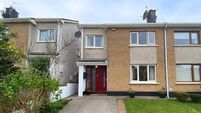
Perhaps it’s because everything has been done, has been redone, and has been buffed and shone up to the highest standard, inside, outside, up and across its three floors of accommodation and across its 0.3 of an acre site, that No 4 Eyrecourt has now come up for sale.
Altered even at the build stage by its owners who moved walls before they ever moved in about 18 years ago, it has been added to once or twice since.
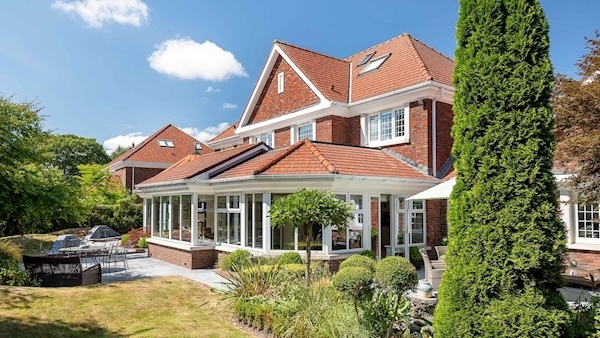
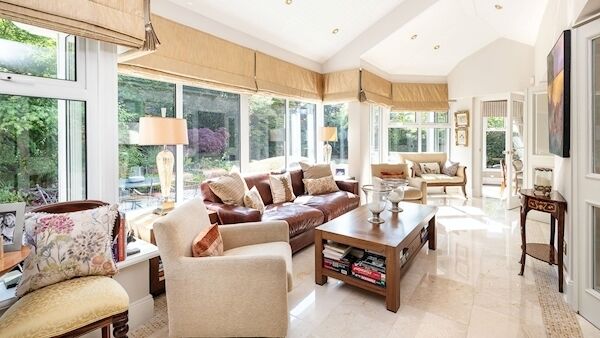
It has had a wide skirt of sun-drenched veranda-like rooms to the back brought to bear, as well as an octagonal-shaped dining room to its side for even more garden view. Now, No 4 relaxes into its full 4,300 sq ft of family-friendly living and sleeping spaces, all in a home where the interior finishes, furnishings and tactile quality are simply top-notch.
Now, there’s nothing left to do?
If there’s an upmarket, English Surrey Downs sort of look to the handful of homes built at Eyrecourt, in Cork’s Rochestown suburb by Garryduff, it’s hardly a surprise. So, apologies here for a bit of ‘recent history’ digression, and background over the next clutch of paragraphs, before getting round to the many attractions and charms of the classic-looking home 4 Eyrecourt.
Eyrecourt’s developers Howard Holdings drafted in the services of a UK-based architect for the design of this top-end, brick finished niche outer suburban scheme, very much intended as a calling card for their ambitions to roll out luxury homes elsewhere in the southern capital.
In particular, Howard Holdings had targeted a wooded site at Cleve Hill on the Blackrock Road, now being developed as Botanika, by site re-purchasers, Citidwell Homes. At the time, there was talk of about 18 very large houses going to be put there (In the event, Citidwell dialled back the sizes and have sold out the 28 Botanika houses, into a recovered but chastened market.)
Howard Holdings, headed up by Greg Coughlan and Brian Madden, came to Cork in the late 1990s, having cut its teeth in development in Britain, and their ambitions for Cork were ever-escalating.
In their heyday, Howards raised the design and development and delivery expectations for Cork quite some notches, and their Scott Tallon Walker-designed City Quarter quayside hotel and office block, and boardwalk, were a harbinger of what they hoped to do further down the docks, with high rise, high density buildings, and ringing right around Cork harbour, with water taxisa a new commute option for these sites-in-waiting.
They drafted in the likes of Sir Norman Foster to design Atlantic Quarter near the Marina for them, in three towers, the tallest 30 storeys, and in the mid 2000s, were active in Cork, Dublin, the UK, Poland, Italy and South Africa (post-script: the publicly listed Glenveagh Homes now plan about 1,000 apartments for that Howard Holdings site, which they bought from Nama for c €15m.)
‘Course, the HH house of cards came down with spectacular debt effect in the crash, which followed Lehmann Brothers’ collapse ten year ago this month: as the saying goes, the higher they go, the further the fall, and they deeper into NAMA went Howards’ assets and Anglo loans.
What they did do, though, they did well once they moved up a step or two from their starting-off point of tax incentivised car park development.
They had ambition, and drive in spades, and, oh, helicopters and jets, and more but, like, Icarus, they flew too close to the sun, and came all unstuck.
On the ‘modest’ residential side, the gated niche project Eyrecourt was to be their flagship and calling card for detached builds, and it comprised just four-only, c 3,000 sq ft five/six bed homes on c 0.3 acre plots, and one far larger one-off, on a double site at the back.
That ‘one-off,’ No 3 Eyrecourt, ran to 6,000 sq ft, and was adapted/designed by Cork architect Derek Tyner for the man who’d owned the lands here at Garryduff that the four other houses were to be built on. No 3 Eyrecourt sold in 2015, for €1.23m, a tad below its launch price at the start of the year at €1.375 million.
Market-wise, it was followed by the arrival of the more ‘standard’ No 2 Eyrecourt a year later, launched at €950,000, for its 3,400 sq ft, and No 2 sold in a much stronger market year 2016, for over its guide, for a reported €1.01 million.
No 2 was a fine and well-specced family home, in just about anyone’s book, and it is only now just seeing the closing stages of a major refurb and rear extension by its family purchasers, with the pavement outside thronged with tradesmen’s vans as the extra investment there looks like winding up.
All that frenetic finishing off work at No 2 can be glimpsed today from the long, immaculate limestone path up to the front of the gleaming No 4 Eyrecourt, which clearly kept a fair share of tradesmen, women and craftworkers going during the euphemistically-titled ‘downturn.’
In occupation since about 2000, No 4’s owners (and having shepherded and remoulded it several times over through their family rearing years,) are now seeking to relocate, having acquired a period property in one of Cork’s older suburbs. It’s likely the skills they’ve acquired here, and the teams they’ve worked with, will be put to renovation uses at their next stage move.
The gleaming and expansive No 4 Eyrecourt has just been listed with estate agent Dennis Guerin of Frank V Murphy & Co, at a guide of excess €1.25 million; he has it under early, and immediate, offer after some pre-launch viewings.
He describes the six-bed home as “truly magnificent, it’s a five-star property,” in one of Cork’s highly valued suburbs, near many sports amenities, and on professionally landscaped and pristine gardens, and it’s very much going to be seen as a trophy home purchase by those in the hunt at the top end of the market (€1m-plus sales are in pretty short supply so far this year).
The quality starts with the precision of the smooth limestone paths around and leading up to No 4, with inset gravel beds, and discrete LED lighting at ground level, along with sets and granite kerbing by the spacious side drive, where there’s room for a brace of cars, bikes, SUVs and/or jeeps by the wide garage doors.
The same quality limestone is even more extensively used right across the broad back of No 4 for its patio and sun terraces, and framing low retaining walls, and forming the outline of several pumped water features for discrete splashing sounds and water movement.
Internally, the house is now much-enlarged, with extra rooms added on to the south/rear, for the best of light and garden views, with plenty of tranquil seating spots to admire the now-mature grounds and grassy mounds, landscaped to the plans of a professional designer, the late Brian Cross, and now is in full and effective force, with boundary walls cloaked in green and autumn russets.
It’s all quite precise, and pristine, and to one side is an added outdoor extra, a Shomera-like garden pad or pod, a spacious wood-clad structure with lots of glazing, with sports and bikes store room in one section, with a larger home gym/games room/study/studio in its main section, albeit with distracting garden views through its sliding doors.
The exterior and distinctively-mounded grounds are a match for the standard of the interior, or vice versa: there’s a quality parity of esteem.
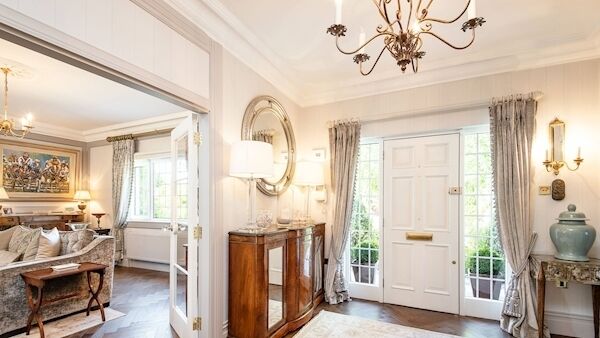
On entering, the L-shaped hall has recently been refloored in hand-laid stained oak parquet, and
that same hardwood in its herringbone pattern continues into a shelf-lined study, immediately on the left, which in turn gives an optional access to the front-to-back kitchen/dining room.
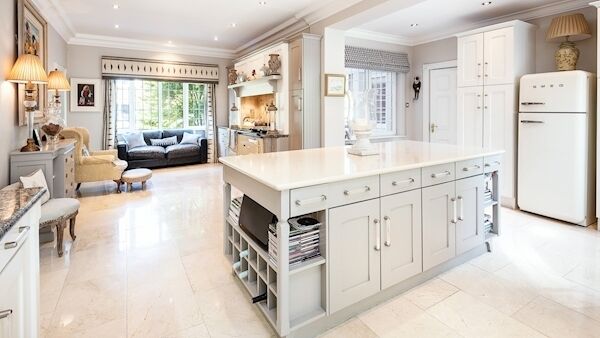
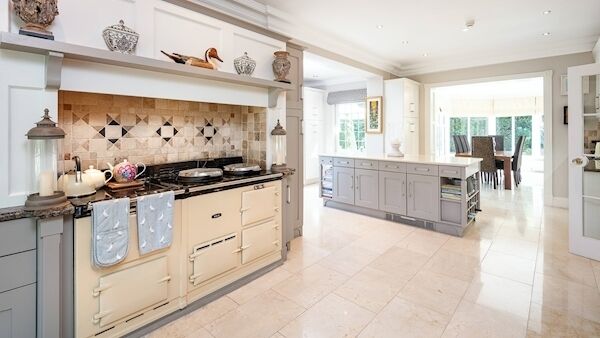
This marble floored kitchen/breakfast dining/family spot is exceptionally deep and double aspect, and while it’s extremely well kitted out, it has been done almost in an ‘unfitted’ way so that there’s no long runs of identical units.
Pride of place goes to a wide, fouroven Aga, and instead of being surrounded by banks of units, there’s a scattering of armchairs, sofa and seating: it all feels like a relaxing area to enjoy ‘slow cooking’. Separately, there’s a long island, with marble tops, painted solid timber units and drawers with wide, glass handles, running at right angles to the room and into a side wing where there’s a bank of utility, service and storage rooms, linking back as far as the attached garage, now principally used for storage.
Make no mistake, there’s no shortage of quality kitchen ‘presses’ and appliances, but they don’t dominate this mid-section cooking area, with a mix of hand-painted units done by Cork makers Glenline.
Yet further back, the space expands into a family dining end, which then forms part of the run of sun-washed rooms and walk-throughs of seating areas bringing up No 4’s rear. At the very far end is a more formal dining set-up, with the circular/octagonal extra space designed to mirror the overall shape of the dining table.
These many interlinked areas have distinctive, vaulted and wood-sheeted ceilings, panelled in white oak and latterly given a sheen of white paint. Pity the poor master carpenter/joiner who dovetailed and butted up all the angles and joints, only to see the neatness of the joins and grains covered over?
Deep within the bowels of this broad and deep home is a family room, about 20’ by 16’ with gas-fired cast iron stove: it’s a bit removed from direct glazing, after the wing outside was added on, and so probably isn’t a space to get much daytime usage, but when the evenings and nights close in, and the telly’s on, or there’s a book to read, it’s going to be all embracing, a real retreat from the world beyond.
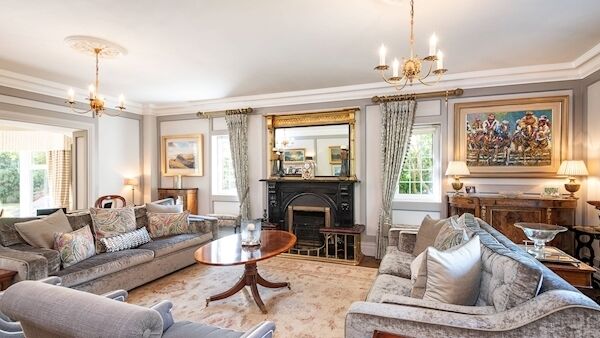
Separately, on the house’s far flank from the kitchen/breakfast end, and linked to cupola-like dining extensions, is the formal lounge/drawing room, effectively triple aspect, with slender gable end windows either side of a wide, feature dark slate fireplace with brass insert and matching brass club fender/seat.
The owners acknowledge the input of interior designer Sara Murphy in fitting and furnishing their home, saying they very much wanted to go for and achieve a ‘classical’ interiors style which wouldn’t date and say that practically all of the items and furniture were locally sourced in Cork, while paints used are from various Farrow & Ball ranges.
The original white oak stairs now too has been painted, white with polished mahogany rails and is carpeted, leading up to a first floor done with Ducon or concrete slab, super-effective for sound—deadening, fire protection, overall underfoot heft and solid feel and more.
Up here are five bedrooms, all with built-in wardrobes, and three of the five have en suite bathrooms, worked off a pressurised water system, and central heating is gas-fired. The master bedroom has a Jacuzzi bath among its four-piece accoutrements; there’s a main, four-piece family bathroom for everything else, plus the landing has a double size hotpress, with double doors to shelving.
A further stairwell, with overhead rooflight, means light flows easily down to the mid-core, while up on the top floor No 4 Eyrecourt has a games room/den/ one more bedroom/bed 6, or further home office/study, a room which has very recently born the brunt of Leaving Cert study pressures.
As regards the outer ‘envelope,’ Eyrecourt homes and No 4 too are pretty low maintenance, at least in terms of the building fabric: the red brick can only mellow with age, and the sills and window surrounds are in a pale reconstituted stone, and scrub up well. As, in fact, do the roofs’ red clay tiles, evidenced by one or two instances within Eyrecourt when the expansive roofs have been power-washed, for exemplary house proud standards from the ground, to chimney tops, and all points in between.
Five stars out of five.
Rochestown
€1.25m+
Size: 400 sq m (4,300 sq ft)
Bedrooms: 6
Bathrooms: 5
BER: Pending
Pictures: Jed Niezgoda
CONNECT WITH US TODAY



Be the first to know the latest news and updates