Repairing homes after fires can be a burning topic
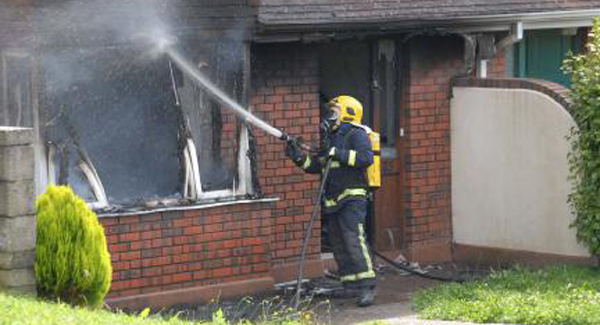
All housefires are bad but a grease fire — such as when someone leaves a pan on and it blazes up — is definitely the worst, says disaster restoration expert Keith Spencer.
He works with Rainbow International, a restoration and cleaning company with bases through the world and which has had an Irish presence in Kinsale, Co Cork, since 2004.
Contrary to dire health and safety campaigns about Christmas lights or candles, there isn’t a massive peak in housefires at Christmas, according to Spencer. It averages out to around four fire clean-ups a month for Rainbow — and they have five vans on the road at any one time.
If you’re lucky enough to have the fire brigade come to the rescue if your house is ablaze, then you could well be mopping up gallons of water before you even get to think about smoke damage.
And with the unrelenting rain we’ve had in recent years (winter 2013/14 was officially the wettest since records began 148 years ago) it’s no surprise that houses and businesses have been flooded by many means.
This can be the time of year for water damage alright — whether it’s burst pipes or flooding. The main thing to note is that water damage gets worse and even dangerous the longer it is left.
“Water damage is progressive and items that could be restored within the first 48 hours of the water damage might not be if emergency response is delayed.
Structures that are not dried out quickly and properly can become a food source for mould growth, and river water contamination is just awful,” Spencer says.
Water from rivers that burst their banks can be heavily contaminated with sewage or farm run-off and can be a bio-hazard.
1) Clean water from bath or sink overflows or a supply line to a washing machine;
2) ‘Grey water’ has a significant degree of chemical, biological, or physical contamination such as sump pump failures, or water discharged from a dishwasher;
3) ‘Black water’ is grossly unsanitary as it contains harmful bacteria or fungi which could cause severe discomfort or sickness.
This could come from problems ranging from rising water from a river or toilet backflow — as well as grey water which is left go stagnant.
Work on flooded property can range from a few weeks to “huge jobs” of several months: One small rural hotel damaged by a culvert bursting took about six months last year, says Spencer.
It’s been said that “fire, water, and government know nothing of mercy” — and anyone who’s suffered a house fire will know plenty about the first two.
The causes of a house fire — or what is burnt in the blaze — can have a huge impact on how the clean-up goes. “A wood fire can have a strong odour but is relatively easier to clean up,” Spencer says.
“If it’s caused by a deep-fat fryer, for example, it’s the worst . Everything has to be cleaned as you get a greasy residue over everything.”
Different chemicals are used depending on the type of fire; a pack of J-cloths or baby wipes is never going to do the job here.
Most household items which haven’t actually been burnt in a fire can be cleaned. Personal treasures and heirlooms are tricky but often quite manageable. After a fire or flood, Drycleanit.com, based in Carlow, are the ones who sort out that wedding gown you’d hoped to keep pristine for the next generation, or the cuddly toy your child can’t sleep without.
Owner Stephen O’Connor explains they tag, assemble, and then remove the soot or smell of smoke from clothes or soft furnishings. And it’s regular clothes as well as the designer lace wedding dress.
“Women particularly want their own clothes back. They have put a lot of time and effort into getting the ‘right’ clothes or they associate them with different occasions and they want them back. Typically men don’t have the same volume of clothes and often for a man a pair of jeans is just a pair of jeans,” says Stephen.
www.Drycleanit.com, set up in 2003, would also be given the job of cleaning up a child’s favourite teddy if it was smoke- or soot-damaged — there might be a lot of change or upheaval in a child’s world if they have a house fire so getting that small piece of normality back to them can be a big thing, he explains.
And sometimes it’s the backstory to a restoration project that just gets to you. “People are always extremely distressed if they’d suffered a fire but one particularly sad case we dealt with was a family whose child had passed away some time before. They had preserved their daughter’s room so it was a very sensitive project to get their child’s clothes, duvet, and toys back to them.”
The Carlow-based company deals with the aftermath of around 75-100 fires each year and are also called in by assessors after a ‘water damage event’. They do an express job on a few key items for a client and then hang onto the rest of the cleaned items until the person is ready to move back in.
Meanwhile, I ask Spencer whether there’s any point in keeping special papers or documents (which aren’t worth putting in a safe deposit box or which need to be kept to hand) in a metal box or biscuit tin. “It shouldn’t do any harm — the biscuit tin might protect the papers from soot or smoke damage if it survives the fire.”
Soot from a housefire typically travels upwards and towards cold surfaces such as windows. “So when we get called in to clean up after a house fire we check the furthest windows first to see the scale and work back towards the seat of the fire,” Spencer says.
Aside from obvious accidental fire causes such as candles, cigarettes, etc, he warns about cleaning and maintaining household appliances. “Plug out computers when you’re not using them. I don’t want to start a panic about tumble-driers or anything, they’re fine — just make sure to defluff them regularly. And get vents cleaned out.”