Suburban serenity in Cork
THE suburbs are a joy in summer — especially those of the leafier variety. The clamour of playing children is removed to the gite, the villa or the West Cork cottage and birdsong prevails.
Seventy or more years of maturity means there are more old trees in Hettyfield, Douglas, than in many recreation parks and with huge site sizes, boskiness abounds.
Warmth, growth, and the perfect peace of a sunny summer’s morning give these old estates the edge — and the hush of wealth.
There’s Douglas and then there is this end of Douglas — houses built in the 1930s on what would have been “the sticks” for the growing Cork middle classes — starting with the semis of Browningston Park and ending with these larger detached houses at Hettyfield.

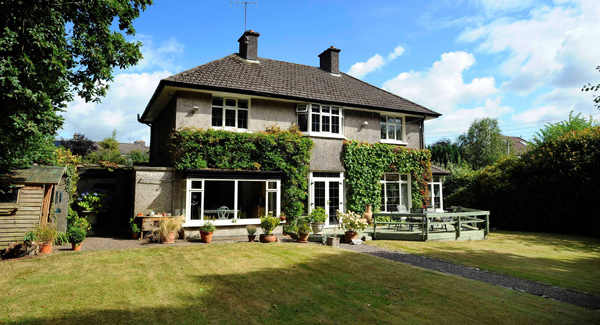
And following a vague Arts and Crafts style, the larger houses would have slotted into older estate gardens and the trees and planting have carried through — especially in the case of Glencorran, which is an early autumn sales breakaway.
With a rising market, expect more high-profile sales for September as downsizers have now sniffed the air and decided the time is right to sell up.
There has been a dearth of good properties coming onto the market — it’s been a moan of estate agents for the past five years. The deficit has led to a logjam in sales (along with the cruelty of negative equity), and without key moving parts, the market stagnated.

Despite a healthy equity build-up, few sales occur in a falling market and now that the slide has halted, the market has stabilised and certain areas of Cork City are seeing reasonable growth. (Incidentally, the property price register is the place to go for values — not asking prices — which can be influenced by a vendor’s expectations and an agent’s keenness to get the sale. Just because Mrs Murphy is asking such-and-such doesn’t mean your house is worth more — the register sale price is roughly the current value for your area.(https://www.propertypriceregister.ie/)
So with the big suburban houses starting to flow again, there could be a return to a normal market situation with trading up and trading down.
In the case of the vendors of Glencorran, they’re trading down from their four-bed, 1939 house on it’s exquisite one-third of an acre o gardens to something smaller.

But they’re keen to stay in the area — and like Blackrock, the greatest demand and greatest house price rises are in these two suburbs. Amenities, quality stock, maturity, and notional value all add up to a rejuvenated market and to increased demand.
And it’s probably no surprise that the guide price is on the wrong side of €1m — we don’t come out off the blocks with brazen price tags — but with the right kind of buyers, who knows where it could go?
Glencorran was bought over 20 years ago by its owners and their family was raised here, with the youngest now in their 20s and fully fledged.The couple bought it almost in the condition in which it had been built and sensitively have only tweaked the old girl here and there — it had lots of charm and lovely features.
But perhaps the most striking element on the approach (apart from the fab corner site) is the utter privacy. You have to walk inside the gates of the house before you get glimpse of its mass, as the garage is the only part facing the road.

The main entrance too, is obliquely placed, although there is the servant’s entrance, says the owner jokingly, referring to the anonymous black door which leads into the yard. (And there is a servant’s bell in the old scullery, a reminder of times when a live-in maid was standard for middle-class families, to cook, clean and keep house.)
“I keep trying it,” says the owner, “but they’re not there!”
The main entrance door is a classic of it’s time, but with new glazing that includes cut glass in the old frame. And that’s a good way to show the approach to the interior design here — it’s subtle, in keeping with the house and if it works, it stays. Nothing gets thrown out for fashion. This is immediately obvious in the little guest bathroom off the hallway, (which is a curious elbow affair and not at all grand) where everything is as is — nothing’s changed. There’s the original wooden seat and high cistern and the walls are subtly wallpapered, with nice blinds on the windows, but the sink and terrazo floor are from the pre-war years.
The flooring in the hallway, narrow plank maple, has been buffed back to life and winds it’s way past the important rooms to the kitchen. The room is like a magnet at the end of a corridor is which the stairs rises along the north-westerly facade — and here too is where the only design statement is made: Hand-forged, ornamental ironwork balusters that allow light through for the windows on the landing.

And these are covered in plantation shutters — the only place they’re used, says the owner, because they’re such a strong feature they could be overkill if used throughout the house.
In any case, these are the only windows overlooked in the house, save the bathroom, with only decorative drapes used elsewhere.
The bulk of the property faces full south over a perfectly rectangular garden surrounded by 40ft oaks, ash and more, including a delicious plum tree drooping with the last of its fruit.
The original Crittall windows have been replaced with double-glazing, but the terazzo flooring remains and instead of blasting out the old kitchen, pantry and scullery, the floor plan was modified to give the house a curious old-fashioned feel — almost as if it had been inherited, rather than bought. There are no dramatic or vulgar touches; the integrity of the design, which works so well, prevails.
So, there’s an extension to the kitchen, but it’s a big bay window onto the garden where the informal dining table sits and the terrazzo was extended outwards from the kitchen.
A specialist installer was brought down from Dublin for the job, and the difference, while slight, is still there, but it’s the same floor — a really lovely job.
“My mother told me that they used to cover the windows when the Italians laid terrazzo,” says its owner, “because they wanted to keep the method secret.”
And she respects the value of this old floor, just like she respected the layout, so there are three sides to the kitchen — the old scullery, where the unfitted units in French grey hold the sink and from where you can see the driveway (there’s also a cute pedestrian entrance from the other corner), and then another niche where the pantry — or “safe” as the owner says — was located. This has been opened up, but the new lines of terrazzo are like a map to the history of this house.
The central feature of this unfitted, individual room is the old Aga which they inherited with the house — it thrums away most of the time, says the owner, and when it’s turned off, it’s almost like the house loses its heart, she says.
Built to cook all the food in the house and “a bath each day”, it’s not too costly to run, she says.
Across from it, bespoke bevelled double doors lead out to an courtyard and garage which houses a laundry room and toy train room, formerly the garage. Great storage and scope here for new owners, but as it stands the pergola element overhead creates a nice, enclosed feeling. And there’s direct access to the garden and to ouside.
Next door to the kitchen, and again, surprisingly, not knocked through, is the dining room, fitted with a lovely ciruclar table and aged leather dining chairs from Boulevard Interiors, now sadly gone, says the owner, who sourced most of her furniture from there and Caseys.
The main feature here (and so it should be for a woman with a dissertation on medieval halls and patronage behind her) is a is a clever and amusing painting based on early Elizabethan society.
In a two-dimensional copycat style, it shows her as chatalaine of a hall with thinly-veiled caricatures of husband, children, family and friends as courtiers. An idea that’s ripe for the plucking.
As might be expected, the drawing room is an elegant, creamy, and low-key space with double aspect that includes a large bay facing south east, with longest side facing due south.
A specially made fireplace in pewter and Carrara marble holds the sacred place and furniture is soft and inviting around a massive marble coffee table. This double room is ideal for entertainng and overlooks the deck outside, which is ingeniouse is the way it’s built in seating also creates a safe boundary for children — and perhaps adults at a certain time of the evening.
The upper floor has four bedrooms, all ranged southwards around a long landing and the family bathroom, (a symphony in French grey and dark grey and silvered wallpaper) bookends the run to the west, with the smallerst room, now a study/dressing room, to the east.
Each room is decorated with a light hand, no overwrought touches here, just comforable, inviting family space.
Great energy, warm and welcoming and unpretentious. Yet, a trophy house too — and there’s no contradiction.