Ring in the new cheer
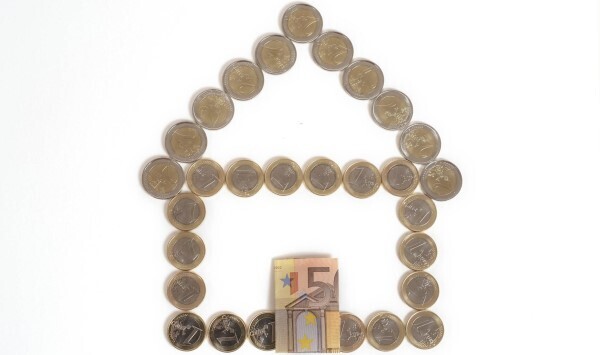
Conor Power suggests rising house prices could be a good thing and bemoans what he sees as our reverse negativity

Ring in the new cheer

WE are certainly living in strange times, when growth in the residential property market is treated with an approach akin to hearing that the country is showing signs of remission from a sort of national cancer.

When the CSO released figures late in 2013 showing that house prices had increased nationally by over 6% in the previous 12 month period and that prices in Dublin had increased by a stunning 15% in the same span, the news analysis reflected more worry than joy:

“Are we heading for another property bubble?” asked one paper in the tone of a child seeking verification on the news of his pet dog’s demise. Another headline warned us not to get too hopeful of this current growth disappearing. “Don’t bet your house on rapid price rises slowing down,” was the ominous headline.

REALITY CHEQUE

Beyond the Pale, the rest of Ireland has seen a tiny decrease in house prices over the last year of 0.3%. This underlines the stark contrast between the property market in Dublin and the rest of Ireland, but it’s the smallest drop in years and the ‘fear’ is that the house-price-increase fever will spread to the other towns in Ireland too.

“We are seeing, I believe, the beginnings of the situation in Dublin spreading out to the rest of the country,” says Simon Stokes, chair of the Residential Group of the SCSI (Society of Chartered Surveyors Ireland).

The problem that needs addressing in Dublin, according to Mr Stokes, is one of lack of supply. With so few houses being built and a growing population, the basic economic rule of supply-and-demand comes into play.

In the Greater Dublin area it’s estimated that demand is outstripping supply by a ratio of around 5:1 (ie. for demand of around 10,000 units a year, the actual supply is a mere 2,000 units).

In the budget for 2014, the Government said that it was allocating €30m towards the State’s house-building programme, but it seems little more than a cosmetic exercise in supply increase.

The second element is the continuing lack of credit — for those who want to build and those who want to buy. Commercial banks spend a lot of money and energy in trying convince that they are shelling out the shekels, but they’re not fooling anyone. At the start of the year, AIB and Bank of Ireland were waving a total of €4bn under the noses of gainfully-employed working citizens, but the gesture was as empty as Santa’s bag was after Christmas Day.

“If you’re looking at what the lenders promised to lend at the beginning of the year, you’re talking about €4bn-plus, and we’re not going to come anywhere near that,” says Karl Deeter, compliance manager of Irish Mortgage Brokers in Dublin.

Sure enough, the total lent for 2013 (including mortgage top-ups for people who already have a mortgage) stood at about €1.6bn by end Q3. Even with the figures of the final quarter of the year to be added on, the 2013 total of mortgages drawn-down will, according to Deeter, come in well below €2.5bn — a figure that’s even less than 2012.

Deeter rightly points out that we are, literally, expecting the impossible of banks in expecting loans from organisations that are struggling for their very survival.

But, the Government doesn’t seem to be showing any lead here — and there seems to be a distinct lack of political will to make banks lend at one end and to create the conditions for the building of houses to take place, at the other.

One thing that the Government is apparently going to do outside of the Pale is to remove some of those dearly unloved, unsold and unfinished concrete spectres in the countryside.

According to some media reports, Housing Minister Jan O’Sullivan has already drafted a hit-list of 40 unfinished estates that are to be permanently bulldozed from the backlog this coming year.

Is this really going to make a difference to the supply/demand situation in the countryside where there is a surplus of housing?

Simon Stokes of the SCSI sounds none too convinced: “I think that it’s something that catches the public eye or catches the public attention, but I don’t think that it’s that relevant.”

Over a year ago government ministers called in an inter-disciplinary panel made up of chiefs of banks, the heads of some of the largest estate agency firms, economists and other advisors around a large table, in a comfy office with ample tea and biscuits to thrash out just what was happening in the property market and just what needed to be done about it. The looming housing shortage problem that was going to lead to sharp house price increases was top of the agenda. The Government did nothing about it and now we have had double-digit house-price rise in Dublin in the past year.

“A part of me thinks that the Government wants to be seen as not intervening in the property market,” suggests Karl Deeter. “Another part of me, however, thinks that this whole country is just a gamble on an upward-moving property market.”

The point is, ladies and gentlemen that scarcity, (for lack of a better word), is good. Scarcity works.

Scarcity destroys negative equity; scarcity reduces the amount that the banks have to provision for losses. When house prices rise, a lot of banks become more profitable. This is because they don’t have to put as much aside for losses, losses that they avoided paying tax on in the past, incidentally, by putting them down as losses that they never actually realised.

Take, for example, the pre-Christmas news that Bank of Ireland was selling some of its shares back to the Government. This was hailed by the Government as a wonderful deal, where we, the people of the Republic of Ireland, made money. But the fact is that if the Government had waited another three months and enforced the loss provisions on BOI that the Central Bank had signalled immediately before the sell-back, that figure of €1.8bn would have been 25% higher (i.e. almost €500m) for the Exchequer.

When you see things like this, you might be tempted to think that the focus of government policy is more about making the banks happy rather than getting to grips with a skewed demand/supply situation in the property market, and that’s a condition whose recurrence we definitely do not want to see ever again.

More in this section

Property & Home

Newsletter

Sign up for our weekly update on residential property and planning news as well the latest trends in homes and gardens.

Cookie Policy Privacy Policy Brand Safety FAQ Help Contact Us Terms and Conditions

© Examiner Echo Group Limited