Letters to the Editor: Complexities and costs of becoming a decision-maker
People with an intellectual disability range from mild to moderate to severe to profound. It’s a broad spectrum.
For many families of people with an intellectual disability, the Assisted Decision-Making (Capacity) Act 2015 is causing untold problems.
Presuming everyone has capacity can be problematic. In theory, it’s a good idea to protect those with an intellectual disability and to ensure they have autonomy but it doesn’t suit everyone. People with an intellectual disability range from mild to moderate to severe to profound. It’s a broad spectrum.
My son has a severe to profound intellectual disability. He is non-verbal and is unable to make his own decisions besides making simple choices with assistance.
He is on a huge amount of medication due to his complexity and needs to be on them for quality of life. He is tube-fed.
Last week, I came across a couple of issues where someone caring for him in his day service was told to ask him if he wanted something before it would be given. It’s not a medication, but very important that he is given this through his tube to keep him comfortable. I really have an issue with this as my son is on a strict regime of feeds/meds and the balance is always tricky.
For someone to come along who has never even set eyes on him to then change his schedule without discussing it with me has really upset me. What had been proposed could have easily been the catalyst for a hospital admission. I was livid when I heard.
It has since been sorted (for the moment), but people who are working with our loved ones with intellectual disabilities must listen to families/ primary caregivers and heed what we (or they) say. I was told was he is an adult — as he is over 18 — and therefore can make his own decisions. This is ludicrous.
I need to become my son’s decision-making representative ASAP to prevent incidents like this from happening again. I have been to so many talks on the Assisted Decision-Making (Capacity) Act 2015, and I’m still none the wiser. I’m bamboozled after every meeting. What I do understand is that everyone is presumed to have capacity.
Unfortunately, to become a decision-making representative you have to go to court and there are legal costs in the region of €5,000. Most carers cannot afford to go this route. Most of us are on a measly carer’s allowance of €270 per week. With the cost of living crisis and the increasing costs of fuel, electricity, etc, it’s not getting any easier.
The Decision Support Service has a helpline and website at decisionsupportservice.ie.
A lot of people attempt to make the application themselves but you do need a lot of guidance and it’s time consuming. Carers like me are often caring 24/7. We are exhausted and really don’t need our lives to be made any more difficult.
Can we be human about the act and have some common sense. Not one size fits all.
Firstly, thanks for providing such lively stimulation and for helping to energise the debate on what we expect from our education system. It’s very timely given the online poll.
It’s with due regard for that purpose that I must also thank David Graham, the writer of the article — "The State is completely failing non-Catholic families" ( May 9, 2025) — and indeed the provocative writer of the synopsis/headline of this particular story.
However, he’s leant on too much tosh for this to be a serious contribution to the debate.
Thanks to Mick Clifford, we know that Ruairi Quinn set some deadlines and, while they haven’t been met (88% instead of 50%), there are within the State models of non-denominational schools such as the Educate Together model. And the 50% rather than 88% could be accounted for by the influx of less jaded Catholics than us (Polish people, for example).
Given that I have spent most of my adult life as a flake and am still recovering from a series of strokes, I have to park my own contribution to the debate here and thank you for your time.
There is a quiet cry rising across our country. It does not shout loudly enough to command headlines, yet it is present in every town, every parish, and every community. It is the parent who quietly goes without so their child can eat. The worker who gives everything and still cannot make ends meet. The older person sitting in the cold, counting the cost of every hour of heat. And we must ask ourselves, honestly: Have we grown used to it? Because this is no longer simply a cost of living crisis. It is a moral reckoning.
Ireland is not a poor country, and yet too many are living poor lives. Behind closed doors, families are asking the same question again and again: “Will we have enough?” Budgets have become battles. Every bill carries fear. Every unexpected cost brings anxiety. This is not what a just society looks like.
Scripture does not allow us the comfort of indifference: “Speak up for those who cannot speak for themselves… defend the rights of the poor and needy.” These are not gentle words. They are a call to action.
Because this crisis is not inevitable. It is shaped by choices, about housing, wages, energy, and political priorities, that continue to place the heaviest burden on those least able to carry it. Charity matters, but it is not enough. Charity may ease suffering today, but justice is what prevents it tomorrow. And yet, at a time that demands courage, we are offered caution. At a time that cries out for urgency, we are given delay.
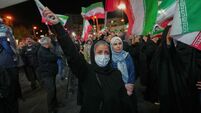
We see frustration spilling out onto our roads in recent days, with blockades and protests disrupting daily life. These actions reflect a deep anger and a sense of being unheard.
Protest has its place, and it must always remain peaceful and mindful of others, especially those already struggling or in need of care. But we must also ask, what kind of society creates the conditions where people feel they have no other way to be seen or heard?
The deeper crisis is not the disruption on our roads. It is the quiet suffering in our homes. The cost of delay is paid in cold houses, in skipped meals, in parents lying awake at night trying to make impossible sums add up. It is paid in the silent erosion of hope.
“What good is it for someone to gain the whole world, yet forfeit their soul?”
Beneath this crisis lies something deeper, a slow thinning of compassion. A quiet acceptance that this is simply how things are. A dangerous belief that some will struggle so others can thrive.
In recent months, I have heard stories that are hard to forget. Messages sent late at night. Voices filled with worry. And one simple, humbling question repeated again and again: “Will you pray for me?”
People are not just asking for help; they are asking not to be forgotten. And once you hear that, truly hear it, you cannot look away. This moment calls not only our leaders to act with boldness and imagination, but each of us to examine our own hearts.
Because a society is not held together by economic growth alone, but by compassion, by justice, and by how we treat the most vulnerable among us.
There is still hope. It lives in quiet acts of kindness, in neighbours caring for one another, in communities refusing to give up. But it cannot remain the work of the few. So I ask your readers, do not look away. Notice the quiet struggles. Hear the unspoken fears.
Let yourself be moved. Give, even when it stretches you. Speak, even when it feels uncomfortable. Stand with those who are struggling. Demand better, from leaders, and from ourselves. Because the cost of doing nothing is too high. It is measured in dignity lost, hope diminished, and lives quietly breaking.
Le cúnamh Dé, may we choose solidarity over silence, justice over indifference, and love over all else, before more lives are quietly diminished.
What is one to make of the fact that on Good Friday pubs were open but bookies were closed? Do authorities deem it to be perfectly alright to get legless drunk but very, very wrong to place a little bet on that very sacred day?
Further to Colonel Dorcha Lee’s article — "Security will be the big challenge for the Irish EU presidency" ( , April 9) — I believe the following points are also of relevance to the discussion around Ireland’s EU presidency.
Ireland is a long-standing (1973) member of, beneficiary of, and contributor to the EU, which has 27 member states at present. Of those, 23 are also members of Nato, the alliance formed in 1949 for collective defence against the then USSR.
Ireland has not been minded to join Nato, espousing instead military neutrality whilst being active contributors instead to UN peace initiatives and some EU-mandated missions (Kosovo, Bosnia).
The political and security landscape has fundamentally changed in the last two decades. The Russian Federation’s stated objective is to dominate Nato (and, by extension, Europe).
Donald Trump’s clearly articulated dissatisfaction with Nato member’s refusal to support his (and Israel’s) war on Iran has severely damaged European Nato member’s confidence in the US as a reliable contributor to their defence. If he, as threatened, withdraws from Nato (although to do so formally would require an act of Congress) he can do so, to all intents and purposes, by withdrawing or redeploying some of the 84,000 American troops currently in Europe. The only winner will be the Kremlin and Russian president Putin.
Without the US, Nato ceases to have meaning and Europe must look internally for resilience.
Where does this leave Ireland? We do not exist in a bubble created by our neutrality. In July, we take over presidency of the EU from Cyprus and will be asked to take a leadership role in the EU’s governance. We will inevitably be the focus of disruptive activity from cyber hacking, through drone incursions on infrastructure/security facilities to interference with subsea power and communication networks.
We are taking steps to negate these threats and we cannot do this alone. Ireland in 1973 joined a "community" which has evolved exponentially. Ireland can be a front-runner in leading Europe’s development and protecting our common interests.