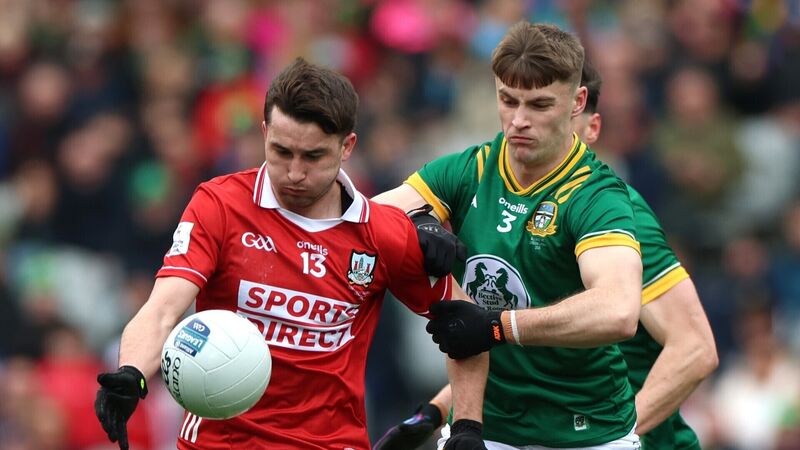
Recent modifications to the rules governing Gaelic football have been acknowledged widely as enhancing both the quality of play and the entertainment value of the game. Nevertheless, a number of substantive concerns merit further scrutiny and refinement.
One such issue pertains to the protocol surrounding the return of the ball to an opposing player. The act of physically handing the ball to an opponent is inconsistent with the traditions and ethos of Gaelic football.
When a free is awarded, and the infringing player is in possession of the ball, the appropriate procedure should be to place the ball on the ground and withdraw to avoid impeding the continuation of play. Presently, the sanction for failing to return the ball appropriately or for obstructing the flow of play following the award of a free is disproportionate to the nature of the offence.
The advancement of the ball by 50m can, in certain instances, create a scoring opportunity worth two points, a situation which contrasts unfavourably with more serious infractions elsewhere on the field that do not confer comparable advantage.
While the intention of promoting continuous play is positive, a 50m advancement appears excessive. It would be prudent, therefore, to consider either reducing this distance or eliminating the consequent two-point scoring potential. Furthermore, questions arise regarding the practical accuracy with which referees can measure this 50m distance during live play.
With respect to game duration, if the ball remains in active play at the moment the hooter sounds, the game should be permitted to continue until the ball next goes out of play, subject to a maximum extension of say two minutes. A second hooter could then signal the definitive conclusion of the game.
In situations where a sideline kick or free is awarded just prior to the hooter, and the hooter sounds before the kick is taken, play should be allowed continue until the ball again exits the field of play or the two-minute allowance has elapsed, whichever occurs first. Such a system would promote procedural consistency and fairness at the close of games.
The adoption of technological innovation to assist referees also warrants immediate consideration. The current disparity between what is visible to television audiences who can view replay footage within seconds and what is accessible to match officials represents a significant shortcoming in the administration of the sport.
The integration of video review or similar systems, as effectively employed in rugby, would promote fairness and support referees in making informed and equitable decisions.
While the introduction of the split season has been well received by many stakeholders, it is not without its complications. The temporal proximity of the National League final to the opening rounds of the championship has reduced the appeal of the league finals for certain counties, as teams may prioritise readiness for the championship. Furthermore, the scheduling of the final league fixtures and league finals on consecutive weekends poses challenges for player welfare and recovery. The rescheduling of All-Ireland finals to July has also curtailed valuable promotional opportunities for the GAA within schools which may reduce youth engagement and participation.
In light of these observations, it is clear that the new GAA rules and structural reforms have brought meaningful improvements to Gaelic football. However, the amount of time spent by players passing the ball back and over across the field before shooting for a score is concerning and detracts from the game as a spectacle.
A number of aspects warrant reconsideration and adjustments that balance fairness, player welfare, and the traditional character of the game would serve to enhance the integrity and enjoyment of one of Ireland’s national sports.
Seán de Brún
Firies, Co Kerry
When solidarity stops listening
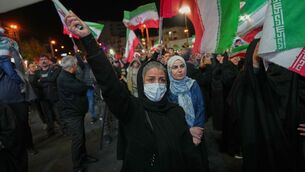
The Galway Alliance Against War (GAAW) has read Mahya Ostovar’s account of our March 4 ‘Peace and Solidarity with Iran’ event. We respect her right to criticise. However, her article requires correction.
We organised the event in response to the unprovoked US-Israel war on Iran, in particular the deliberate “double-tap” missile strike on a girls’ school in Minab. Initial reports suggested 40 dead; the final toll reached 180, including 168 children.
What compounded this atrocity was the silence of the Irish State. Two weeks earlier, a school shooting in Canada that claimed nine lives prompted immediate expressions of sympathy from both the Government and the President’s office. For Minab, nothing. Are Iranian children worth less? It would appear so. The minister for foreign affairs even declined to describe the attack as illegal.
Basic decency required that someone express condolences. We chose to do so.
Ms Ostovar overlooks the other Iranians present — those who have engaged with our peace work for years and who welcomed our solidarity.
We are told this war is about women’s rights. If so, some obvious questions arise. Why has Saudi Arabia — long associated with far more extensive restrictions on women — escaped similar treatment? Why did Western powers arm Mohammad al-Jolani to overthrow the secular government in Syria? The answer is simple: They do Washington’s and Tel Aviv’s bidding.
Western hostility to Iran is not rooted in concern for women. It stems from Iran’s refusal to submit to external control and its support for Palestine. This is not new. It echoes the fate of Mohammad Mossadegh in 1953, when he attempted to use Iran’s oil wealth for its own people.
None of this is to deny that Iran has internal issues, including on women’s rights. But the reality is more complex than presented. Under the Shah, female literacy stood at 35.5%. Today it exceeds 85%, approaching 99% among young women. Rural literacy rose from 17% to 73%. Women now make up over 60% of university students. Progress in women’s rights will come through the efforts of Iranian society itself — not through sanctions or military intervention.
You can criticise a government and still oppose the bombing of your country. You can support reform without endorsing war.
Our organisation was founded in the aftermath of 9/11. For 25 years, we have opposed Western militarism and the use of Irish territory in support of illegal wars. On March 4, Denis Halliday, former UN assistant secretary-general who resigned over sanctions on Iraq, sent us a simple message: “Congratulations. Keep doing the right thing.”
We intend to do exactly that.
We will continue to oppose the war on Iran, the demonisation of its people, and Irish complicity in these actions.
As the representative from the Iranian embassy said at our event: “This war is not new. It is a continuation of the Gaza genocide.” The US-Israeli assault on Iran is part of a wider pattern where civilians, schools, hospitals, and homes become targets.
We stand with the victims. That, we believe, is what solidarity actually means with EU and non EU citizens.
Niall Farrell
Galway Alliance Against War