Letters to the Editor: No progress in delivery of mental health care
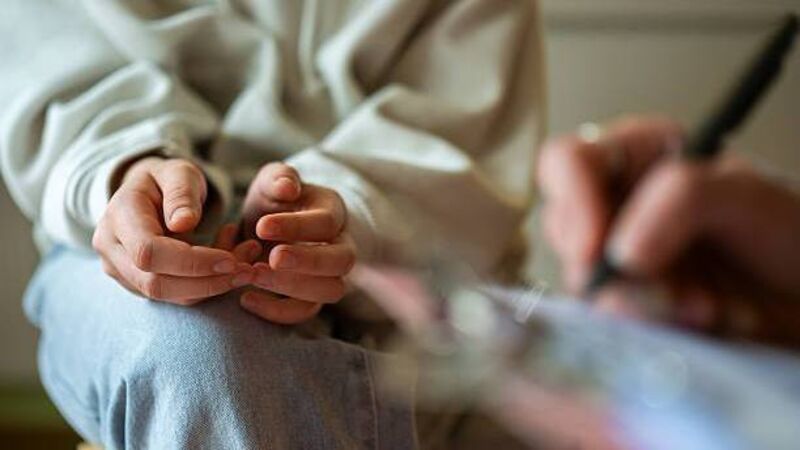
'Working in the field of homelessness, we meet too many people with serious mental health issues ending up in prison and families and concerned individuals struggling to get even a listening ear — an email or voicemail is no solution.' File picture
Watching Prime Time Investigates confirmed the view that “the more things change, the more they remain the same” as they focused on A Vision for Change 20 years ago. I clearly recall being at the launch of that report and, to the annoyance of many people, I asked the junior minister at that time if he would propose meeting in 10 years to assess its progress. This question was asked based on my daily experience — peppered with a degree of cynicism.
The first annual report on people with mental illness was compiled as far back as 1851. In June 1972, Ivor Browne compiled a report on the development of the mental health services which contained a broad outline of proposals for future development of psychiatric services in the Eastern Health Board Area.
The report was based on experience gained over a number of years in attempts to improve psychiatric services. He said they were proceeding with a programme for placement of long-term patients in various hostel situations — clearly in the community. The report addressed the phasing out of large mental hospitals.
The aim of the policy was to break up the existing mental hospital complex with its excessive concentration of patients in large institutions. This was to be done “by a comprehensive range of facilities, largely based in the community, which will provide a more humane, therapeutic, and realistic environment for the care and treatment of patients who had been rejected by society and forced to seek asylum in large substandard antiquated and dehumanising institutions”.
Many people, this writer included, campaigned for and welcomed the closure of these institutions. Working in the field of homelessness for 50 years, we meet too many people with serious mental health issues ending up in prison and families and concerned individuals struggling to get even a listening ear — an email or voicemail is no solution.
Over those years, endless reports have been written, millions of taxpayers’ money spent, endless seminars/ conferences and the increasing numbers of experts and politicians have come and gone. The use of technology, coupled with corporate speak and box-ticking, can give the impression that all is well. This helps to dismiss experiencing the real pain and allows real human interaction to be ignored.
In 1984, when yet another report was published — Planning for the Future — we contacted the then minister for health about our concerns of hostels and night shelters becoming dumping grounds as hospitals continued to be emptied?
In more recent years, the NGO sector has become much more involved in “the care and rehabilitation” of people with mental health issues and housing. Another example of the State offloading its responsibilities.
Now, 42 years later, prisons have become the dumping grounds. The gardaí are the only help available in an emergency and this can inevitably lead to a court appearance and eventually admission to prison, even at times outside this jurisdiction.
The patient then becomes the prisoner or “inmate”, with the added stigma attached. The gardaí and prison officers have a very difficult job dealing with problems not of their making and these issues should be addressed by the health service. The distressed calls from loved ones capture the pain and suffering endured in attempting to get help will continue until this issue is addressed with the seriousness it deserves.
The Prime Time Investigates programme will probably lead to much needed debate. But it will be meaningless unless action takes place. This must involve frontline workers, people experiencing mental health problems, their loved ones and concerned citizens, together with an acknowledgment that our fellow human beings deserve better in a modern, wealthy European country.
Alice Leahy, Director of services, Alice Leahy Trust, Dublin
Cork City is as progressive as Paris
I write in response to the latest column by Michael Moynihan — ‘Cork should take some inspiration from the imagination and leadership in Paris’ — inspired by his recent visit to Paris, in which he praises the mayor of the French capital for her leadership, for pedestrianisation, reducing car dependency, and promoting the 15-minute city concept.

There is a certain ‘déjà vu’ when it comes to reading the unremitting negativity and criticism in his column week after week.
While Mr Moynihan wanders along the banks of the Seine, he celebrates Paris for progressive urban planning but ignores how Cork is already far along the same trajectory, and, as is often the case, he either ignores, or simply isn’t aware of what’s actually happening on the banks of the Lee.
If he’s looking for leadership, Mr Moynihan should look no further than Cork City Council’s key role in delivering what will be Ireland’s tallest residential building on Albert Quay, where work is well underway on the 25-storey Railyard Apartments.
It is a key strategic objective of the city development plan 2022-2028 to deliver compact urban growth that achieves a sustainable 15-minute city of scale.
Just last week, the city council approved planning for a four- to 16-storey, car-free social housing apartment scheme at Anglesea Terrace — a clear demonstration of its commitment to sustainable urban living. And more sustainable and affordable city centre homes are on the way — at Horgan’s Quay, in the south docklands and at Creamfields on the Tramore Rd.
The city council worked with city traders post covid to introduce the largest pedestrianisation programme in the State, reducing on-street parking in favour of people and public spaces.
The city council worked with restaurateurs to deliver the Eat on the Street concept on Prince’s St — reimagining a city street to create an outdoor dining destination — a project that made international headlines for its partnership approach to reinviting cities post pandemic.
The city council pedestrianised the Marina and went on to develop Marina Promenade, Marina Park and then revamped the Atlantic Pond — transformational green public spaces that will serve the city for generations.
Hundreds of millions of euro is being invested in the city’s public transport system. The capacity of the city’s commuter rail system is being trebled, a new through-platform has been built at Kent Station, new tracks have been laid, eight new rail stations are planned, and the fleet will be electrified.
A route for a light rail system has been published, and public consultation is ongoing. The bus system is being overhauled, with a new network and new sustainable transport corridors planned, a new depot being built at Tivoli for an electrified bus fleet, and millions more is being spent on new active travel infrastructure across the city.
We are working with government and various State agencies to deliver these major projects as quickly as possible.
Mr Moynihan was right on one thing though — more funding is needed.
Cork City Council has proven that once funded, it can deliver for a city that has always had that certain ‘je ne sais quoi’.
Valerie O’Sullivan, Chief executive, Cork City Council
Getting treatment for depression
Someone brought it to my attention to watch Majella O’Donnell on The Late Late Show (Friday, February 6). I didn’t know what it was about — before I saw it on RTÉ Player.
Another person I know had seen it and was very impressed and admiring of her and I can see why. It made riveting viewing as she spoke to The Late Late Show presenter Patrick Kielty of her experience of severe depression and of the help she received in St John of God University Hospital in Stillorgan, Dublin.
She wanted to be treated the same as everyone else and she didn’t want her beloved husband, singer Daniel O’Donnell, visiting her in hospital as she didn’t want any fuss or attention. Her priority was to get well — which she did.
I read that the hospital is the national centre for the treatment of depression and can accept referrals from GPs around the country for public or private patients — if there is a bed available. I thought this is important to know if anyone feels in need of more support to recover from severe depression.
Majella asked for the Government to retain the Dublin-Donegal afternoon flight service, which is important, she said, for people in Co Donegal, where she lives, and in the local offshore islands who need to go to Dublin for cancer treatments. They can return on the afternoon flight rather than waiting all afternoon for the evening flight. There are morning, afternoon, and evening flights and the worry is the government may remove the afternoon flight. Hopefully, after her appeal on The Late Late Show they will retain it.
She emphasised for anyone with depression to go to their GP and say what they need. In her case she needed in-hospital support.
This too shows the strength of The Late Late Show when it highlights issues in the public interest.
Mary Sullivan, College Rd, Cork