I write in relation to ‘Why is education so cheap’: UCC president says honest conversation needed in third-level fees, ( Irish Examiner, November 10).
The president of University College Cork, Professor John O'Halloran, in addressing the significant underfunding of the higher education sector, has identified an easy target. By advocating for higher fees, he is effectively saying universities should be out of reach for working-class students.
Education is not ‘cheap’ for the average student household in Ireland, and it’s certainly not cheap by European standards.
Presumably, he is using the anglo-saxon, neo-liberal model of higher education as an example to follow.
The Government and UCC have responded inadequately to the current plight of students facing an accommodation crisis and crippling rents.
Shame on university administrators earning bloated salaries while lobbying to make third-level education even more inaccessible. All this, while food banks are struggling to feed impoverished students.
Orlaith Finnegan
Boulevard Raspail
Paris
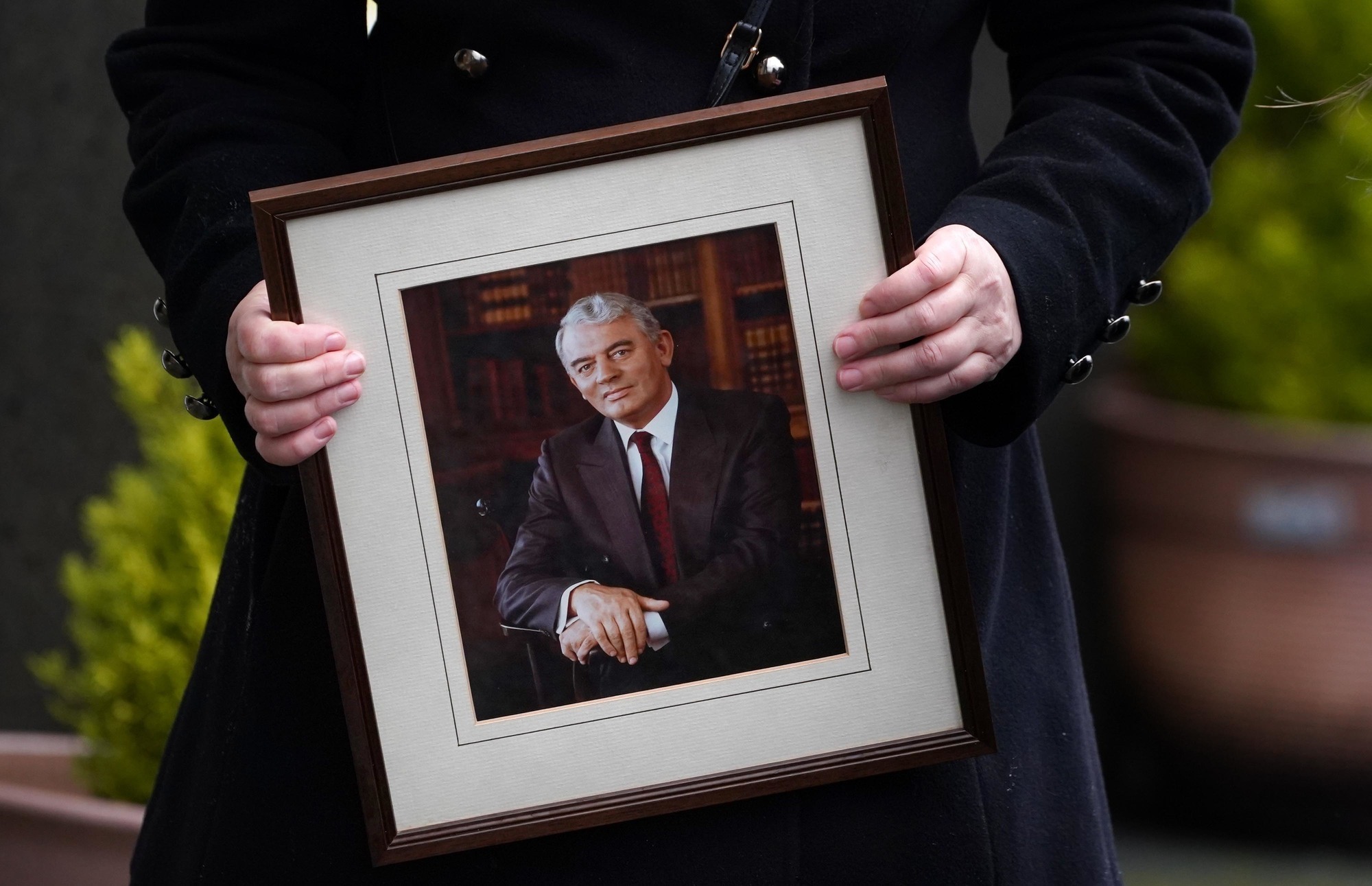
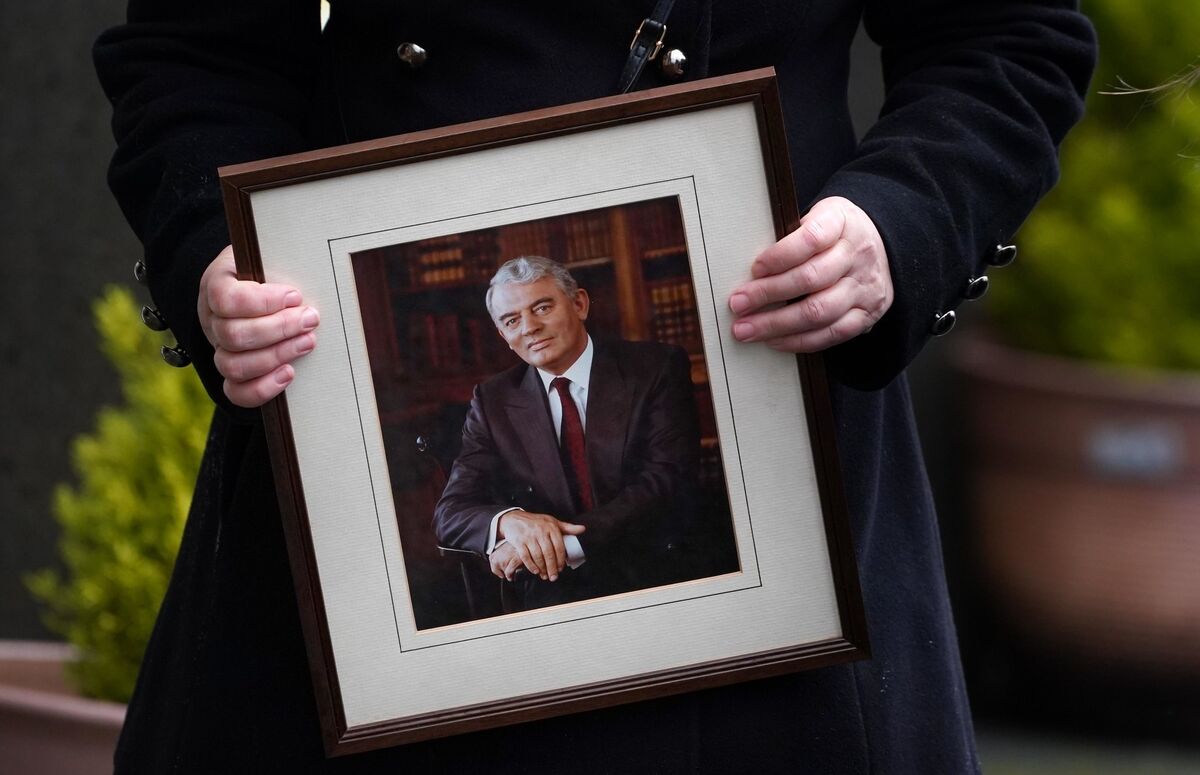
Currie a true giant of Irish politics
I agree with the Irish Examiner’s viewpoint on the career of Austin Currie. He was a true giant of Irish politics.
I was deeply saddened to learn of his death.
I valued his friendship from our days in Northern Ireland politics together although we represented different political parties.
Our friendship continued when we were both elected as Fine Gael colleagues in elections held on the same day in 1989 — he as a Fine Gael TD and myself as a Fine Gael MEP.

I always valued and respected his political contribution in both parts of Ireland. Although others have been given or tried to claim the credit — he was the real founder of the Northern Ireland Civil Rights Movement and he was totally committed to achieving equality based on non-violent means and respect for both traditions on this island.
We had planned to meet up again several times over the last two years but were denied the
opportunity of doing so because of Covid-19 – I will forever regret that we were unable to do this.
I would like to extend my deepest sympathy to his wife Annita, his daughter and Fine Gael colleague, Senator Eimear Currie, her siblings, and the wider family circle.
May he rest in peace.
John Cushnahan
Former Fine Gael MEP
and former Alliance leader
SDLP founders would be exasperated
I learned with sadness and regret of the passing of Austin Currie, the last remaining of those who founded Northern Ireland’s Social Democratic and Labour Party (SDLP) in August 1970. May he now rest in peace alongside Ivan Cooper, Paddy Devlin, Gerry Fitt, John Hume, Paddy O’Hanlon, and Paddy Wilson the party’s other founder members.
While the menace of Brexit currently stalks the landscape of NorthSouthLondon politics, relationships were infinitely worse a half a century ago. That we are now in a better place is due in no small part to the bravery and steadfastness of these seven intrepid Northern politicians, all of who if they were still amongst us would, I suggest, be totally exasperated by the continuing immaturity and noxiousness of Northern politics and by London’s enduring mendacity towards Northern Ireland.
Michael Gannon
12 St Thomas’s Sq
Kilkenny
South Africa’s journey to full equality ongoing
The passing of South Africa’s last white president FW de Klerk marks the end of those from the leadership of South Africa during the apartheid times. He did start the process of transition to democracy where everyone had a vote, but he also worked for a long time in the apartheid system and didn’t seem to really apologise, recognise, and refute apartheid as completely as he should have.
It is customary to praise those that pass, and he did start the process, but the full picture is more complex than that. Although apartheid has officially gone, are all the people in South Africa offered the same opportunities? I think there is more to do.
Rest in peace and hope that others continue with the journey to full equality in South Africa.
Dennis Fitzgerald
28 Landale, St Box Hill
Vic Melbourne
Australia
A simple solution to sideline abuse
Reading about recent abuse to underage referees from officials and supporters on the sideline; I have a simple solution: When a referee hears abuse he goes to the offending side’s manager. He says if the abuse comes again, the match will be abandoned.
With the prospect of 22 plus players and parents having nothing to do, I contend that the abuse will be gone after one or two games.
In the 90s, local leagues had a policy of penalising bad language with a free, then a yellow card, then a red card. After a few weeks, players were like altar boys.
Unfortunately, the rule was not continued and the following season, things were as before.
Kieran Grainger
Glenbrook
Passage west
Zero-carbon move must be for us all
The Irish Examiner is to be congratulated on its excellent coverage of the discussions at the climate crisis summit in Glasgow.
In your reporting, you have highlighted the issues on the table at the conference, and how they relate to Irish society. And you have also noted how some people are concerned that efforts to de-carbonise our economy will make their lives worse, not better.
There is indeed a real potential that the costs of the transition will come to weigh most heavily on the poorest and most vulnerable people; the same people that are already most exposed to the impact of climate chaos.

We know that action to stop runaway climate change is required urgently and, as a result, we in Ireland are about to make a big investment in a better future.
If this investment is to succeed, it must strengthen the social fabric of our society, support local creativity, and address both climate justice and social justice issues.
All over Ireland, people are coming together in groups to find alternatives to the practices that created the climate crisis. It is time to highlight and support those
initiatives, so that communities everywhere can reap the rewards from the transition to a zero-carbon society.
Hans Zomer
Global Action Plan
Axis Centre
Ballymun
Dublin
Climate disaster victims need aid too
Thirty years ago global warming was front-page news so why has it taken our leaders this long to address these problems? Since the Paris agreement in 2015, we have seen rising emissions, rising temperatures as well as rising fossil fuel production — and it’s the vulnerable who suffer the most.
Countries in the global south contribute relatively little to climate change in terms of carbon emissions, yet they are among the hardest hit partly because they rely heavily on rain-fed farming. Rising temperatures and sea levels — as well as rainfall anomalies, have heightened the frequency and intensity of natural disasters, so why should these vulnerable communities have to suffer the most from the mistakes of the western world?
From working in Kenya since 2002, I have seen first-hand the result of climate change with the women and girls I work with, within Brighter Communities Worldwide — from having to walk even longer distances to access water and
collect firewood on a daily basis, as well as working extended hours in fields to ensure food security, due to reduced crop yields. This is having a major impact on their livelihoods and education, and so they continue to face a disproportionate impact from the climate crisis. While we welcome the news of the additional aid
funding of €2.1m which will help address the impact of climate change in developing states, there is no compensation for victims of climate disasters — more needs to be done now.
Maria Kidney
Co-founder, Brighter Communities
Worldwide,
Cork
Let’s act to reduce rising inequalities
Many Cop26 government leaders did not wait to hear from citizens. More fossil fuel delegates than island people affected attended.
We can take our independence back and act to reduce increasing inequalities. As climate change, conflict, and hunger sadly increase in a work of plenty, we can allow the web to divide and rule, or we the people can move the dial to say ‘stop’.
Be the change we want to be. Power back to the people.
Is the only way expected outcomes of COP26 can be delivered on.
Protect planet earth for our future generations.
Breda Gahan
Annaly Rd
Cabra
Dublin 7
Monikers have no place in rugby
Could we all please simply call our rugby opposition today by their rightful national name, ie New Zealand, rather than by the relentlessly over-used moniker based on the colour of their gear? They’re the only team in the world who have somehow managed to have themselves constantly referred to as their ‘pet-name’ implies. South Africa, Argentina, Australia et al, all have traditional monikers — Springboks, Pumas, Wallabies etc, but at least they still mostly travel under their standard national name. Is there perhaps some sub-conscious, innate
acceptance of New Zealand’s dominance at play here? If so, we’re going to be always on a hiding to nothing even before the kick-off, if we constantly defer and refer to their rather foreboding moniker. A solo-colour strip, white fern or no, surely doesn’t deserve such profiling. If we allow it to, we’ll surely be ‘monikered’ off the field!
Jim Cosgrove
Chapel St, Lismore
Co Waterford

Cancel anytime
CLIMATE & SUSTAINABILITY HUB