Letters to the Editor: Stigma of prison never goes away
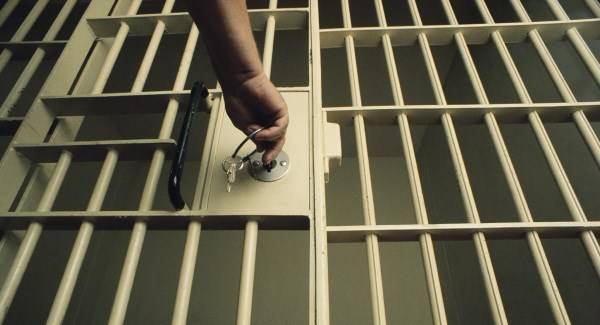
Letters to the Editor: Stigma of prison never goes away

Life can be a struggle for ex-prisoners as people try to shame them for the mistakes they made.

It was so good to read Vivian Geiran’s article — ‘When is enough punishment enough?’ (Irish Examiner, online, June 2). Finally the issue is being highlighted.

Finally the issue is being highlighted. 

I’ve been there, I was at the lowest point of my life 20 years ago and ended up in prison. On my release, I worked hard and focused to be a better person.

There were walls put up everywhere and even my success was mainly ignored because people focused on historic events rather than the present.

In February this year, my new life crossed over to the past when I was responsible for getting gardaí to do the Jerusalema challenge. A massive achievement for anyone, especially for an ex-prisoner, but my name was removed from the story by some media and the article even deleted by some others.

Sadly last year I left my radio job as the hate I was getting was too much for me. I gave up my dream job and realised that unless people talk about success stories after prison then the stigma will never go away.

Frankie Shanley

Albufeira

Portugal

Treat people with respect they deserve

Readers of a certain age will relate to the wise words of Fergus Finlay — ‘The generation born in the 1940s and ’50s have earned our respect’ (Irish Examiner, June 1).

However, some people in this age bracket are not always treated with the respect they deserve, just being taken for granted. 

Clearly we are all ticks in boxes to support the insensitive labels designed to give strength to a particular point of view. Just imagine for a minute the labels coming down the track post-Covid!

The system has become so bureaucratic and insensitive, with little thought given to the pain and hurt it causes. 

Fergus details the contribution made by people in the past. The contribution of older people in supporting and encouraging the younger generation in these challenging times is more important now than ever before.

The other ‘virus’ reaping havoc on our health service has reminded us of the simple pen and pencil we thought was a thing of the past. Fergus didn’t acknowledge his own very important contribution to the National Conversation on radio — always an opportunity to whet the appetite for more. In 1972 the novelist Anthony Powell wrote “growing old is like being increasingly penalised for a crime you haven’t committed”.

It behooves all of us, of all ages to ensure we don’t end up feeling like him

Alice Leahy

Director of services, Alice Leahy Trust

There is life after exams

May I give some advice to the many parents of students who will be sitting their Leaving Cert next week? Especially after such a tough year for all these young people.

I have just turned 70 and I still have nightmares about sitting mine.

Tell your young sons and daughters, and often, that you love them. Tell them that you hope they will do their best but whatever the outcome they can come home and they will be loved just as much as ever. 

Tell them there is lifelong learning and the Leaving Cert is but one, relatively small, stepping stone along the road of life. And always remember, the ones who do best do not always succeed best in life.

I sat my Leaving Cert in 1969, and the pressure was horrific, way over the top. Of course, it did not help that school life in general at that time was a very unhappy experience. I survived and learnt very quickly there was a lot more to life than the Leaving Cert.

Brian Mc Devitt

Glenties

Co Donegal

Labour’s anti-Israeli stance is a vote grab

How sad that the Labour Party is considering joining Fianna Fáil, Sinn Féin, and their fellow travellers in the anti-Israel rabbit-hole — ‘Labour to hold urgent meeting on Israeli stance’ (Irish Examiner, June 3).

In a desperate ploy to gain votes in the forthcoming Dublin Bay South by-election, Labour may now support calls to expel the Israeli ambassador.

Past leaders of the party, people like the indomitable Frank Cluskey, were staunch supporters of Jews’ right to a homeland within safe borders. In 1980, it was Frank Cluskey that led the outrage after Brian Lenihan, the then Fianna Fáil minister for foreign affairs, declared in Bahrain that Yasser Arafat, the leader of the Palestinian Liberation Organisation (PLO), was “a most sensible element”. Frank Cluskey was later vindicated when armed Palestinians linked to Arafat’s PLO kidnapped and murdered Irish army private Caomhán Seoighe (Kevin Joyce) in South Lebanon.

Caomhán Seoighe was from the Aran Islands. His body has never been found and so can’t be returned to his family for Christian burial. Despite this Fianna Fáil and the rest of Ireland’s political establishment are only too happy to dance to the tune of Yasser Arafat and his successors.

Karl Martin

Dublin 13

Preserving a Catholic ethos in schools

Some politicians have questioned why a Catholic ethos should be present in our schools. Perhaps the reason lies in the fact that the overwhelming majority of children are from a Catholic background and that their parents have a sneaking feeling that the Catholic ethos is the most compassionate, coherent, and comprehensive available.

These parents are delighted to see kindness and a belief that our lives have a significance beyond our ability to fit into a consumerist-driven economy, taught alongside mathematics, geography, etc.

Those who do not appreciate this are largely unwilling to put the time, effort, and money into founding and sustaining schools with an alternative ethos. It would be strange if the presence of children from these parents should result in parish schools dumping that which is distinctively Catholic. If the tables were turned, would these parents, having gone to the trouble of setting up their own schools, consider it fair to be forced to abandon their preferred ethos, on account of the presence of few children from some other background?

The dominant political, media and corporate driven ideology of today’s world, casualises sex, relationships, and even life itself; marriage, family life, and having children are optional extras. The birth rate of every European country has fallen below its self-
replacement value. In other words, we are in the process of self-extermination.

The Christian approach to life, including relationships and our sexuality education, helps our young people to embrace a life of meaning and personal responsibility that is both rewarding and sustainable. It is indeed worthy of our support.

Gearóid Duffy

Lee Rd

Cork

Bins are best way to tackle street litter

I learned with interest of the enormous amount of litter left on our streets as the country emerges from the Covid-19 lockdown.

To put this in context: Since the pandemic began there has been a decline all over the country in the number of public litter bins available, with local authorities appealing to the public to take litter home.

Research has confirmed that the items most frequently left on our streets are cigarette butts. Smoking was banned public buildings in 2004 yet the response of successive governments to date has been to ignore the obvious by failing to erect cigarette receptacles outside each public building.

In a similar vein my appeals to those in local government to make the provision on request of cigarette receptacles to ratepayers has fallen on deaf ears; numerous business owners have put receptacles outside their premises on their own initiative.

While I am the first to acknowledge that the above suggestions will not be a substitute for a national waste management strategy, that proactively taxes waste at the point of creation to enable the financing of adequate disposal of same. I am nevertheless confident that with more public litter bins and cigarette receptacles in place the amount of litter being dropped on our streets would be reduced substantially.

Tadhg O’Donovan

Fermoy

Co Cork

Help women to keep their children

Lucy Boland writes about “pregnant people”, “barriers to reproductive healthcare”, and the right to “make their own decisions” — ‘Abortion legislation not fit for purpose’ (Irish Examiner, Letters, June 2).

As far as I know those “people” who take hormones for contraception; those who face unwanted pregnancies, and who take decisions on whether to have their child aborted or not, are women.

Many such women have indeed been failed by partners and their families.

Indeed, they have also been failed by the State, which has spent €20m on abortions but virtually nothing in assisting women experiencing crisis pregnancies towards having their children.

Conchita L Serra

Dalkey

Co Dublin

Use contraception rather than abortion

Lucy Boland writes that “we can and should do better” in regard to abortion.

I’m sure that 90% of GPs would agree that less abortion is better than more abortion.

So why not promote contraception rather than abortion and accept that pro-choice care starts there.

Seamus O’Callaghan

Carlow

Why no planning department?

Why does the Republic of Ireland not have a town planning department? 

Had the country had a town planning department, that financial disaster of a children’s hospital would not have occurred. I also see that some families have houses that are after crumbling away and they are facing huge financial problems. None of this would have happened if the country had a town planning department.

One can also mention the mess on the streets in Dublin.

Isn’t it about time that Ireland had a town planning department?

Mike Hulme

Hartlands Avenue 

Cork

x

More in this section

Revoiced

Newsletter

Had a busy week? Sign up for some of the best reads from the week gone by. Selected just for you.

Cookie Policy Privacy Policy Brand Safety FAQ Help Contact Us Terms and Conditions

© Examiner Echo Group Limited