Letters to the Editor: Children need a new strategy for post-Covid support needs
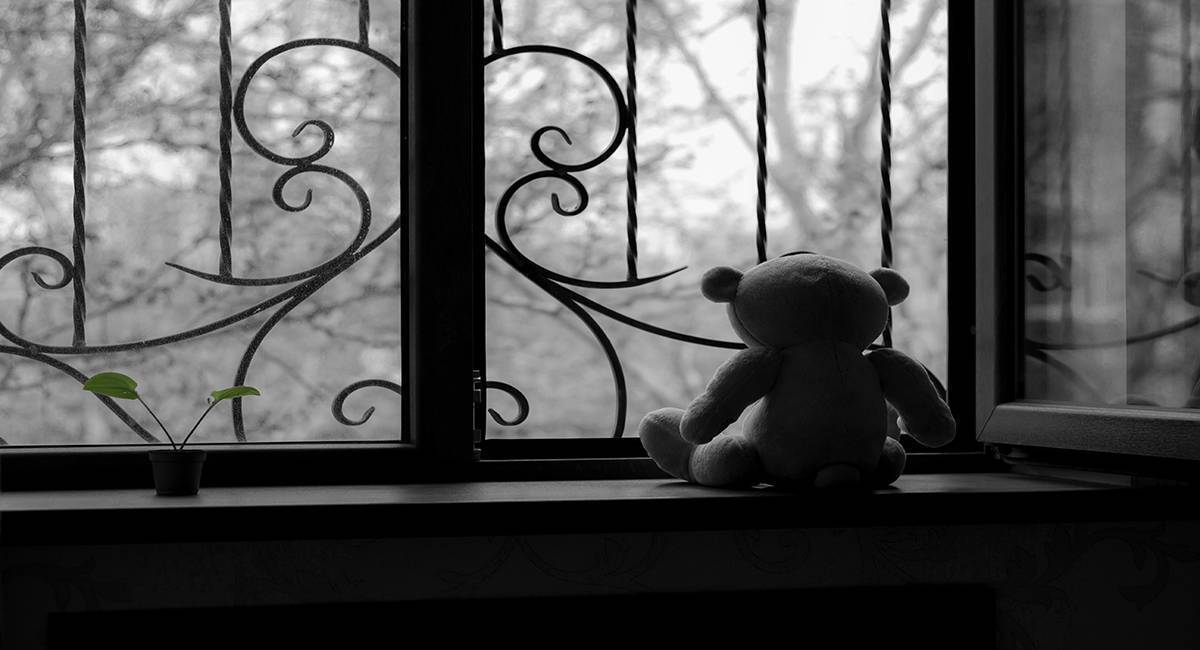
Pandemic, coupled with parental unemployment, increased poverty, and financial stress, will have a hugely negative impact on children unless steps are taken
Letters to the Editor: Children need a new strategy for post-Covid support needs

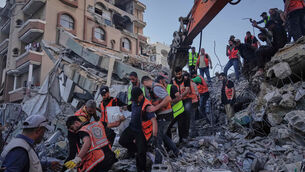
As outlined in an Economic and Social Research Institute report on Children’s lives in Ireland, published Monday, May 31, the pandemic, coupled with parental unemployment, increased poverty, and financial stress, will have a hugely negative impact on children unless steps are taken now.

The Prevention and Early Intervention Network represents those working with children and families thought Ireland. During a think-in last week, members outlined the significant demand for services, including from families — and the increase in families who have never sought help before.

Members spoke of the anxiety that children of all ages are experiencing and the increase in younger children, from the age of five upwards, needing therapeutic inputs. They spoke of the trauma of bereavement and the isolation of lockdown and of the increase in domestic abuse and alcohol use in the home.

Ireland’s most recent children’s strategy, Better Outcomes Brighter Futures, concluded its six-year life in 2020. Now is the time to start the planning process for an ambitious new children’s strategy which seeks to address the impact on children and families of the pandemic as well as to continue to address the challenges which were there before Covid and have not gone away.

What is required is an immediate consultation with children and their families on their needs post-pandemic and an immediate engagement with service providers across the statutory, voluntary and community sectors on the needs they are encountering and the supports they need to address them.

The process should also build on the many positive local initiatives that have been developed during the pandemic, so that they can be shared and implemented on a national basis. These steps should inform an ambitious and well-funded strategy for our children for the next six years.

Acting quickly and decisively now will pay dividends into the future. Research clearly shows that preventing adverse childhood experiences — or indeed offsetting their impact — can improve health across the whole life course, enhancing wellbeing and productivity while reducing pressures and costs on health, social, criminal justice, and educational systems

Ireland’s children need a new strategy to provide for their support needs after the pandemic.

Francis Chance

Chair, Prevention and Early Intervention Network

Managing our public spaces

As the weather improves, it seems wrong that gardaí are proposing further closures of public spaces in Dublin due to crowds. 

This follows on from the fencing off of Portobello Plaza to the public due to anti-social activity. 

Of course, residents need protection from people sitting, and then urinating, on their doorsteps, but proper management, more public space and better facilities is surely the answer.

In Brussels, the city has provided more public seating, public spaces, and drinking fountains in recent years — 29 urinals and 14 toilets are available, with another eight in the pipeline. They have rolled out temporary toilets in black spots.

Public space management is also crucial. On Sunday, I saw a council worker with a bin trolley pick up every last piece of litter, including cigarette butts, from a crowded square. 

In addition, uniformed peace guardians patrol public squares and provide low-level public order security and advice.

Belgium is by no means perfect, but there are lessons to be learned.

Council staff do great work in Dublin, but they need additional resources and vision from management to manage the outdoors on sunny days.

If ever there was an argument for Dublin City Council appointing a public realm czar to oversee public spaces, then the threatened sealing off of parts of our city from the public should be the rallying cry. 

Such a figure could also plan and manage city centre improvements, including more car-free streets, greenery and seating where one can sit-down for free without having to purchase a drink.

After a long, hard winter, our young people deserve a break and the opportunity to socialise safely outdoors.

Ciarán Cuffe

MEP for Dublin

Cutting costs of search and rescue

At last week’s public accounts committee (PAC), we learnt from Department of Transport officials that the cost of providing the search and rescue (SAR) service from 2012 to 2022 will be about €650m. 

The contract for this service is provided by a private Canadian operator, CHC, and is due for renewal in 2023.

Transport is a big spending department and, much of the time, curtailed questions by deputies at the PAC were not surprisingly concentrated on constituency issues. 

However, there were some questions on the ever-escalating SAR costs and some of the replies were less than illuminating.

The following day, senator Gerard Craughwell brought a private members’ motion on Ireland’s SAR and it deserves greater media recognition for its detailed and forensic analysis of what can only be described as poor management of the current SAR contract. 

Among other things, he pointed out that the State has an asset in the air corps’ proven helicopter expertise, which should be given serious consideration to providing part of the SAR requirement from 2023.

The cost savings to the exchequer would be considerable, he said, in that the air corps input would not have an inbuilt profit margin, such as required by private operators.

The air corps, however, as a component of the Defence Forces, cannot bid for this contract on its own and, in this regard, it has made a detailed submission to the Department of Defence on how it could provide this service, partially or otherwise, in a cost-effective and professional manner from 2023.

The critical decision on this submission rests with the Government and, given the never explained decision of the FF/PD coalition in the late 1990s to privatise SAR, it behoves the current administration to reverse that bad political decision and start using State assets to their full capability.

Comdt Frank Russell

Blanchardstown

Dublin15

Remedy for housing crisis

The crisis in housing is not without remedy. The will to think outside the box is required and political courage.

Time and skilled labour required to build the houses we need.

Eighty years ago, Britain suffered widespread bombardment from Nazi warplanes. There was wholesale destruction of homes, offices, churches etc. Thousands of homes lay in ruins.

The desperate situation called for a desperate remedy. The response was to build prefab houses as a temporary measure to meet the need of homeless people. Solid brick-and-mortar houses were out of the question because the need was urgent and desperate. 

Many of these houses still exist and people are happily living in them. The lesson is very clear.

In all the talk and debate raging here about the need for new houses — how to structure prices, develop land, involve local councils — one simple fact is overlooked: The time factor required to build solid houses (apart from the likely shortage of skilled labour).

With whole families being housed in hotels and lodgings (often having to vacate such places during the day), surely a quick-fix temporary solution would provide families with much-needed private dwelling space. State-funded modular houses fit the bill.

I seem to recall a team of lrish tradesmen travelling to Soweto in South Africa some years ago to build houses in weeks for homeless families. Again I repeat, the current crisis can be relieved effectively while awaiting more solid houses to come on stream.

We need to house our homeless families right now, not in four or five years’ time. Even mobile homes would be preferable to cramped rooms in hired hotels surely.

People need their own private living space and since, with the best will in the world, we cannot magic up thousands of houses, we must provide more immediate solutions to meet present needs.

John Coughlan

Innishannon Road

Cork

Osaka’s press conference refusal

The brilliant Japanese tennis player Naomi Osaka has been fined $15,000 (€12,300) for refusing to go to a press conference with journalists at Roland Garros. 

She has stated that this is because of mental health issues and now she faces the possibility of being defaulted from the tournament if she continues to refuse to attend these press conferences.

There are two concerns that need to be addressed here. The first is that a person’s mental health is vital and must be protected. 

She has said that she finds press conferences a concern, so surely there is no need for the ‘mob’ type press conference, but perhaps a few questions could be submitted, and responses sent out on the tournament’s social media. Most of the questions and responses are usually fairly mundane and predictable.

The second concern is that she could be banned from playing in this and future tournaments. 

Surely having one of the best players in the world playing and being seen by the world is more important than seeing a seemingly shy person being forced to do a press conference.

As Benjamin Franklin suggested: “Well done is better than well said.” 

Let her play and others talk.

Dennis Fitzgerald

Melbourne

Australia

More in this section

Revoiced

Newsletter

Sign up to the best reads of the week from irishexaminer.com selected just for you.

Cookie Policy Privacy Policy Brand Safety FAQ Help Contact Us Terms and Conditions

© Examiner Echo Group Limited