Letters to the Editor: UK’s can-do attitude shows in its vaccine rate
Letters to the Editor: UK’s can-do attitude shows in its vaccine rate

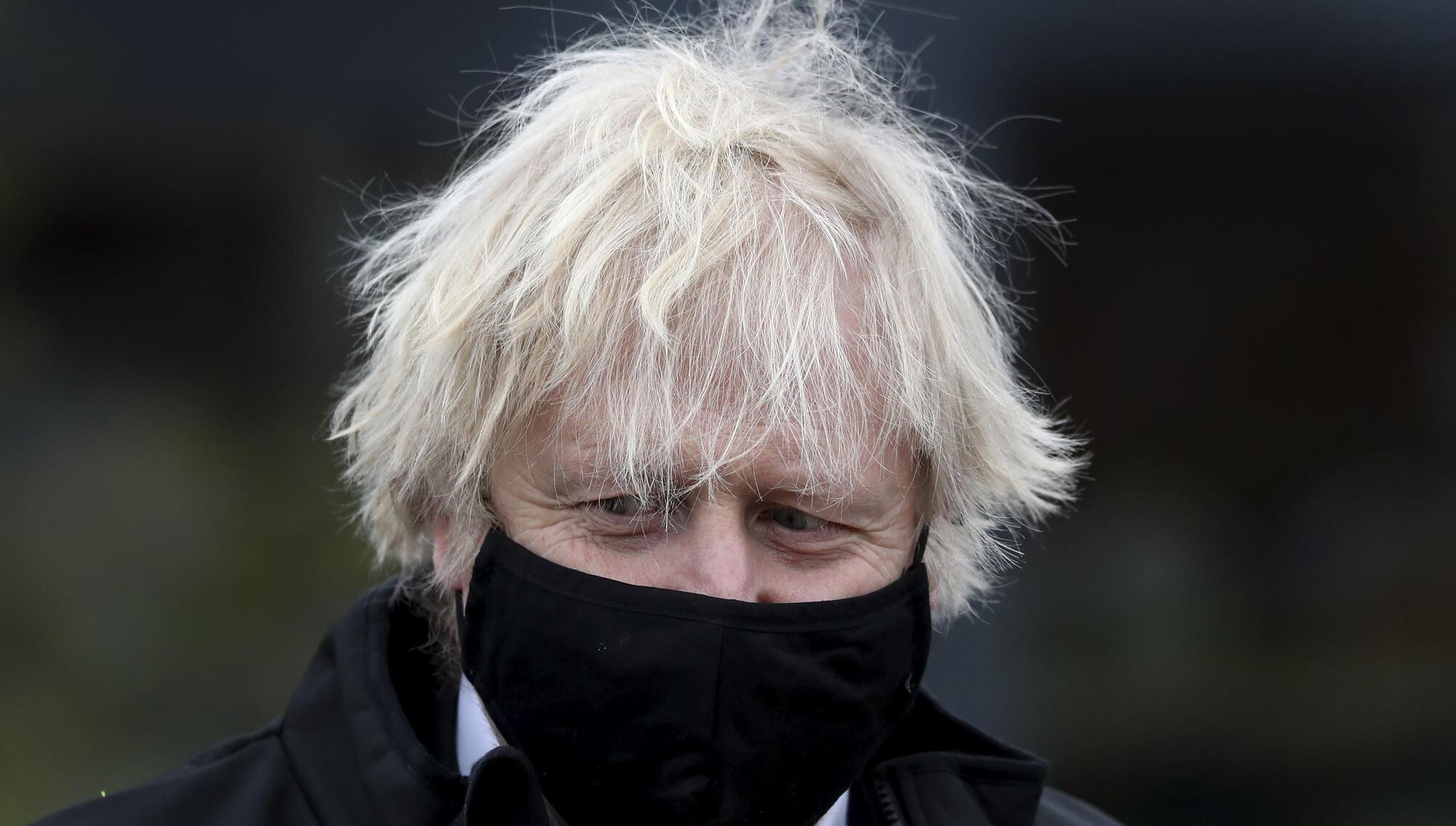
British Prime Minister Boris Johnson.  The British have always been renowned for their administrative prowess and, again, they have not been found wanting.
The WHO’s assessment of the rollout of the Covid-19 vaccine doesn’t present the EU in a flattering light ( Irish Examiner, April 2).

The WHO laments the tardy administration of the vaccine across the economic bloc, with only 10% of the population having received their first dose and only 4% having received both. Compare this to the UK, where 31m people have received their first dose, out of a population of 67m. It’s understandable that the WHO would be displeased with the EU.

The British have always been renowned for their administrative prowess and, again, they have not been found wanting. Hopefully, over the coming weeks and months, we can bridge the gap between us and our nearest neighbour. Now, it’s a case of roll on the rollout, so that we can get back to some kind of normal living, because nobody is 100% safe until everybody is vaccinated.

Michael Henchion

Old Fort Road

Ballincollig

Cork City

Have plaques for Troubles victims

On a visit to Berlin, I noticed commemorative plaques embedded in paving stones, known as stolpersteines, The name and details of a Holocaust victim were engraved on each and the stone set in the path outside the person’s last-known address. 

There are 70,000 such stones across the world, in 2,000 towns and cities in 24 countries.

They are an apology and an act of remembrance for murdered Jews. 

Perhaps similar plaques should be installed in Northern Ireland to acknowledge the victims of the Troubles, for each of the 3,500 people who were killed, denoting where they lived, from Crossmaglen to Ballymurphy, and from the Bogside to Cookstown.

 Only then will I trust that the Troubles are over and that violence has ended, and only then will I trust the participants, in whatever political form they now take, particularly when many of them aspire to public office.

Tom Carew

Ranelagh

Dublin 6

Free speech isn’t just for ‘liberals’

Louise O’Neill ( Irish Examiner, April 3) is right in saying that Piers Morgan hasn’t been silenced after his outburst on ITV about Meghan Markle. Some 57,000 people complained to Ofcom, the UK’s broadcasting competition authority, about Morgan.

 He was asked to apologise and his refusal to do so led to his leaving ITV. Two days later, this newspaper reported that the combined total of people signing petitions to get Morgan his job back had reached 200,000. 

Even more telling is that on the day of Morgan’s outburst, ITV was celebrating beating BBC’s morning programming for the first time, with a viewership of 1.29m.

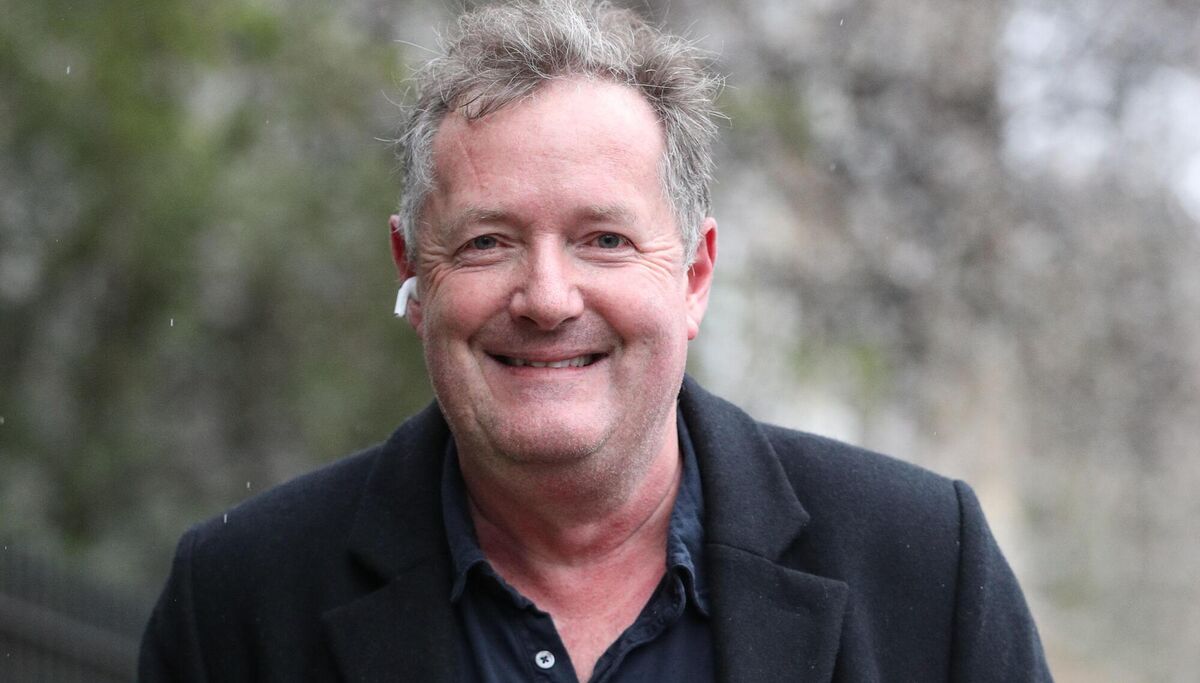
Piers Morgan isn't fraid to speak his mind.

This crashed to 800,000 after Morgan’s departure and is now hovering around the 1m mark. If anything, it is ITV that is being “cancelled” and which is learning the adage, “Go woke, go broke”. I don’t watch Morgan or read many of his writings. However, I can see why he drives self-flagellating, perpetually offended liberals into a manic frenzy. He doesn’t toe the woke line and isn’t afraid to speak his mind. I don’t always agree with him, but he has a right to express his opinions, just the same as anyone else.
O’Neill contends that, “hate speech and incitement cannot be tolerated” and does so in an article with so much passive aggression that it should probably come with a health warning. 

O’Neill also asserts that “there is a huge difference between censorship and de-platforming”. I agree with her, in that censorship is carried out by governments with respect to material that is prohibited by law. De-platforming is when woke liberals get outraged that someone offends them, behave like petulant children throwing a tantrum, and demand that people who have annoyed them be silenced. 

These so-called liberals go by the mantra, “everybody has the right to freedom of speech, so long as they say what we want them to say”. Vary from this groupthink and you are accused of “hate speech”.

Perhaps O’Neill is offended that an “old man” (56 is old?) chose to challenge Markle’s truth. On the other hand, now that Markle’s story is falling apart (‘fake’ wedding, misquoted headlines, passport ‘confiscated’), maybe it’s easier to attack the white, “old man” rather than admit that, maybe, Morgan was on to something.

Brian Ward

Mallow

Co Cork

A woman’s work is never done

The article by Noel Baker ( Irish Examiner, April 3) highlighting how 10% of women have quit their job because of the impossibility of juggling a full-time career and running a home/parenting highlights a longstanding problem.

The root of the enormous gender inequality faced by women is a deeply flawed societal expectation: Whether or not they have paid work, responsibility for the invisible job of parenting and running a home should fall to women.

The Covid-19 lockdown has magnified the stark imbalance between men’s and women’s contribution to this enormous role. The lockdown is not the problem, but, hopefully, it will enable women and men to realise that if we believe in equality, home-making is a role that men and women are equally capable of doing and we need to set expectations in our personal relationships accordingly.

We also need governments and employers to put in place the legal and financial frameworks that exist in Norway and Iceland that enable (and expect) men and women to be equally accountable for the care of children and the home.

The impact on women of our failure to address this core cause of gender inequality is outlined in my book, The Invisible Job – How Sharing Home and Parental Responsibilities Leads to Happier Lives. I urge anyone who sees their partner as an equal, and who wants to create a fairer and happier world, to read it.

Paula Fyans

Dartry

Dublin 6

Public patients ‘pay for it’ by waiting

For the 46% of the population who pay for private health insurance, there are no queues.

The Irish health service is very generously funded when compared with other countries, most of which don’t have a large private sector and must cater for the whole population within that budget and still provide an excellent service.

Instead of continually banging on about queue jumping, ask when the HSE is going to start queue prioritising for the unfortunate public patients. The money, the staff, and the facilities are there and if they want my advice, start with one simple problem, like cataracts, do it well, and learn as you go. There will be as many obstacles as Aintree.

Dr Michael Foley

Rathmines

Dublin 6

Consequences for skipping queue?

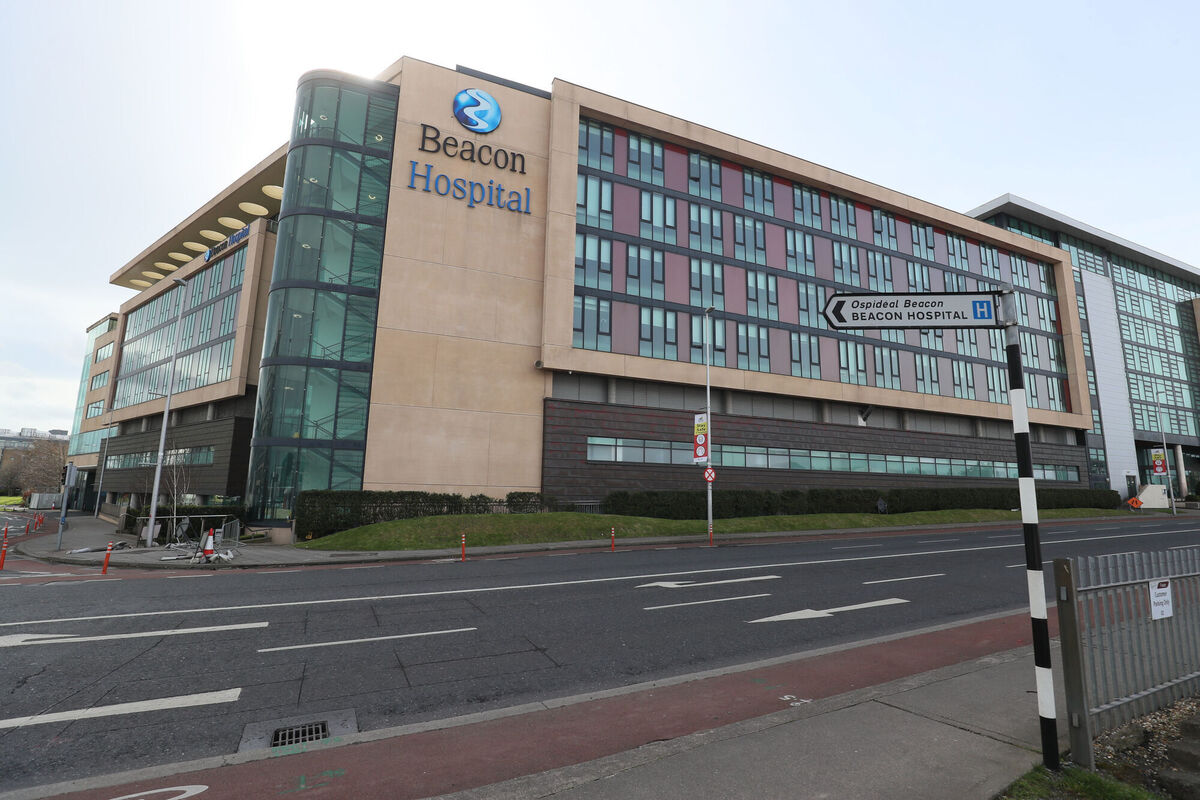
Many believe that there should be consequences for the Beacon Hospital and for the Coombe Hospital for giving Covid-19 vaccinations to people who were not a priority.

Beacon Hospital in Dublin.

Should there not also be consequences for those people who portrayed themselves as healthcare workers to skip the queue and get vaccinated before their turn?

Anne McGrath

Rathfarnham,

Dublin 16

‘Autism-friendly’ an empty gesture

I am a mother of two: A tired mother. I have an eight-year-old boy who has autism and I have a five-year-old “spirited” girl, who could possibly be diagnosed with something in the future. It is good, but, as I said, I am tired.

There is an extra effort I have to give in raising my children. I am in a constant state of alert and constantly carrying out simultaneous conversations with both children.

On some occasions, I’ve mixed up the conversation and the child, to their amusement.

Ireland has become more autism-friendly of late and mainstream schools aim to be inclusive. However, my issue is how the growing curiosity about inclusion has met a standstill. Yes, SuperValu and Lidl supermarkets are autism-friendly, but no one else seems to have followed suit.

I think the autistic community would far better benefit from a country that is educated about autism, that understands sensory needs, and which accepts their social difficulties, rather than a couple of hours of dimmed lighting in a supermarket.

For instance, my son was educated to look someone in the eye when talking, to avoid being rude. Inclusion should teach the class that although some autistic children can’t make eye contact, it does not mean they aren’t listening or don’t care.

Autism can be wonderful, if understood properly, and I hope that, one day, my children can fully be themselves, rather than adapting to society.

Thank you, from a less-tired mother.

Audrey O’Sullivan

Ballincollig

Co Cork

x

More in this section

Revoiced

Newsletter

Sign up to the best reads of the week from irishexaminer.com selected just for you.

Cookie Policy Privacy Policy Brand Safety FAQ Help Contact Us Terms and Conditions

© Examiner Echo Group Limited