Irish Examiner view: Striking the right balance on issues of sovereignty
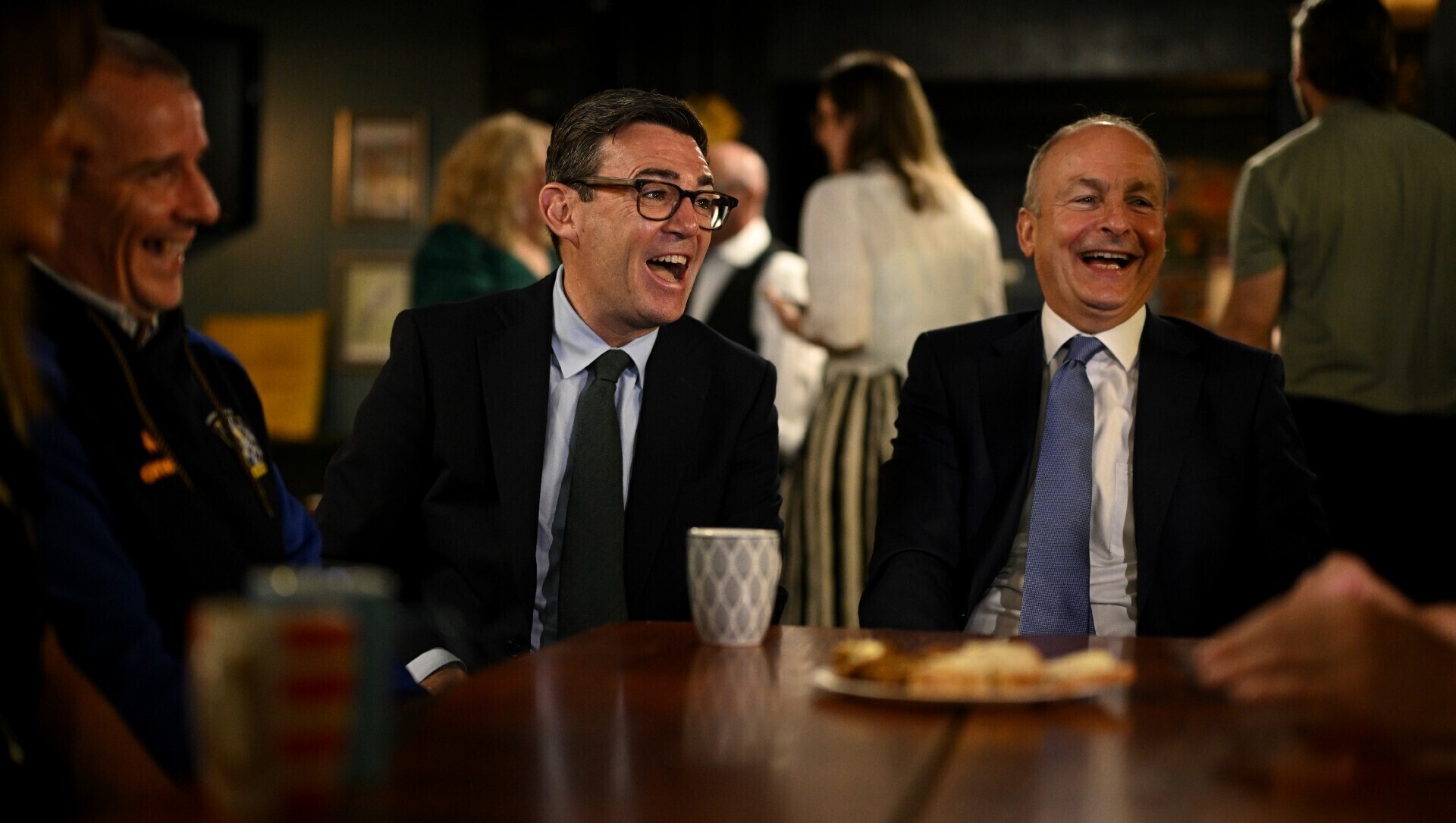
'There was a historic encounter between Taoiseach Micheál Martin and British prime minister Andy Burnham on Friday.' File picture: Oli Scarff/PA
There was a historic encounter between Taoiseach Micheál Martin and British prime minister Andy Burnham on Friday. Their first meeting as Taoiseach and prime minister, it took place far from the traditional English venue for such encounters, No 10 Downing St.
The meeting was in No 10 North in Manchester: Mr Burnham was mayor of Greater Manchester until recently and established No 10 North with the intention of creating a regional government hub that would shift decision-making away from the traditional power centre in London.
It is not known at the time of writing whether Mr Martin made notes at the meeting for a similar initiative for his native Cork, but Northern Ireland certainly formed a key part of the two men’s discussions.
[backtitnt=start]
We have grown accustomed to the slow progress of our large-scale infrastructural projects. Whether it is the National Children’s Hospital, Cork’s event centre, or the Metrolink, long delays and spiralling costs have become painfully familiar to us in recent years.
Now we also seem to be encountering difficulties in developing various online systems. Readers will recall the Arts Council’s botched IT system, which ended up costing the taxpayer €6.5m, while the HSE’s use of paper records and unconnected databases means the State must spend €2bn on a long-delayed electronic health record system. Two weeks ago, Irish Rail fired Spanish multinational Indra Sistemas, which had been developing another delayed IT system — to manage train movement on the rail network — and is preparing a legal case for damages.
This week, the reported that the University of Galway has spent €10.6m on a student record management system that remains “uncompleted” three years on from its original deadline.
Last night was Culture Night all over Ireland, which must be one of the best and most inclusive innovations of the last 20 years.
Since it began in 2006, the annual event, run with local authorities, a variety of institutions, and countless individuals across the country in the arts and culture sector, has engaged people, fired imaginations, stoked new interests, and created audiences all over Ireland.
There are events online and in person which are broadcast widely and experienced locally, the opening hours are flexible and accommodate night owls, and, perhaps most significant of all, the activities are free.
CONNECT WITH US TODAY



Be the first to know the latest news and updates