Irish Examiner view: Absence of policing in domestic abuse crisis
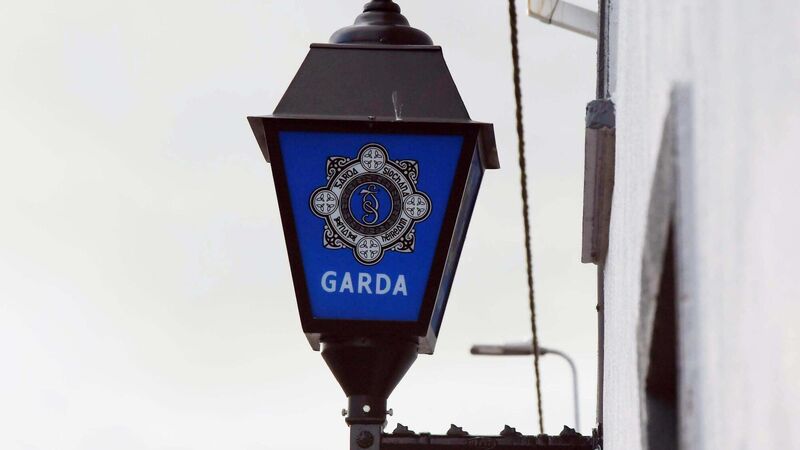
Domestic abuse is closely linked to serious violent crime, including homicide. Garda data shows it is a key driver of gender-based violence and disproportionately affects women. File Picture: Denis Minihane.
The scale of the problem is not in dispute. An Garda Síochána responded to more than 65,000 domestic abuse incidents in 2024 — roughly 1,250 every week. Reports of domestic violence have surged by 162% in less than a decade, climbing from 18,782 incidents in 2016 to over 49,000 in 2024. Frontline services are overwhelmed: Women’s Aid recorded tens of thousands of disclosures last year alone, reflecting the prevalence and severity of abuse.
Behind those numbers are stark human realities. One in three women in Ireland has experienced abuse from an intimate partner. One in four has suffered sexual violence. Children are frequently caught in the same cycle, with evidence suggesting abuse co-exists in more than 40% of affected households. This is a national emergency. Yet, the State’s operational response remains patchy, and in some areas practically non-existent.
Successive governments have spoken the language of “zero tolerance”. But leadership is measured in delivery, not declarations. The absence of a nationwide network of domestic abuse units, despite years of rising demand, signals a failure to translate policy into practice.
The consequences are profound. Without specialist teams, victims are more likely to encounter fragmented responses, repeat their trauma to multiple officers, or disengage from the system altogether.
There is also a wider societal cost. Domestic abuse is closely linked to serious violent crime, including homicide. Garda data shows it is a key driver of gender-based violence and disproportionately affects women.
The need for reform is neither new nor unclear. The steady rise in incidents, the pressure on support services, and repeated warnings from advocacy groups all point towards need for radical reform.
Yet the response has been incremental when it should have been transformative.
This must now change — urgently. A fully-resourced nationwide network of garda domestic abuse co-ordination units is not an optional enhancement; it is a basic requirement of a modern justice system. These units must be embedded in every division, staffed by trained specialists, and supported by clear national standards to ensure consistency. Anything less perpetuates a postcode lottery in protection and undermines public confidence in the State’s commitment to tackling domestic violence.
Leadership now demands decisive action — delivered with urgency, scale, and accountability. Anything else is a failure the State can no longer afford.
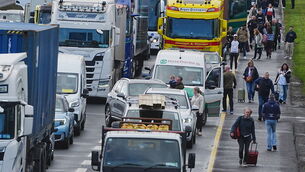
The disruption is stark. Blockades, including at the Whitegate refinery — which supplies around 40% of the State’s petroleum — have effectively locked up as much as half of Ireland’s fuel supply. In a matter of days, forecourts ran dry, emergency services were disrupted, and supply chains faltered. That such a small number of choke points can cripple the country speaks volumes.
The protests did not create this vulnerability — they revealed it. Ireland is uniquely exposed among European states. It imports almost all its oil and gas, relying on a small number of terminals and storage facilities to maintain strategic reserves.
Even domestically, infrastructure constraints are glaring. Dublin Port — the primary distribution hub for the capital — can only accommodate tankers of up to roughly 55,000 tonnes, limiting access to larger, more efficient super tankers. This forces reliance on smaller shipments and more frequent deliveries, increasing vulnerability to disruption.
Alternative capacity exists, but it is neither sufficient nor convenient. Deep-water facilities such as Bantry Bay can handle larger vessels, yet they are geographically distant from the main centres of demand. Inland and estuarine terminals including Foynes have smaller storage volumes and handling limits, creating logistical bottlenecks.
The result is a system that is technically compliant, but operationally fragile.
A modern economy should not be this easy to disrupt. These protests have amplified what policymakers have long ignored: Ireland’s energy security is overly centralised, underbuilt, and dangerously exposed to both domestic disruption and international shocks.
Correcting this demands urgent investment in storage, diversification of import capacity, and hard decisions about where and how critical infrastructure is located.
Energy security is national security. Ireland is currently treating it as an afterthought.
At a moment when artificial intelligence promises speed, efficiency, even creativity, the value of such work becomes sharper, not softer. These shortlisted books are not merely products: They are lived experiences, shaped by culture, language and the slow accumulation of thought. Four are translations, reinforcing the idea that literature is a shared global conversation, not a dataset to be scraped.
It cannot know grief, or love, or the quiet weight of memory. That is why prizes like this matter.
They do more than reward excellence — they defend it.
In celebrating authors and translators, they assert that art is not just content. It is connection.


CONNECT WITH US TODAY



Be the first to know the latest news and updates