Irish Examiner view: Opportunity to end Viktor Orbán's ill-fitting vision
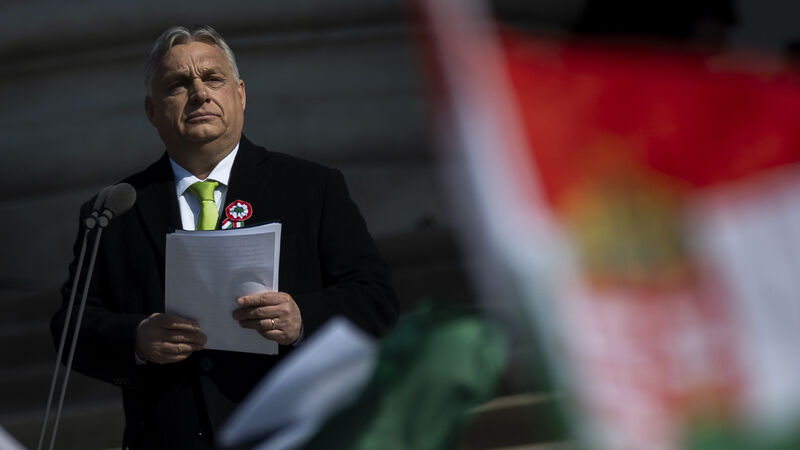
Hungarian prime minister Viktor Orbán's vision of illiberal nationalism has shown itself to be a complete dead end. Picture: Denes Erdos/AP
Viktor Orbán’s vision of illiberal nationalism has shown itself to be a complete dead end, which has made the country he presides over a much poorer place and less free for those living there.
This weekend, Hungary goes to the polls and — for the first time since 2010, when his Fidesz party won a two-thirds majority in parliament, allowing it to alter the constitution and create a bastion of Christian values and conservatism in a secular and liberal EU — Orbán is looking down the barrel of defeat.
Seen as a friend to both the US and Russia, Hungary has become an outlier in Europe, using its veto to stall hundreds of millions of euro in aid to Ukraine, and generally disrupt any attempt to adopt moderate policies across the union.
However, despite US vice president JD Vance flying into Budapest this week carrying a message from his boss Donald Trump — offering his “complete and total endorsement” ahead of Sunday’s general election — victory for the incumbent is far from certain.
After repeated re-election wins over that 16-year period, Orbán and Fidesz now face a genuine electoral challenge from Peter Magyar and his centre-right Tisza party, which has led in the polls for more than a year while running on an anti-corruption platform.
The picture is looking so bad for Orbán, and his cronies are facing a battle which will tell us if it is possible to defeat a government which has rewritten the electoral laws in its own favour and subjugated the country’s media into being little other than an official mouthpiece.
While Vance’s visit this week drew the collective ire of the EU, it was heartily supported by the Trump regime in Washington — because it sees Hungary as a laboratory for policies promoted by many self-described national conservatives in America who want government to positively promote conservative values.
In truth, what appeals most to them about Orbán is the authoritarian way he’s gone about his business in ruthlessly stamping his authority on the judiciary, reshaping the constitution to suit himself, and forcing a takeover of civil society.
That stuff really appeals in Trump’s America.
However, this kleptocracy is facing its moment of truth, because its model of governance has been a failure and 16 years as a Petrie dish for post-liberal nationalism has not worked to benefit Hungary’s wider population — even if Orbán’s toadies have lined their pockets well.
One hundred years ago, Ireland was a nascent, infant entity.
And yet, it was also a distant being from the monochrome, parochial, and non-secular state it was so often characterised as.
It was, in fact, a place where immigrants could be found in every corner, giving the lie to the current right-wing, racist tropes about Ireland being solely “for the Irish”.
Back in 1926, the government conducted a census of Ireland’s then 2.9m-strong population and it illustrated clearly that ours was far from being a mono-ethnic society.
The National Archives of Ireland will, on April 18 next, release a digitised version of that census return — around 700,000 pages of it — which provide an intimate and highly informative snapshot of life here in the decade following the 1916 Rising, the 1919-’22 War of Independence, and the Civil War which followed.
Any perception that the newly-formed state — not yet a republic — was an isolated backwater, but rather an element of an increasingly globalised world, if somewhat hamstrung by a conservative demeanour.
The 1926 census illustrates that while immigrant numbers were small, individuals from Britain, America, France, Italy, Germany, Egypt, and beyond, were to be found here.
In fact, there were few towns without some form of foreign influence — be it from Germans in Limerick and surrounds working for Siemens on the Shannon hydroelectric scheme, to an Indian-born Hindu law student boarding in Dublin.
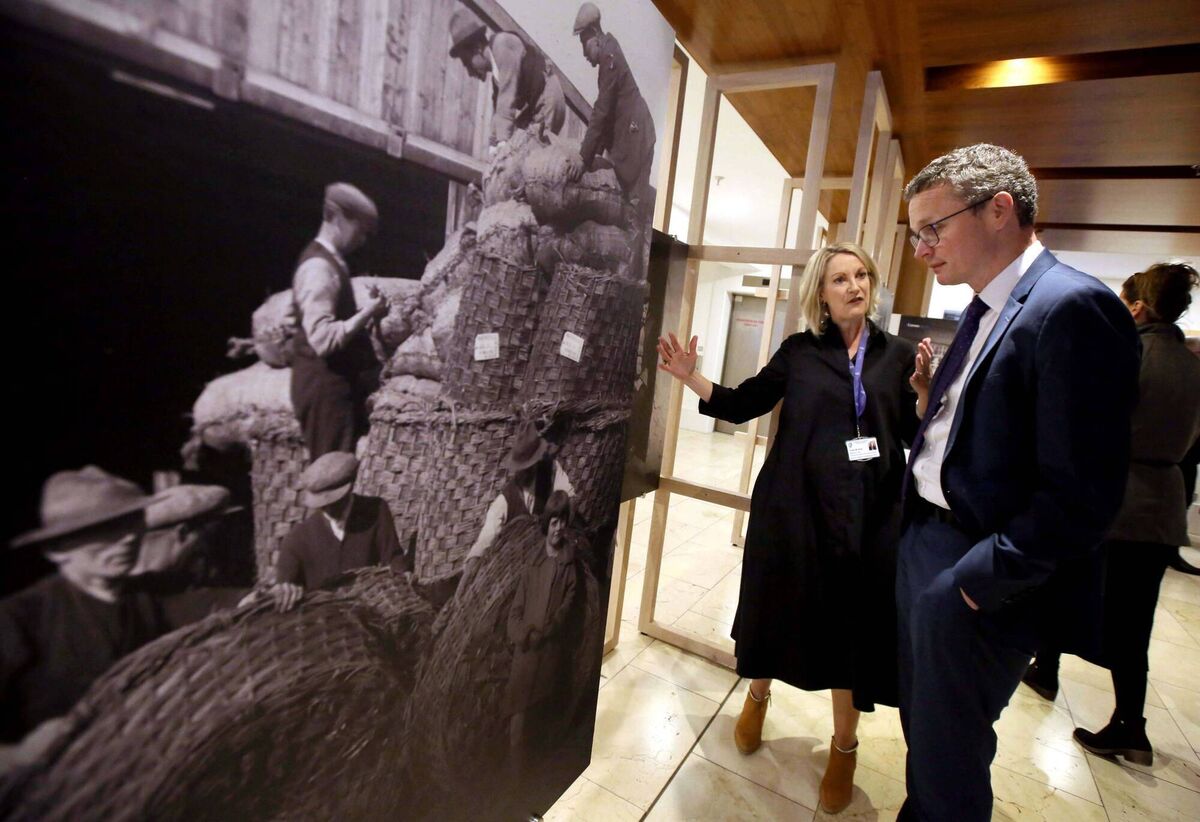
Under the 100-year rule, the 1926 census must, by law, be made public this month and — thanks to €5m in government funding — a 50-strong team from the National Archives extracted the records from 1,344 boxes of material.
The team had to restore damaged pages with paste and Japanese rice paper, and they then catalogued and digitised the trove to make it accessible to academics and the public alike.
Also, unlike the UK’s 1921 census, made public in 2021, it will not be behind a paywall.
This has been a phenomenal undertaking and one which will provide an insight into the reality of life in our newborn state — one which, in reality, is quite different from that painted by the ultra-nationalist doomscrollers of today.
Small steps can ultimately pave the way for big gains and a project in East Cork is currently shining a bright light on how people with intellectual disabilities can be successfully integrated into the workforce.
Staff at the Midleton hub provide day services and support for people with intellectual disabilities, under the Horizons umbrella, are now focusing on finding worthwhile and lasting employment opportunities for them.
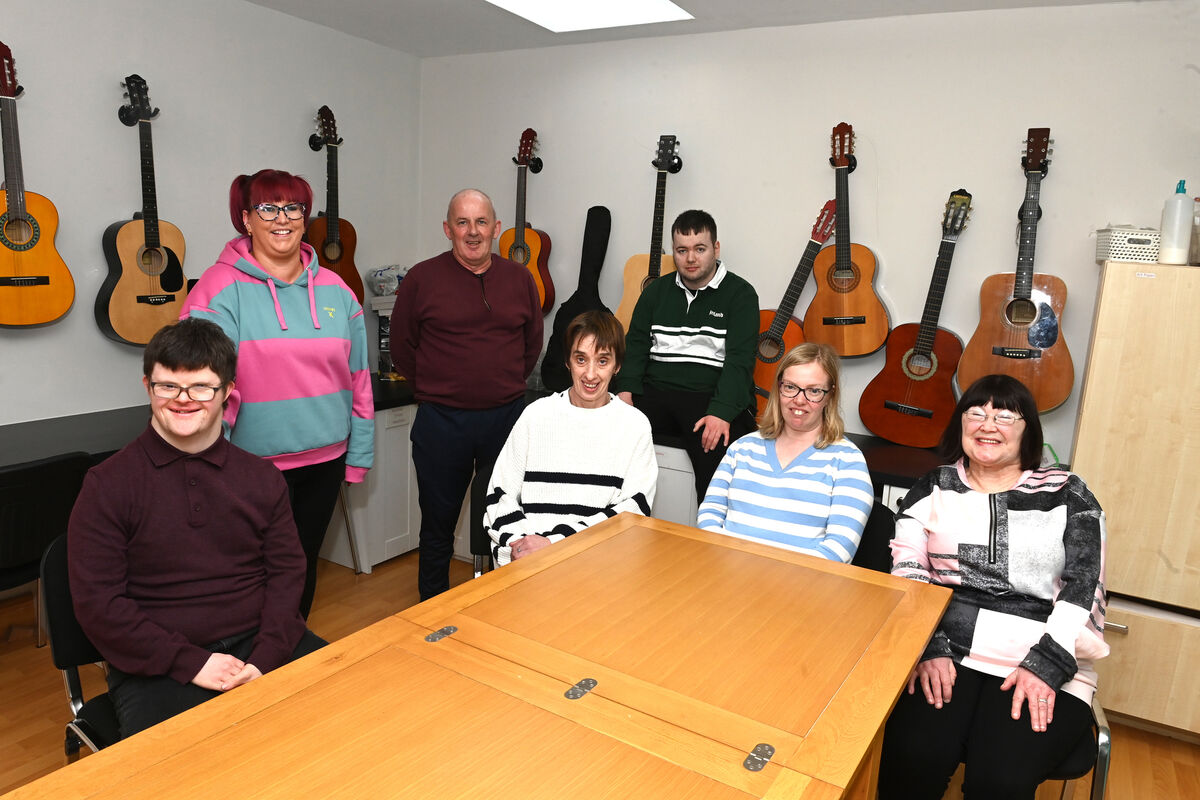
While they have chalked up some notable successes, overall community integration efforts have proved tricky.
Unfortunately, some employers find it difficult to provide work experience and often dismiss the idea out of hand — without having met the person seeking even part-time work.
Horizons have had some fantastic success stories — as highlighted in this columns this week, with the story of Sandra Egan being especially resonating — and are illustrating clearly the capability of members of the Midleton hub.
Often times, employer disinterest is down to a lack of education or simple apathy, but there is a precious lesson to be learned from their excellent work: People only need to be given a chance.


CONNECT WITH US TODAY



Be the first to know the latest news and updates